
Island Culture & Daily Life
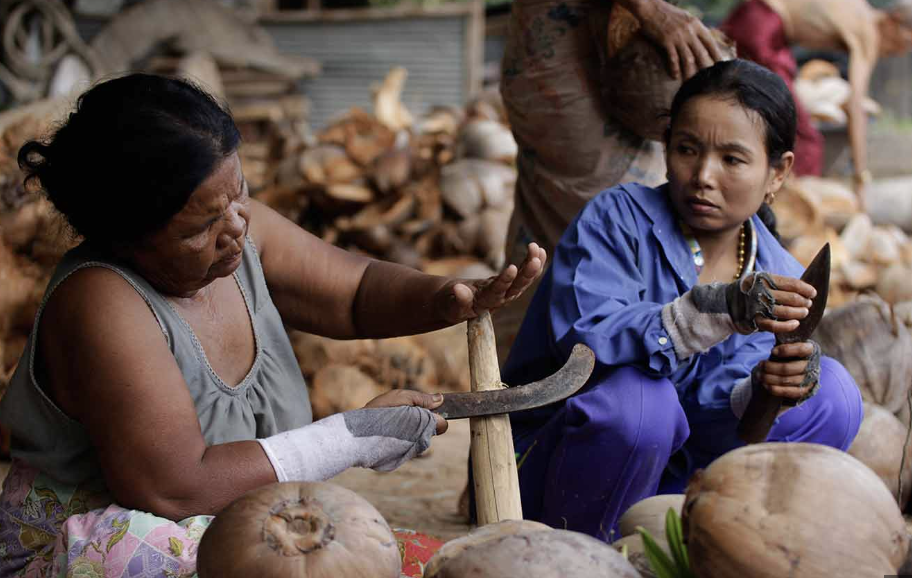
Koh Phangan is known for beaches, sunsets and a laid-back atmosphere, but what makes the island truly special is its daily rhythm. Life here follows its own structure, shaped by nature, community and small routines that repeat quietly from one day to the next. Once you stay a little longer, you begin to understand the unwritten rules, the way people interact and the sense of familiarity that makes Phangan feel like a small village scattered across a tropical landscape.
This article gives you a deeper look at what daily life on Koh Phangan really feels like.
Tips Overview
Contents
Life on Koh Phangan: Beyond the Parties and Holiday Moments
Beyond the parties and holiday moments, there is a small island community shaped by routine, nature and connection.
A Rhythm Set by Nature: How Daily Life on Koh Phangan Actually Works
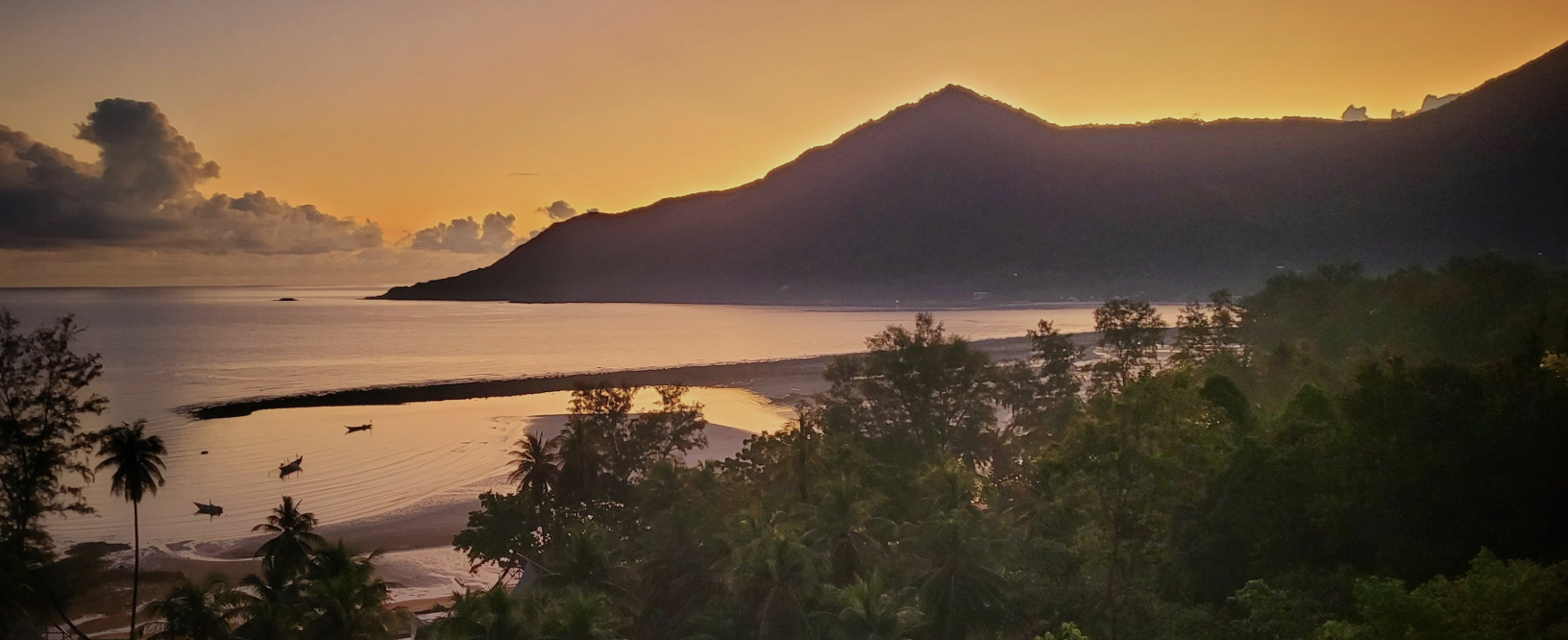
Life on Koh Phangan follows light and temperature more than clocks.
Sunrise in Chaloklum is quiet and clear. The sea is still. Fishing boats head out slowly. Birds are louder than traffic. Small food stalls begin preparing breakfast and smoke from early grills drifts through the village. It is the best time for a run along the bay, a swim in calm water or a coffee before the island fully wakes up.
By late morning the heat settles in. Movement slows naturally. People retreat into shade. Work happens indoors. Early afternoon is not lazy, it is practical. In this climate, slowing down simply makes sense.
Late afternoon is when the island becomes active again. Traffic increases slightly as people leave home or finish work. Beaches fill gradually. Friends meet for a swim or an early drink.
Sunset is not organized or announced. It simply happens. Most people notice it, watch for a few minutes and then continue with dinner, training or whatever the evening holds.
Village-Style Community: Why Koh Phangan Still Feels Like a Small Island
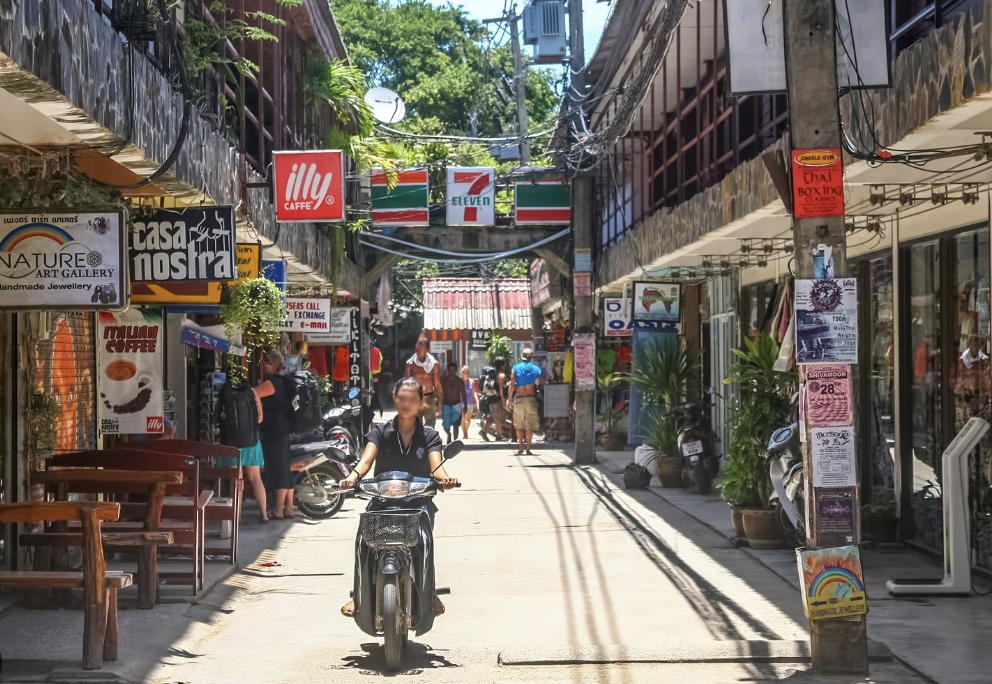
Koh Phangan attracts travelers from all over the world, but daily life still feels local and village based. The island is not one big center. It is several small areas connected by winding roads.
In Thong Sala, Sri Thanu or Chaloklum you quickly recognize familiar faces. Shop owners sit outside in the evening. People stop their scooters to talk. Conversations happen in front of minimarts and cafés. The pace is relaxed and personal.
There is a strong sense of looking after each other. If a motorbike breaks down, someone usually stops. If a storm cuts electricity, neighbors check in. When a temple fair or local event takes place, the whole area shows up.
Even short term visitors feel this quickly. After a few days, the fruit vendor remembers what you buy. Café staff greet you by name. Life feels smaller and more connected than expected.
Markets on Koh Phangan: A Daily Routine, Not a Tourist Attraction
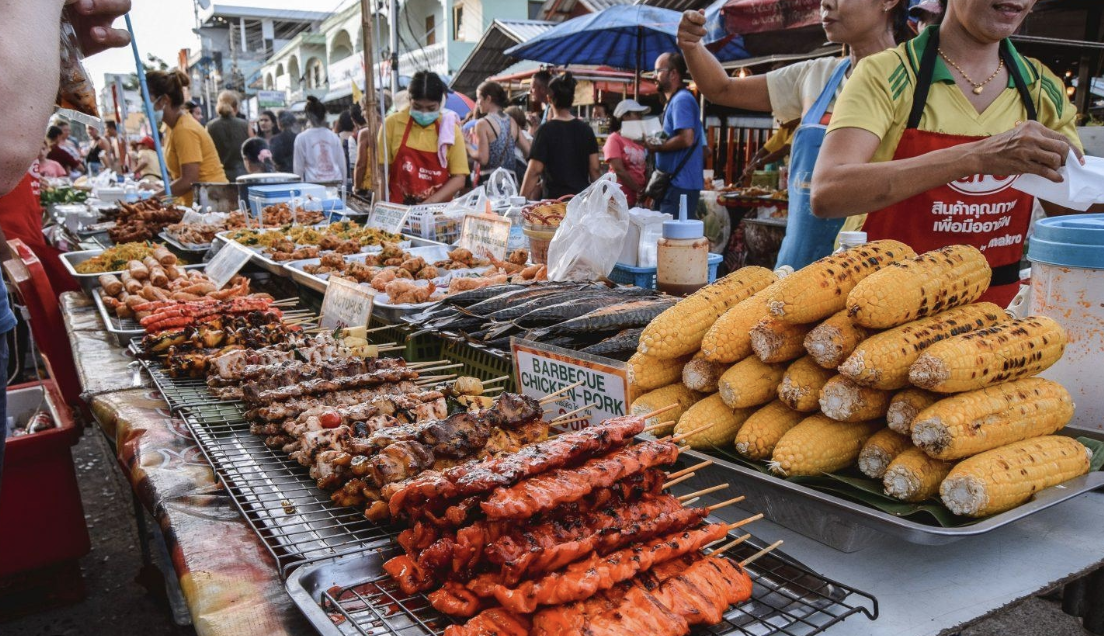
Markets are part of everyday life, not a tourist attraction. Thong Sala Walking Street on Saturday is the most visible one, but locals shop daily at fresh markets around the island. Chaloklum Night Market every Sunday is another regular meeting point, especially for seafood and local dishes.
Most people shop for the day. Fish is bought fresh in the morning. Fruits are chosen when fully ripe. Curry pastes are made in small batches. Vendors know their customers and customers know their vendors.
Markets are social spaces. People exchange news while buying vegetables. Food stall owners source ingredients early. It is practical and community driven, not performative.
Food Culture on Koh Phangan: Seasonal, Fresh and Community-Driven
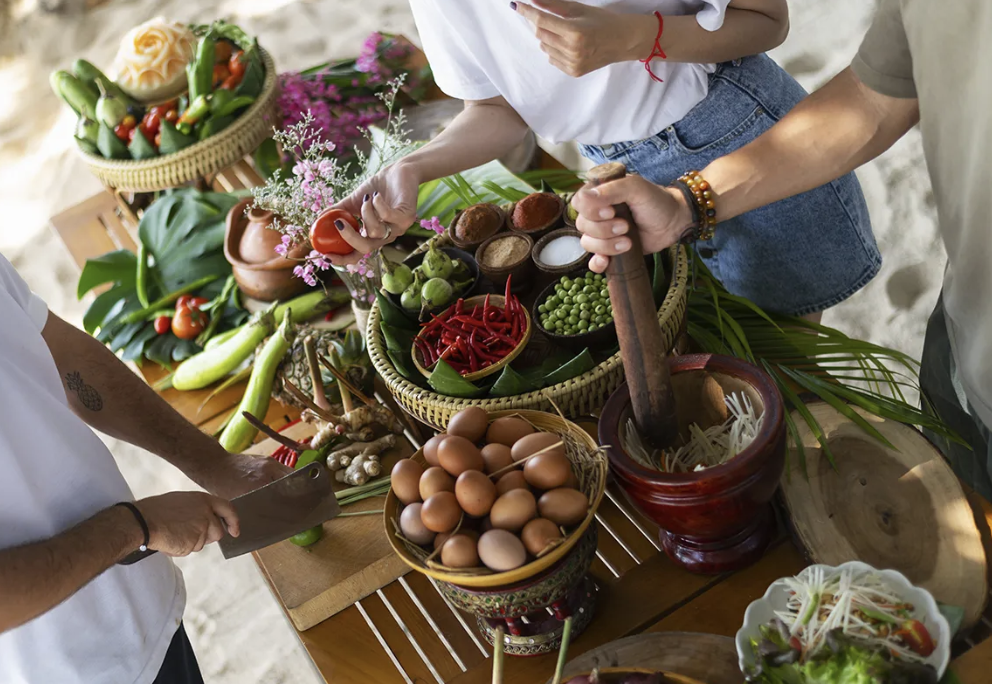
Food is central to daily life. Many families still cook at home and eat together outside. Sharing food with neighbors is common. It is normal to see someone walk across the street with an extra plate.
Lunch is simple and consistent. Rice, curry, stir fried vegetables, grilled meat, fresh fruit and iced drinks. The island follows seasonal cycles. Mango season, rambutan season, longan season. People know when certain fruits are at their best.
There is strong appreciation for fresh ingredients. Small herb gardens are common. Calamansi, lemongrass or basil often grow close to houses or along roads. Food here is routine, not trend driven.
Social Code on Koh Phangan: How Respectful Communication Works Here
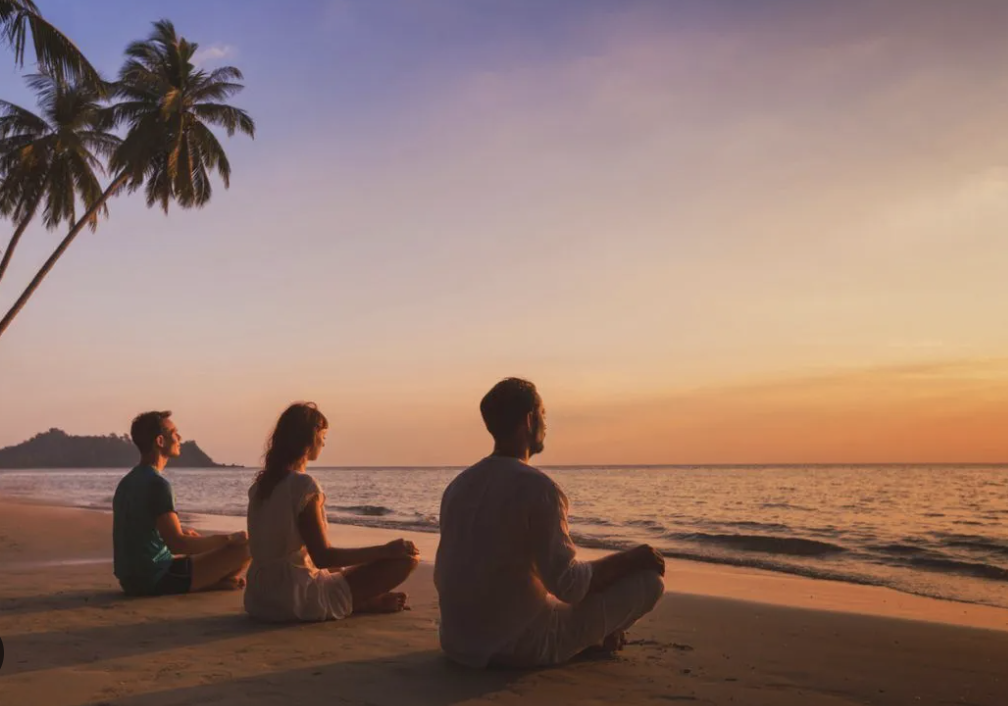
Island life is relaxed, but respect is important. Communication is soft and non confrontational. Raising your voice is uncommon and usually unnecessary.
Shoes are removed before entering homes and many small shops. Patience works better than pressure. Tone and body language matter.
If you approach people calmly and respectfully, the response is immediate. The social code is simple and consistent.
Spiritual Life on Koh Phangan: Thai Temples, Wellness Culture and Tradition

Traditional Thai culture remains present even with an international community. Temples are active. Monks collect alms in the morning. Buddhist holidays are observed quietly.
Early mornings often include small offerings at shrines or incense at temples. Even people who are not deeply religious follow these habits out of respect.
In Sri Thanu especially, yoga schools and meditation centers sit alongside local temples. International wellness culture and Thai tradition exist next to each other without conflict.
What Makes Koh Phangan Unique: Simplicity and Comfort Side by Side
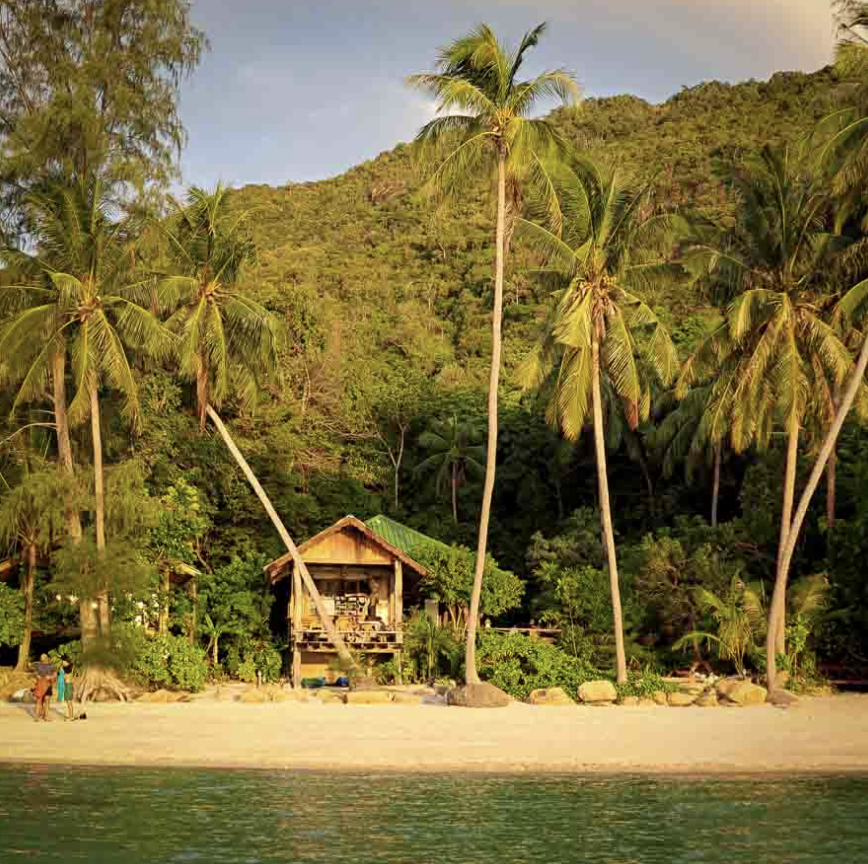
Koh Phangan balances simplicity with comfort. Small family shops sit next to modern cafés. Local markets operate near coworking spaces. Beach restaurants exist next to long standing Thai eateries.
Convenience is available, but speed is not the priority. Life is shaped by routine, season and community. People know when the sea will change, when fruit is ready and when a temple ceremony is coming up.
The lifestyle is steady and grounded. Not dramatic. Not rushed. Easy to settle into if you stay long enough.
Veloura Tips
Adjust to the Island Clock Plan your day around temperature, not around habit. Move early in the morning or late afternoon. Use midday for rest, indoor work or long lunches. If you follow the natural rhythm, everything feels easier.
Shop Small and Daily Skip bulk supermarket runs. Visit fresh markets in the morning and buy what you need for the day. Ask vendors what is best right now. Eating seasonally on Phangan is not a trend, it is how locals live.
Watch Before You Participate Before joining a sunset circle, temple ceremony or community event, take a moment to observe. Notice how locals behave, where they stand, when they speak and when they stay quiet. Koh Phangan is open, but it runs on subtle social codes. Respecting the space first creates better connections than immediately stepping into the center. On this island, awareness goes further than enthusiasm.
Frequently Asked Questions: Culture & Daily Life on Koh Phangan
What is daily life really like on Koh Phangan?
Daily life on Koh Phangan follows a rhythm set by light and temperature more than schedules. Mornings start early and quietly — fishing boats head out at sunrise, food stalls prepare breakfast, and the beach is almost empty. By late morning the heat settles in and the pace slows naturally. Late afternoon brings the island back to life — traffic increases slightly, beaches fill gradually, and sunset draws people to the west coast. The island is not one central hub but several small areas connected by winding roads, each with its own character. Life feels village-scale, personal, and quieter than most visitors expect.
What is Koh Phangan like beyond the Full Moon Party?
The Full Moon Party is one night a month and is entirely contained in Haad Rin in the south. The rest of Koh Phangan — particularly Sri Thanu, Haad Yao, Hin Kong, Chaloklum, and the north — has a completely different identity. The island has a genuine local community of Thai families, long-term expats, and international residents who live here year-round. Daily life revolves around fresh markets, morning swimming, community events, temple ceremonies, and a wellness culture that has developed organically rather than for tourism. Most long-term visitors to Koh Phangan never attend the Full Moon Party at all.
What are the best local markets on Koh Phangan?
Markets are part of everyday life on Koh Phangan rather than tourist attractions. The Thong Sala Walking Street on Saturdays is the most visible, with local food, crafts, and produce drawing both residents and visitors. The Chaloklum Night Market every Sunday is a more authentically local experience — seafood, Thai dishes, and a gathering of island families that feels nothing like a tourist market. Fresh markets operate daily across the island in the early morning, where locals buy fish, fruit, and vegetables for the day. Vendors know their customers and the produce is chosen at peak ripeness.
Is Koh Phangan a good place to live or stay long-term?
Yes — Koh Phangan has become one of Southeast Asia's most popular destinations for long-term stays, particularly for people seeking a slower pace, wellness culture, and genuine community. The island has strong coworking and café infrastructure, a well-developed yoga and meditation scene especially in Sri Thanu, reliable food options at all price points, and a social fabric that makes it easy to build a routine. The rhythm of the island rewards those who stay longer — after a few days, vendors remember your order, café staff know your name, and the island begins to feel like a small community rather than a destination.
What is the spiritual and wellness scene like on Koh Phangan?
Koh Phangan has one of the most developed wellness and spiritual communities in Southeast Asia, centered primarily around Sri Thanu on the west coast. Long-running yoga schools and meditation centers sit alongside active Buddhist temples where monks still collect alms in the mornings and Buddhist holidays are observed quietly. The international wellness culture — yoga, breathwork, sound healing, Ayurveda — has grown organically alongside the island's Thai traditions rather than replacing them. In Sri Thanu especially, both exist side by side without conflict. The result is a community that feels genuinely diverse in its approach to contemplative life.
What is the social code on Koh Phangan?
Island life on Koh Phangan is relaxed, but respect and calm communication are important. Raising your voice is uncommon. Shoes are removed before entering homes and many small shops. Patience works better than pressure. The social tone is non-confrontational — if you approach people calmly and respectfully, the response is almost always immediate and warm. For visitors, observing before participating is a good rule: before joining a sunset gathering, temple ceremony, or community event, take a moment to notice how locals behave, where they stand, and when they speak. Awareness and adaptability open more doors on Koh Phangan than enthusiasm alone.
For more local guides to Koh Phangan and Thailand, visit veloura-gems.com.
Veloura App
There is more to explore.
Bangkok, Koh Phangan and Northern Thailand, beyond the obvious.
