
Basic Thai Phrases All Travellers Must Know
You do not need to speak Thai to travel here. But the moment you try, something shifts.
This guide covers the phrases that actually matter, the ones that open conversations, ease transactions, and make you feel less like a visitor and more like someone who is genuinely curious about the place they are in.
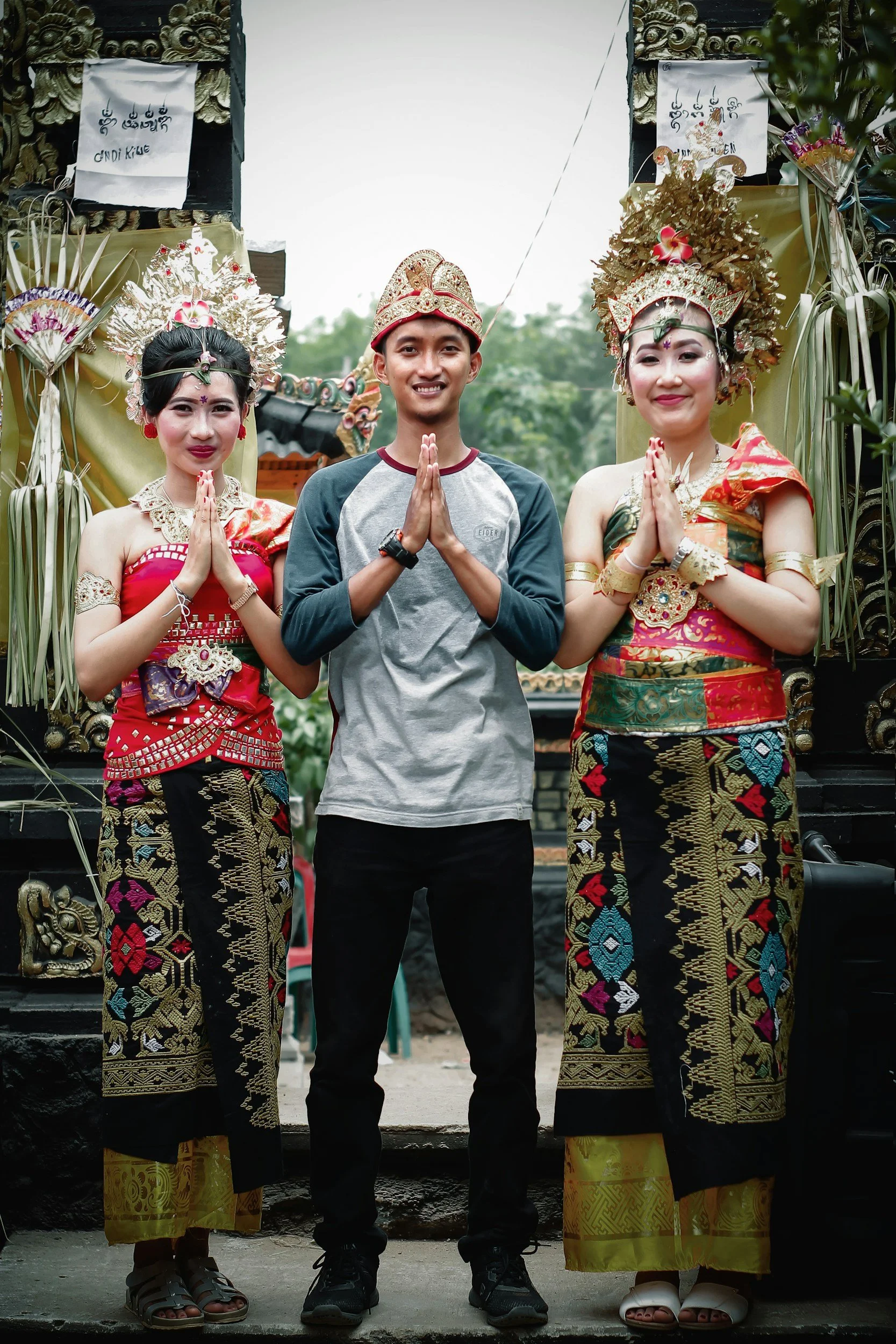
Basic Thai Phrases Every Traveler Should Know
The Thai language is one of the most beautiful parts of Thai culture. It is melodic, expressive and full of warmth. Thai began taking shape in the 13th century with influences from Sanskrit, Pali and Khmer. Over time it developed its own unique rhythm with 44 consonants, 18 vowels and five tones that give the language its musical sound. For many travellers it feels complex at first, but once you listen closely you start to hear the softness and colour in every word.
In Bangkok or Koh Phangan, Thai is the main language spoken in daily life. Markets, local restaurants, temples and smaller villages primarily use Thai. Yet because the island welcomes people from all over the world, many locals speak basic English. Menus, signs and price lists are often written in both languages which makes everyday navigation easy even if you do not understand Thai.
Tips Overview
Contents
The Most Important Rule: Kha and Krap
Before any phrase, understand this.
Most sentences in Thai end with kha (spoken by women) or krap (spoken by men). These small words transform a simple sentence into something polite and respectful. They signal warmth. They are used everywhere, in shops, at markets, with taxi drivers and in every daily interaction.
When you add them, people feel immediately more comfortable. When you leave them out, nothing is wrong, but something is slightly missing.
Throughout this guide: add kha or krap to the end of any phrase and you have already done more than most visitors.
Essential Greetings
Here are some useful phrases you might already know or will enjoy learning:
Sawatdee kha / krap: Hello / Goodbye
The most universal Thai greeting. Use it when you arrive, when you leave, when you pass someone on the street. It works for hello and goodbye. Accompanied by a small bow or a wai (palms pressed together at chest level), it communicates warmth and respect immediately.
Sabai dee mai kha / krap: How are you?
A gentle, everyday greeting. You will hear it often between locals. If someone asks you this, the standard reply is:
Sabai dee kha / krap: I am fine, thank you
Yin dee ton rap: Welcome
You will hear this in shops, hotels and restaurants. It means "we are glad you are here."
Raa tri sawat: Good night
Used in the evening as people part. A softer, quieter version of sawatdee.
Politeness and Everyday Interactions
Khob khun kha / krap: Thank you
The phrase you will use most. Say it to your taxi driver, to the person who hands you your food, to the vendor at the market. Always. Every time.
Kor thot kha / krap: Sorry / Excuse me
Used both as an apology and to get someone's attention politely. If you bump into someone, accidentally take the wrong dish, or need to squeeze past people, this is your phrase.
Mai pen rai: Never mind / It is okay
One of the most important expressions in Thai culture. It means let it go, no problem, all is fine. If you say sorry and the person says mai pen rai back, you are completely forgiven and the moment has passed. Use it yourself when someone apologises to you. It immediately restores harmony.
Chai: Right
Mai chai: No
Simple and universal. Chai (right) and mai chai (no, not that). Keep both in your memory at all times.
Food and Eating
Aroy maak kha / krap: Very delicious
The phrase that will make any cook genuinely happy. After a good meal at a local restaurant or street stall, this one lands warmly every time.
Pet nit noi kha / krap: A little spicy please
Ordering with this phrase tells the kitchen you want some spice but not full Thai heat. It usually gets the balance right.
Mai pet kha / krap: Not spicy please
For those who prefer no heat at all. Be aware that for some dishes, removing spice changes the flavor significantly, but it is always respected.
Aroy mai kha / krap: Is it delicious? / How is the food?
Useful for asking a vendor or local what they recommend, or simply as a way of striking up a small conversation after a meal.
Check bin kha / krap: Bill please
Said at the end of a meal when you want to pay. Works in almost every Thai restaurant.
Getting Around
Bai nai kha / krap: Where are you going? / Where to?
Taxi and tuk tuk drivers will ask you this. You can also use it to ask for directions in a very general sense.
Yoot tee nee kha / krap: Stop here please
Essential for any taxi, tuk tuk or songthaew ride. Say it when you want to be let out.
Tao rai kha / krap: How much?
The phrase every market visitor needs. Short, clear and understood everywhere.
Phaeng maak: Very expensive
If you feel a price is too high and want to express it gently before negotiating. Say it with a smile.
Lot noi dai mai kha / krap: Can you reduce a little?
A polite way to open a negotiation at markets. Always with a smile and a calm tone.
Numbers You Should Know
Being able to say basic numbers speeds up transactions and market shopping significantly.
| Number | Thai | Pronunciation |
|---|---|---|
| 1 | หนึ่ง | Nueng |
| 2 | สอง | Song |
| 3 | สาม | Sam |
| 4 | สี่ | See |
| 5 | ห้า | Ha |
| 6 | หก | Hok |
| 7 | เจ็ด | Jet |
| 8 | แปด | Paet |
| 9 | เก้า | Gao |
| 10 | สิบ | Sip |
When a vendor says a price, listen for these sounds. Even recognizing the number saves a lot of back and forth.
Quick Reference Card
| Phrase | Meaning |
|---|---|
| Sawatdee kha/krap | Hello / Goodbye |
| Khob khun kha/krap | Thank you |
| Chai / Mai chai | Yes / No |
| Tao rai? | How much? |
| Aroy mak | Very delicious |
| Mai pen rai | No worries / It's fine |
| Hong nam yoo tee nai? | Where is the bathroom? |
| Phet nit noi | A little spicy |
| Mai phet | Not spicy |
Want to Learn More?
If you are curious to go deeper, we recommend Banana Thai, an online language school run by a friend of Veloura. The lessons are easy, encouraging and designed for real life situations rather than textbook Thai. Even a few minutes a day builds real confidence. It is one of the best ways to feel more at home in Thailand, wherever you are on the island or in the city.
One Last Thing - Ask About Strawberry
Ask a Thai person to say "strawberry." Just do it. You will understand immediately why learning to listen to Thai carefully makes everything funnier, warmer and more human.
Thai is more than a language. It is a window into the culture, the values and the gentle way life moves here. Once you learn even a little, the country feels closer and people feel even warmer.
Local Tips
Tone matters more than perfect pronunciation Thai is a tonal language, meaning the same syllable with a different tone has a completely different meaning. Do not let this stop you from trying. Most Thai people are patient and genuinely pleased when visitors make an effort. A slightly off tone with a smile is always better received than perfect silence.
Learn one phrase per day, not ten at once The best way to actually use Thai phrases is to pick one each morning and find a moment to use it. Say khob khun kha/krap every time you receive something. Say sawatdee when you enter a shop. Small, consistent use builds real comfort faster than studying a list.
kha and krap open more doors than any single phrase If you only remember two words from this guide, make them kha and krap. Adding them to the end of almost anything you say instantly communicates warmth and respect. Thai people notice, and the response is almost always immediate and warm.
Frequently Asked Questions: Thai Language for Travelers
Do I need to speak Thai to travel in Thailand?
No, in Bangkok, Koh Phangan, and most tourist areas, basic English is understood by most people you will interact with as a traveler. Menus, signs, and transport information are typically written in both Thai and English. That said, learning even a handful of Thai phrases significantly improves your experience. Thai people genuinely appreciate the effort and interactions become warmer, easier, and more genuine when you try. It is less about necessity and more about connection.
What is the most important Thai phrase to know?
Khob khun kha (for women) or khob khun krap (for men) - thank you. It is the phrase you will use most and the one that lands most warmly in everyday interactions. Combined with sawatdee kha/krap (hello/goodbye) and mai pen rai (never mind / it's okay), you have the three phrases that cover most social moments you will encounter as a traveler.
What is kha and krap in Thai?
Kha and krap are politeness particles added to the end of sentences in Thai. Women say kha, men say krap. They do not translate directly into English but communicate respect, warmth, and courtesy. Adding kha or krap to the end of almost any phrase, even just "thank you kha" or "hello krap", transforms it from neutral to genuinely polite. Thai people use these particles constantly in daily speech and notice immediately when foreign visitors use them.
How do you say thank you in Thai?
Thank you in Thai is khob khun kha (said by women) or khob khun krap (said by men). The pronunciation is roughly "kop-khun-kaa" or "kop-khun-krub." Use it every time someone helps you, serves you food, holds a door, or does anything considerate. In Thai culture, expressing gratitude this way is both expected and genuinely appreciated.
Is Thai difficult to learn?
Thai is challenging for English speakers primarily because it is tonal, the same syllable spoken in a different tone has a completely different meaning. The script is also unique and takes significant time to learn to read. However, spoken conversational Thai for everyday travel purposes is very learnable with a small amount of practice. Most travelers find that a week of using basic phrases builds real confidence. Online resources like Banana Thai make it accessible even for complete beginners.
For more cultural guides and local tips on Thailand, visit veloura-gems.com.
Veloura App
There is more to explore.
Bangkok, Koh Phangan and Northern Thailand, beyond the obvious.
