
Getting Around Bangkok
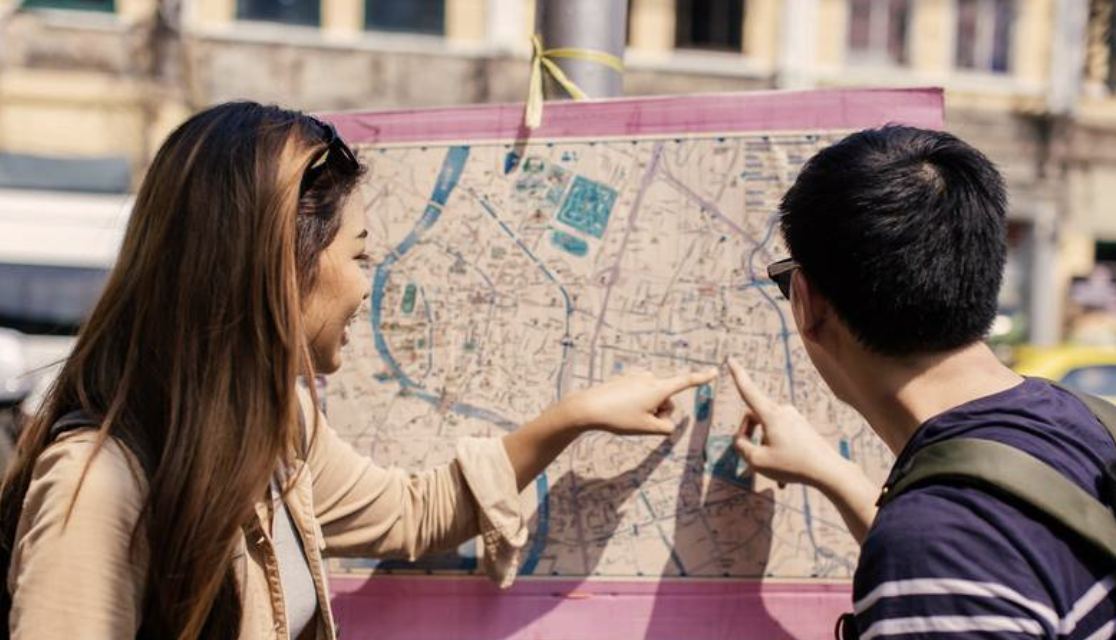
Bangkok may look overwhelming at first, but once you understand how the city moves, it becomes surprisingly easy to navigate. Skytrains glide above traffic, underground metros cut across districts and boats travel quietly along the canals or the river. Each mode of transport reveals a different rhythm of the city.
Some days, you will rely on the BTS to avoid rush hour. Other times, a motorbike taxi is the fastest solution for short distances. And sometimes the best way to explore is simply on foot through a neighborhood that was not designed for maps but for wandering.
Getting around Bangkok is less about perfection and more about flexibility. With a little planning and the right choices, you can save time, avoid stress and move through the city like a local.
Tips Overview
Contents
Bangkok Public Transport: BTS Skytrain, MRT, Boats and Buses Explained
BTS Skytrain Bangkok: The Fastest Way to Move Around the City

Fast, clean and perfect for avoiding traffic
The BTS Skytrain is often the fastest and most convenient way to move around central Bangkok. Running above the city’s traffic, it connects key areas such as Siam, Sukhumvit, Silom and Phrom Phong in a clean, air-conditioned and reliable system.
Two main lines intersect at Siam Station, making transfers simple and efficient. Trains run frequently throughout the day and signage is clear in English and Thai, which makes it easy even for first-time visitors.
You can buy single tickets at every station. At the counter, you can pay with your credit card, but at the vending machines, only cash. The stations are clearly marked in English, which makes it very visitor-friendly.
During rush hour, the BTS can be busy, but it is still significantly faster than sitting in traffic. If your destination is near a station, the Skytrain is almost always the smartest choice.
MRT Subway Bangkok: The Best Underground Transport Option

Clean, modern and great for longer distances
The MRT Subway runs underground and is one of the most efficient ways to cross the city without dealing with traffic. It connects key areas such as Chinatown, Chatuchak, Sukhumvit and the Krung Thep Aphiwat Central Terminal.
Compared to the BTS, the MRT often feels slightly less crowded and is especially useful for reaching Old Town and Hua Lamphong. Trains are clean, air-conditioned and clearly signposted in both Thai and English.
If your route does not align with the Skytrain, the MRT is usually the smarter alternative. Together, BTS and MRT form the backbone of Bangkok’s public transport system. Just tap your credit card when entering the station for an easy ride.
Chao Phraya River Boats and Ferries: Bangkok's Most Scenic Way to Travel

The most scenic way to explore
Moving along the Chao Phraya River is not only practical, it is one of the most beautiful ways to experience Bangkok. Public river boats connect major piers along the river, stopping near temples, markets and cultural landmarks.
The Chao Phraya Express Boat is affordable and efficient, especially during peak traffic hours. Local cross river ferries operate frequently and cost very little, making short crossings quick and easy.
Boats can feel busy during rush hour, but they often save time compared to road travel. If your destination is near the river, this is one of the most atmospheric and refreshing ways to get around the city.
Bangkok Public Buses: The Cheapest Transport Option — What to Know First
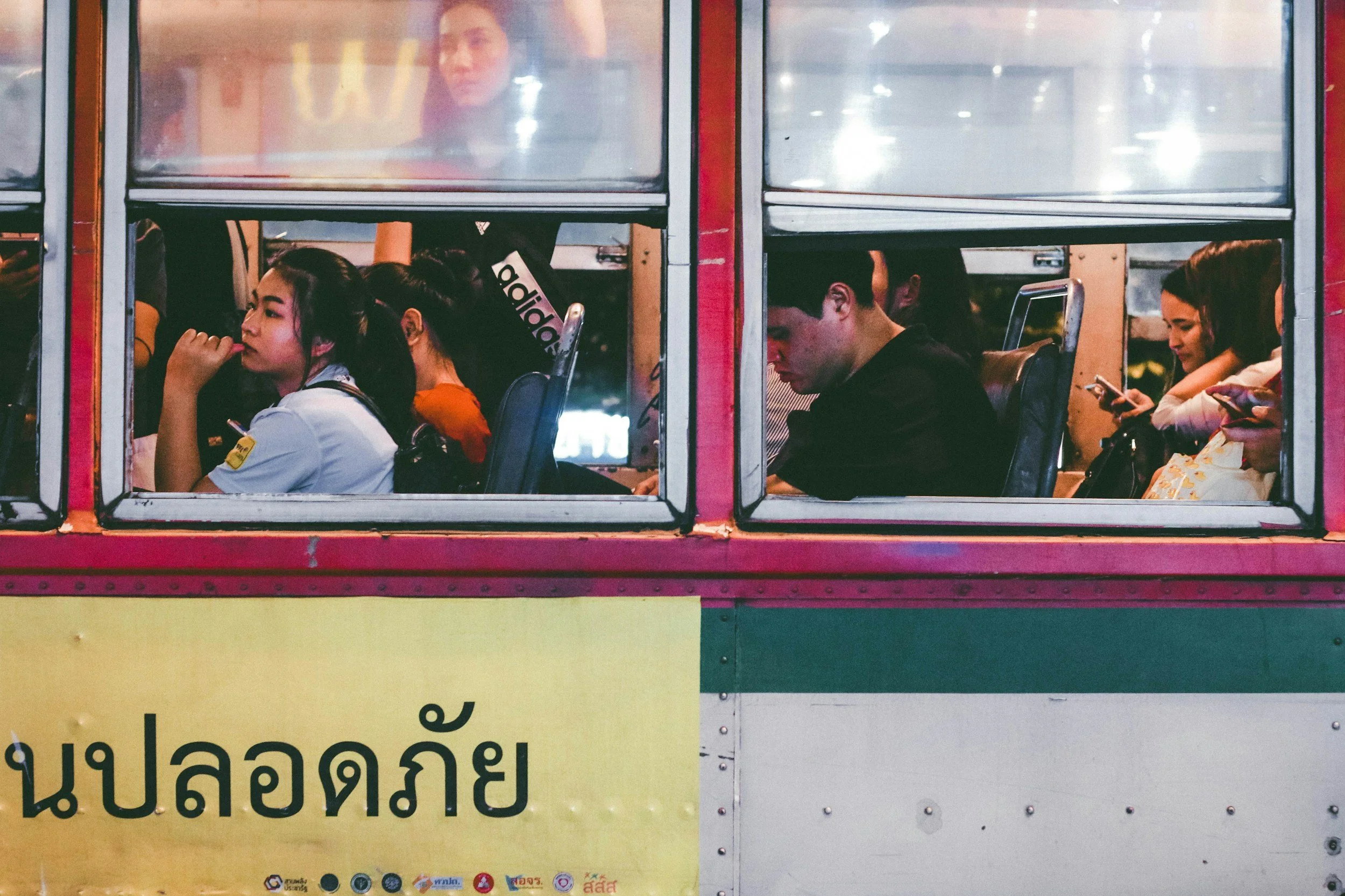
Cheap but challenging
Bangkok’s public buses cover almost every corner of the city and are the most affordable way to get around. Routes connect areas that BTS and MRT do not reach, making buses useful for local neighborhoods and outer districts.
However, they can be slower due to traffic and sometimes confusing for first time visitors. Routes are not always clearly displayed in English and stops are not always announced.
If you are comfortable using Google Maps and have some extra time, buses are a budget friendly option.
Taxis and Ride Apps in Bangkok: Grab, Bolt and When to Use Each
Taxis and ride apps are the most convenient way to travel door to door in Bangkok, especially when public transport does not reach your destination. They are affordable compared to many other major cities and widely available throughout the day.
Taxis in Bangkok: How to Get a Fair Ride Every Time
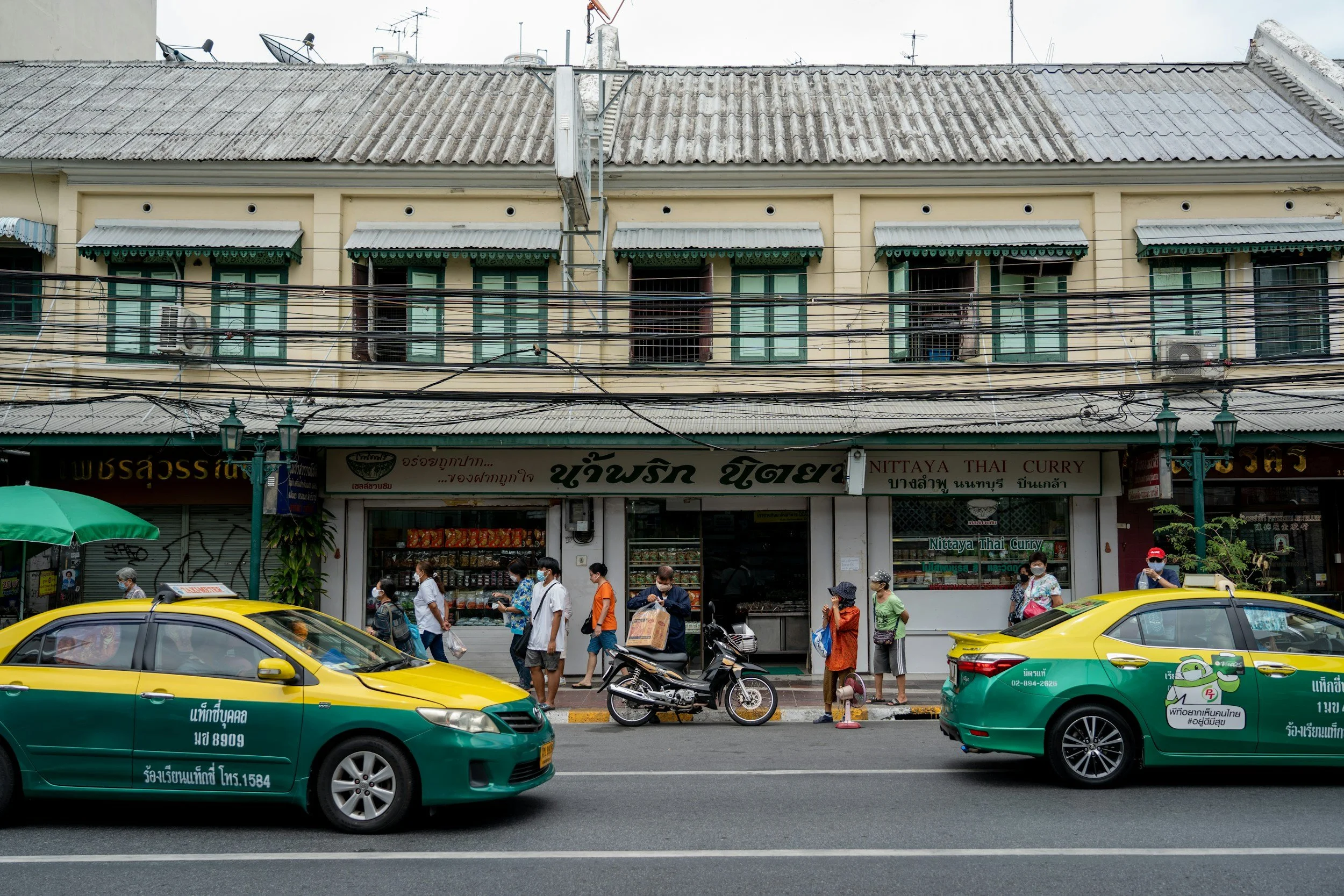
Comfortable but avoid rush hour
Taxis in Bangkok are affordable and widely available, making them a comfortable option for door to door travel. They are especially useful at night, during heavy rain or when your destination is not near a BTS or MRT station.
Always ask the driver to use the meter before the ride begins. Most drivers do, but confirming avoids misunderstandings. There is a small airport surcharge when departing from BKK or DMK, and toll fees apply if you take the highway.
During peak hours, taxis can be slow due to traffic. If your route follows a BTS or MRT line, public transport is often faster. For shorter distances in heavy congestion, locals sometimes switch to motorbike taxis instead.
Tuk Tuks in Bangkok: Fun Experience or Practical Transport?
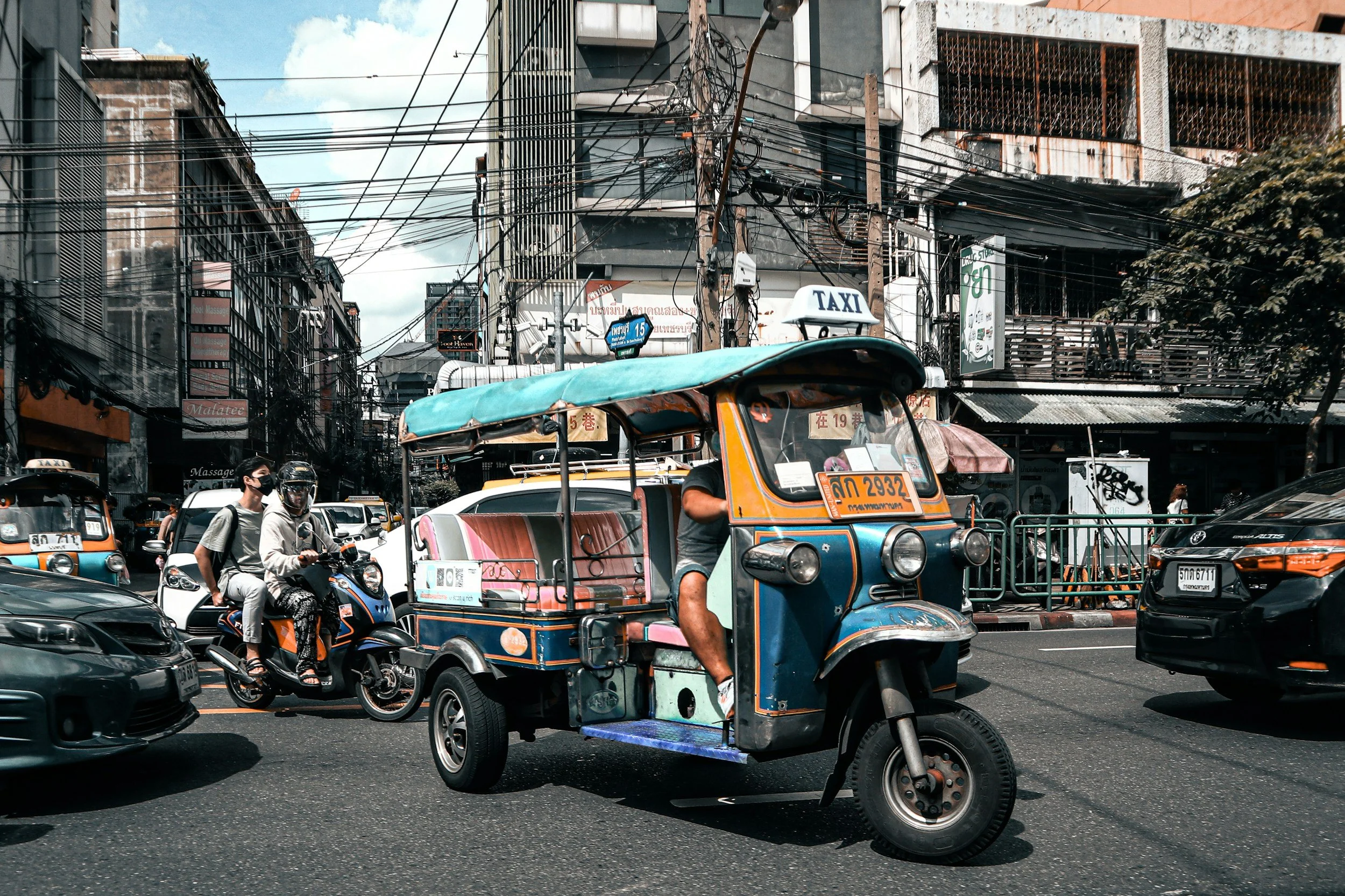
Fun, iconic and a little chaotic
Tuk Tuks are one of Bangkok’s most iconic ways to get around. Open air, colorful and loud, they are more about the experience than efficiency. A short ride through busy streets can feel like a small adventure.
Unlike taxis, tuk tuks do not use meters. Always agree on the price before getting in. For short distances in tourist areas, expect to pay more than a regular taxi. They are fun for a quick ride or late evening spin, but not the most practical option for long distances or heavy traffic.
Think of tuk tuks as part transport, part cultural moment. Try it once for the atmosphere, but rely on BTS, MRT or taxis for everyday movement.
Motorbike Taxis in Bangkok: The Fastest Way Through Heavy Traffic
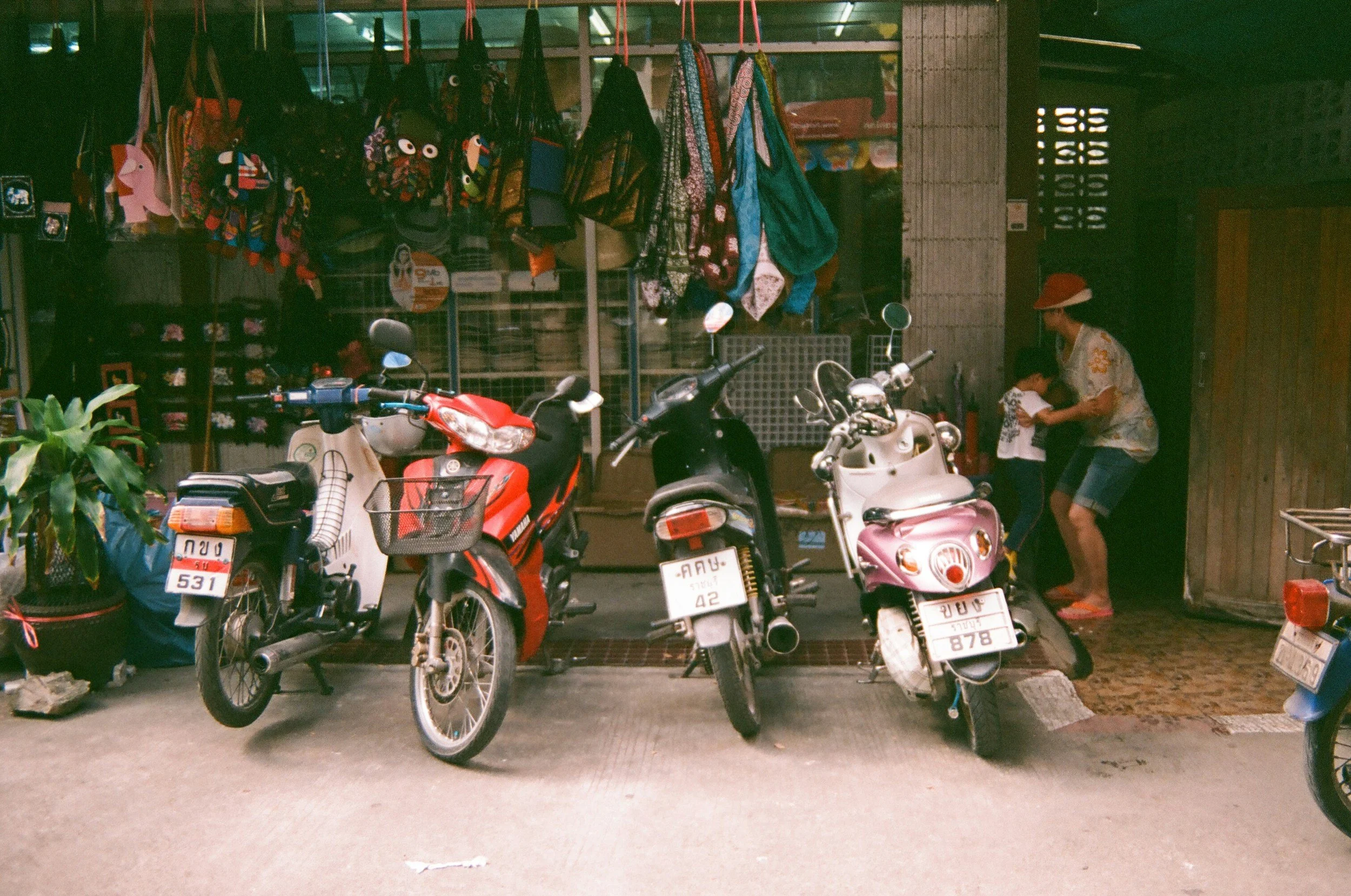
The fastest way through traffic
Motorbike taxis are one of the fastest ways to move through Bangkok’s traffic. You will recognize them by the drivers wearing bright orange vests, usually waiting near street corners, BTS stations and busy intersections.
They are ideal for short distances, especially when traffic is heavy or when your destination is deep inside a small soi that cars cannot easily access. Prices are usually agreed upon before the ride and are relatively affordable.
It can feel intense if you are not used to it, but for quick hops across busy areas, motorbike taxis are often the most time efficient option. If you try it, hold on tight and enjoy the ride.
Walking in Bangkok: Which Neighborhoods Are Worth Exploring on Foot
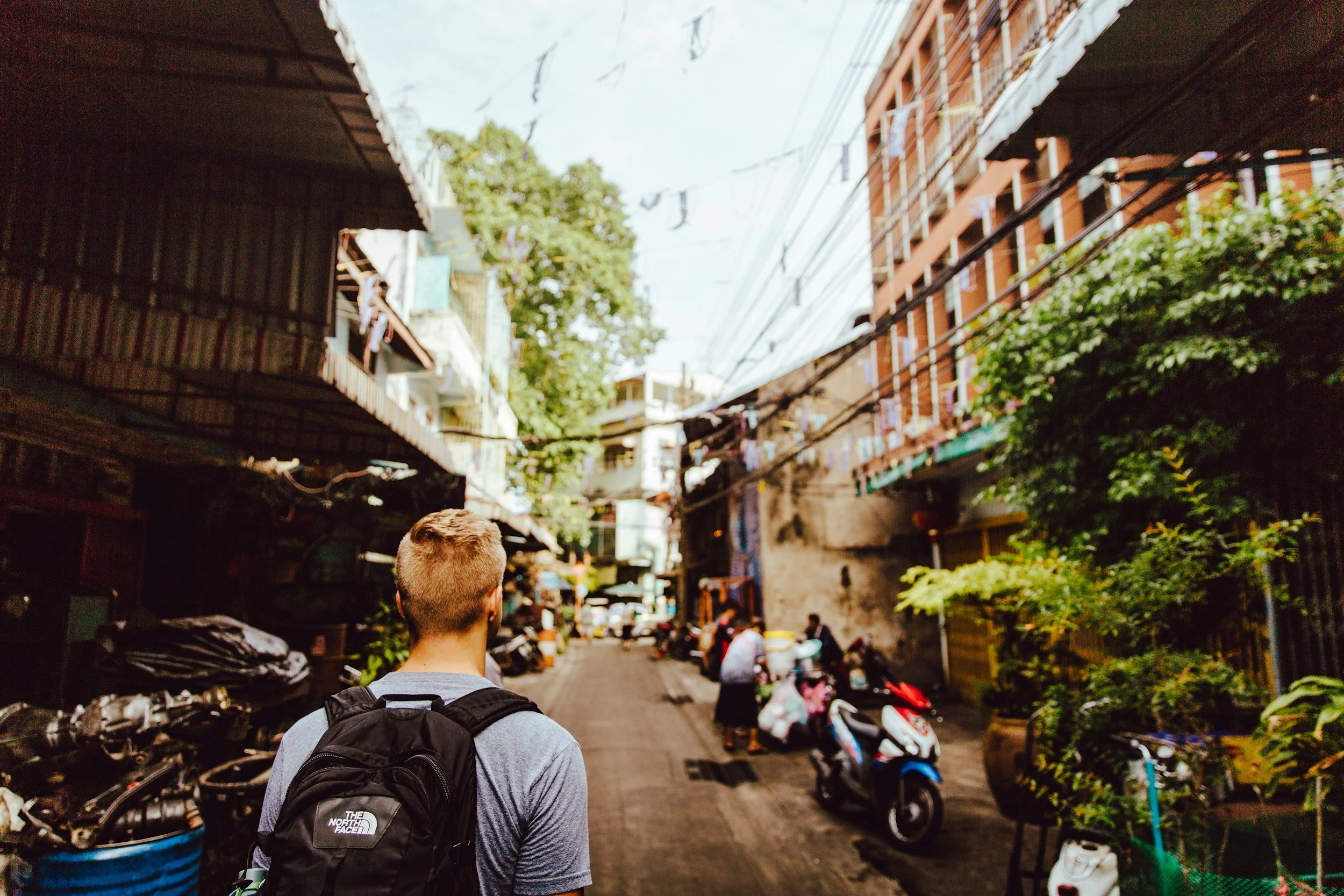
Great for some areas, but not all
Walking in Bangkok can be surprisingly rewarding, but it requires the right timing and area. Some neighborhoods like Talat Noi, Chinatown, Ari or parts of Sukhumvit are perfect for exploring on foot. You discover hidden cafés, small temples and local street life that you would completely miss in a car.
However, sidewalks can be uneven, narrow or suddenly disappear. Combined with heat and humidity, long walks during midday are rarely comfortable.
The best strategy is to combine walking with public transport. Use BTS or MRT to reach an area, then explore a few blocks slowly. Early morning and late afternoon are the most pleasant times to walk.
Veloura Tips
Plan Your Day by BTS or MRT Lines Before you leave your hotel, quickly check if your destinations sit on the same BTS or MRT line. If they do, your day will be smooth. If not, expect traffic or transfers. In Bangkok, good planning saves hours.
Avoid Rush Hour Traffic Rush hour in Bangkok is real. During peak traffic, the average speed on main roads can drop to less than 10 km per hour. A short ride can easily turn into a long and frustrating one. If possible, avoid long taxi rides during late afternoon and early evening. Use BTS or MRT during that window or plan to stay in one area until traffic eases.
Combine Transport Modes Like a Local Locals rarely use just one method. Take the BTS to the nearest station, then a short motorbike taxi into a small soi. Use a river boat to skip traffic, then walk the last few minutes. Bangkok works best when you mix transport strategically.
Always compare Bolt & Grab Price Check both Apps for the same route! Sometimes you have huge price differences! Also check "offers" in the App for better deals.
Frequently Asked Questions: Getting Around Bangkok
What is the best way to get around Bangkok?
For most visitors, combining the BTS Skytrain and MRT Subway covers the majority of central Bangkok quickly, cheaply, and without dealing with traffic. Both are air-conditioned, clearly signposted in English and Thai, and run frequently throughout the day. For areas not covered by rail, Grab or Bolt ride apps provide reliable door-to-door transport at fair prices — always check both apps for the same route as prices can differ significantly. For very short distances through busy streets or down narrow sois, motorbike taxis are the fastest option. Tuk tuks are fun for the experience but not practical for daily travel.
Is Bangkok easy to get around?
Yes — Bangkok is surprisingly easy to navigate once you understand the transport system. The BTS Skytrain and MRT cover most areas visitors want to reach and are very user-friendly even for first-time visitors, with clear English signage throughout. Grab works reliably as a backup for anything not covered by rail. The main challenges are Bangkok's serious rush hour traffic (late afternoon and early evening) and the distance between some neighborhoods. Planning your day by BTS or MRT line and grouping activities by area rather than crossing the city repeatedly makes everything significantly smoother.
How does the BTS Skytrain work in Bangkok?
The BTS Skytrain runs above the city on two main lines — Sukhumvit Line and Silom Line — which intersect at Siam Station. It covers key areas including Siam, Sukhumvit, Phrom Phong, Ekkamai, Thonglor, and Silom. You can buy single journey tickets at vending machines (cash only) or at the counter (card accepted). Trains run frequently from early morning until midnight. Simply enter through the turnstile, board the correct direction, and exit at your stop. Signage is clear in English throughout. During rush hour the BTS is busy but still significantly faster than road transport.
Should I use Grab or regular taxis in Bangkok?
Both work well, but Grab and Bolt have clear advantages. The fare is calculated upfront before you confirm the ride, which eliminates meter confusion and negotiation. You also see the driver's details, rating, and estimated arrival time in the app. Regular taxis are slightly cheaper if traffic is light and the meter runs normally — always confirm the driver will use the meter before getting in. For airport trips, taxis from the designated taxi queue at the airport are reliable. The most practical tip: check both Grab and Bolt for the same journey as prices can vary significantly, and both apps sometimes offer promotional discounts.
What are motorbike taxis in Bangkok and how do I use them?
Motorbike taxis are drivers in bright orange numbered vests who wait near street corners, BTS station exits, and busy intersections throughout Bangkok. They are the fastest option for short distances, particularly during heavy traffic or when your destination is down a narrow soi that cars cannot easily access. Agree on the price before getting on — a short hop of 5–10 minutes typically costs 20–50 THB. Hold on firmly, keep your feet away from the wheels, and enjoy the speed. If you are not comfortable with the ride, simply take a Grab instead. Motorbike taxis are part of how Bangkok locals move efficiently through the city every day.
How do I avoid Bangkok traffic?
The most reliable strategy is to use the BTS Skytrain or MRT whenever your destination is near a station — both run above and below the traffic and are unaffected by road congestion. Plan the most traffic-dependent parts of your day outside rush hour, which runs roughly from 7:30–9:30am and 4:30–8:00pm on weekdays. During those windows, even a short taxi or Grab ride can take far longer than expected. If you need to be somewhere specific at peak time, leave significantly earlier than you think necessary or use rail transport. Grouping activities within one neighborhood or along a single BTS/MRT line avoids unnecessary crossings that can eat hours.
Is Bangkok walkable?
Bangkok is walkable in specific neighborhoods rather than across the city. Areas like Talat Noi, Chinatown, Ari, parts of Sukhumvit, and along the Chao Phraya riverside offer genuinely rewarding walks with street life, hidden cafés, temples, and local details you would miss from a car. However, sidewalks in many areas are uneven, narrow, or nonexistent, and the combination of heat and humidity makes midday walking uncomfortable. The most practical approach is to use BTS or MRT to reach a neighborhood, then explore on foot within a few blocks. Early morning and late afternoon are by far the most pleasant times to walk in Bangkok.
For more local guides to Bangkok and Thailand, visit veloura-gems.com.
Veloura App
There is more to explore.
Bangkok, Koh Phangan and Northern Thailand, beyond the obvious.
