
Best Ways to Get Cash in Thailand
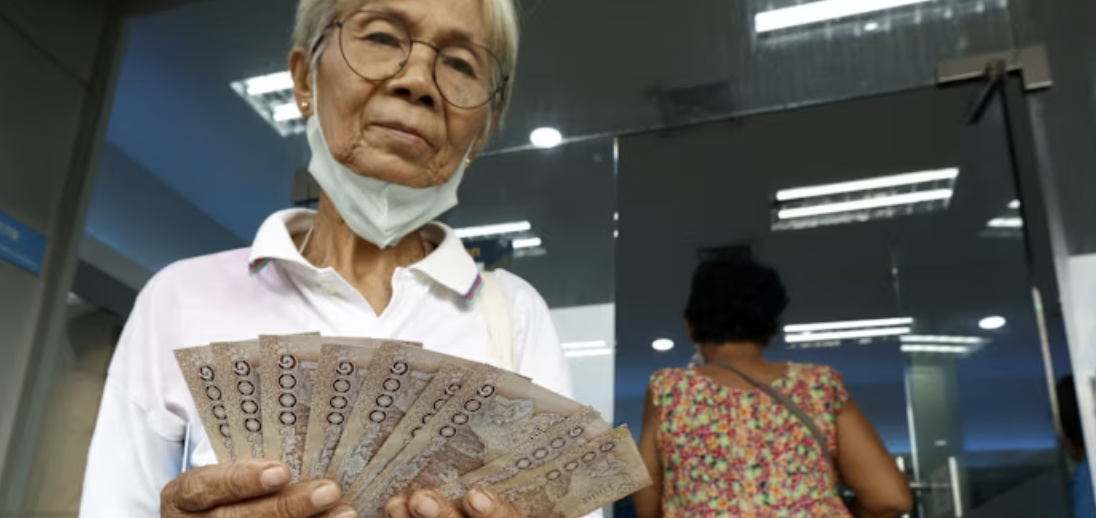
Thailand is still a cash friendly country. Even in Bangkok, many street food vendors, local cafés and smaller shops prefer cash over cards. Having the right strategy makes your trip smoother from day one.
ATMs are widely available and usually the easiest option. They are reliable, accessible and found in airports, malls and convenience stores. Currency exchange counters can offer better rates in some areas, especially in the city, but require a bit more planning.
Credit cards are accepted in hotels, larger restaurants and shopping centers, yet cash remains essential for taxis, markets and local experiences. Knowing when to use which method saves time and unnecessary fees.
A little preparation avoids stress and hidden charges.
Tips Overview
Contents
ATMs in Thailand: How They Work and Where to Find Them

ATMs Are Everywhere in Thailand: What Foreign Visitors Need to Know
ATMs are one of the most convenient ways to get money in Thailand. You will find them literally everywhere: at the airport the moment you walk out, in shopping malls, at BTS and MRT stations, inside supermarkets, in front of 7 Eleven and FamilyMart stores and even on small side streets. Thailand is one of the most ATM dense countries in Asia, so you will never need to walk far to find one.
Almost all ATMs accept international cards. Visa, Mastercard, Maestro and Cirrus usually work without issues. The machine gives you instructions in English and the process takes less than a minute. You can choose to take your receipt or skip it and you can select your preferred language before entering your PIN.
The Thai ATM Fee Every Traveler Should Know — and How to Minimize It
There is one important detail most visitors discover too late. Thai banks charge a fixed withdrawal fee of around 220 THB per transaction when you use a foreign card. This fee is charged by the Thai bank, not your home bank, so you cannot avoid it completely.
To save money, withdraw larger amounts less frequently. Taking out 10,000 THB once is cheaper than withdrawing 2,000 THB five times. Some people withdraw the maximum allowed amount to reduce the number of transactions during their trip.
Also check if your home bank charges additional foreign withdrawal fees as they can add up quickly. Do not accept the exchange rate the ATM shows you.
Which Thai Bank ATMs Are Best for Foreign Cards
Most travellers prefer ATMs from:
Bangkok Bank
Kasikorn Bank (KBank)
Siam Commercial Bank (SCB)
Krungsri (Bank of Ayudhya)
These are the major Thai banks with the most machines in the country. Their ATMs are usually reliable, well maintained and located in safe areas.
If one ATM does not accept your card, do not panic. Try another machine nearby. It is very common for one machine to fail while the next one works perfectly.
Currency Exchange in Thailand: When It Beats an ATM Withdrawal
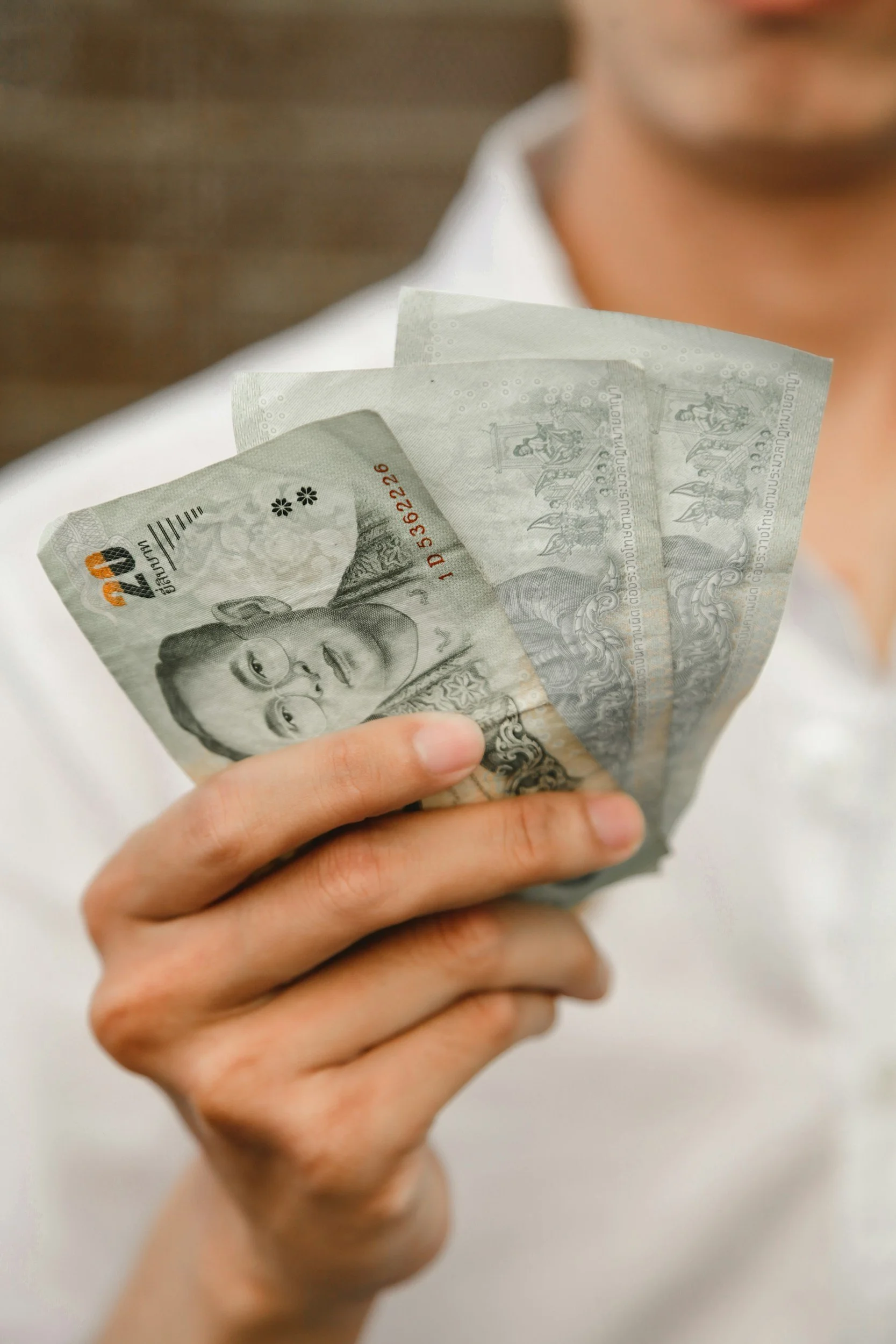
If you are carrying cash in EUR, USD or other major currencies you might get a better rate by exchanging money at licensed money changers instead of withdrawing from an ATM.
Some of the best exchange places are located in malls or busy areas. Superrich (green or orange) is famously good and offers excellent rates. Exchange booths in airports often give lower rates, so if possible wait until you are in the city.
Always check the displayed rate before exchanging and use only official exchange shops.
Thai Bank Branches: Opening Hours and Where to Find English-Speaking Help
The major Thai banks have branches across the entire country. In Bangkok, you will find branches in almost every neighbourhood. Typical opening hours are Monday to Friday from 8:30 to 15:30. However, branches inside malls often stay open longer and many also open on weekends.
Staff at mall branches usually speak basic English which makes communication easy if you need help with larger withdrawals, credit card issues or currency exchanges.
Do You Still Need Cash in Thailand? What Requires Baht in 2025
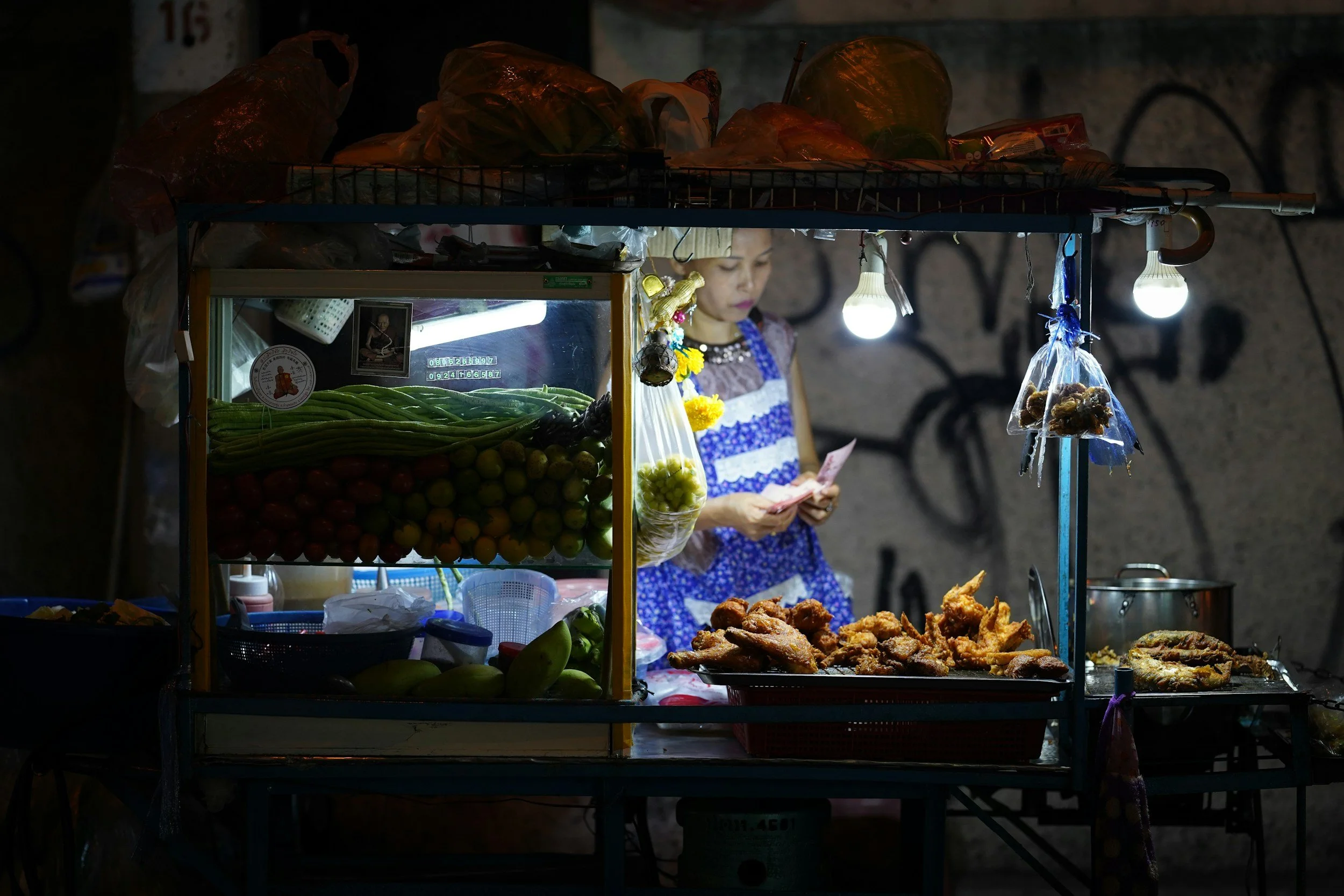
Yes. While Thailand is modern and many stores accept cards and QR payments, cash is still essential for:
• street food
• small markets
• taxis
• motorbike taxis
• local ferries
• small restaurants
• temple donations
Most travelers use a mix of cash for small daily expenses and cards or QR payments for larger purchases.
ATM and Cash Safety Tips in Thailand
Thailand is generally safe, but always follow good habits:
• Use ATMs in well-lit places
• Shield your PIN
• Avoid ATMs that look damaged
• Keep some money in separate pockets
• Do not exchange cash at unofficial spots
It is always better to use ATMs attached to bank branches or inside malls than random machines on empty streets at night. Always check the notes - the 100 THB bill looks similar to the 1,000 THB bill.
Veloura Tips
Always Choose “Without Conversion” at the ATM When the ATM asks if you want to accept its exchange rate, always decline and continue without conversion. This allows your home bank to apply its rate, which is usually better. Many travelers lose more money on bad exchange rates than on the 220 THB withdrawal fee.
Carry Small Notes from Day One Break a 1,000 THB note as soon as possible. Street vendors, taxis and small cafés often struggle with large bills early in the day. Having 20, 50 and 100 THB notes makes daily life smoother and avoids awkward moments.
Thailand Is Quietly Becoming a QR Economy While cash is still important, Thailand runs heavily on QR payments through PromptPay. Locals scan to pay almost everywhere, from cafés to market stalls. Many small businesses even prefer QR over cards. As a visitor, you usually cannot use Thai QR unless you have a local bank account. But knowing this explains why some places say “no card” yet look fully digital.
Frequently Asked Questions: Cash and Money in Thailand
How much is the ATM fee in Thailand for foreign cards?
Thai banks charge a fixed fee of approximately 220 THB per transaction when you use a foreign debit or credit card at a Thai ATM. This fee is charged by the Thai bank regardless of which machine you use — it cannot be avoided entirely. The practical way to reduce the impact is to withdraw larger amounts less frequently. Withdrawing 10,000 THB once costs 220 THB in fees. Withdrawing 2,000 THB five times costs 1,100 THB in fees for the same amount. Also check whether your home bank charges additional international withdrawal fees on top of this. Some banks and travel-focused cards (like Wise or Revolut) reimburse ATM fees or charge lower international rates.
Which ATM should I use in Thailand as a tourist?
The most reliable ATMs for foreign cards in Thailand belong to Bangkok Bank, Kasikorn Bank (KBank), Siam Commercial Bank (SCB), and Krungsri (Bank of Ayudhya). These are the four major Thai banks with the most machines across the country — in airports, malls, BTS stations, 7-Eleven stores, and most residential neighborhoods. Their machines are well-maintained and located in safe, well-lit areas. If one machine declines your card, try another nearby — it is very common for one machine to fail while the next one works perfectly with the same card.
Where is the best place to exchange money in Thailand?
For the best exchange rates in Bangkok, Superrich is the most consistently recommended option — it has two separate companies (orange and green logos) and both typically offer excellent rates for major currencies including EUR, USD, GBP, and others. Superrich branches can be found in central Bangkok, near the Siam BTS area, and in some shopping malls. Currency exchange counters at airports give significantly worse rates and should be avoided if possible — wait until you reach the city. Always check the displayed rate before exchanging and use only official licensed exchange shops, never street-level or unofficial changers.
Should I use an ATM or exchange currency in Thailand?
It depends on what currency you are carrying and where you are. If you have EUR or USD cash, exchanging at a reputable money changer like Superrich in Bangkok will often give you a better effective rate than an ATM withdrawal, particularly when you factor in the 220 THB ATM fee. If you do not have cash to exchange, ATMs are the most convenient option and the rates are generally fair as long as you decline the ATM's own conversion offer and let your home bank apply the rate instead. For most travelers, a combination of both works well — exchange some cash for a good rate in the city and use ATMs for additional funds on islands or in smaller towns.
Do I still need cash in Thailand?
Yes — cash remains essential for everyday life in Thailand despite the country's increasing digital payment adoption. You will need Thai baht for street food, local markets, motorbike taxis, smaller cafés, local ferries, temple donations, and many smaller restaurants outside tourist areas. Credit cards are accepted in hotels, larger restaurants, department stores, and shopping malls. Thailand also runs heavily on QR code payments through PromptPay, which most visitors cannot access without a local bank account. The most practical approach is to carry cash for daily small expenses and use cards for larger purchases where they are accepted.
What is the best tip for using ATMs in Thailand?
The single most important tip: when the ATM asks whether you want to accept its exchange rate or continue without conversion, always choose "without conversion" or "decline." The rate the ATM offers (called Dynamic Currency Conversion) is significantly worse than what your home bank will apply. Declining means your home bank handles the conversion at a much better rate. This one decision consistently saves more money than the 220 THB ATM fee itself. Additionally, always shield your PIN and use ATMs inside bank branches, malls, or 7-Eleven stores rather than standalone machines in less visible locations.
Can I use a credit card in Thailand?
Yes — credit cards are accepted at hotels, larger restaurants, department stores, shopping malls, and most tourist-facing businesses. Visa and Mastercard are the most widely accepted. American Express has more limited acceptance. However, many local experiences require cash: street food stalls, night markets, motorbike taxis, local ferries, temple entry, and smaller neighborhood restaurants are almost always cash only. Having Thai baht available at all times — even when you primarily use a card — avoids the frustration of being unable to pay at the most interesting and authentic places.
For more practical travel guides to Thailand, visit veloura-gems.com.
Veloura App
There is more to explore.
Bangkok, Koh Phangan and Northern Thailand, beyond the obvious.
