A Full-day Guide to Bangkok Old Town
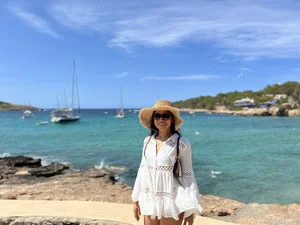
By Pariyakorn L. - Veloura Local Ambassador, Bangkok-born, four years living and studying in Old Town
Part of Veloura's authentic Bangkok neighborhood guides — veloura-gems.com
Most visitors spend a few hours in Bangkok Old Town and leave feeling like they've ticked a box. Grand Palace, Wat Pho, done. They've seen the landmarks — but not the neighborhood.
This is a full-day guide to Rattanakosin written by someone who spent four years here as a student at Thammasat University. Not a highlights tour. The way a local actually moves through this part of the city — from the flower market before sunrise to riverside dinner as Wat Arun lights up across the water.

Your Local Ambassador
Pariyakorn L.
Born and raised in Bangkok, Pariyakorn blends deep local knowledge with an active and adventurous spirit. She loves showing expat friends around and curating refined weekend escapes that balance cultural depth, local flavors, and upscale choices. With international friends visiting regularly, Pari is the person to reach out to when you want to experience Thailand.
I spent four years of my university life here at Thammasat University's international campus, right in the middle of Old Town. This is exactly how I take my friends and family from abroad to discover the historical and local layers of Bangkok in one full day.
Guide Summary
Walking tour through historical quarters with cultural learning and local immersion.
First-time visitors and those curious about local life, culture, and Bangkok’s historical roots.
Full-day experience (8–10 hours)
฿฿ Minimum ฿2,000 per person (including tickets)
- Witness the early-morning buzz at Pak Klong Talat Flower Market.
- Visit the iconic landmarks before the peak heat of the day.
- Lunch like a local at our favorite noodle spot or students' favorite spots
- Escape the afternoon heat, engaging in the theme of “Decoding Thainess.”
- Catch the last light at Wat Arun, then cross the river for a delicious Thai dinner on a terrace.
Pak Klong Talat Flower Market: Bangkok's Best Hidden Start to the Day
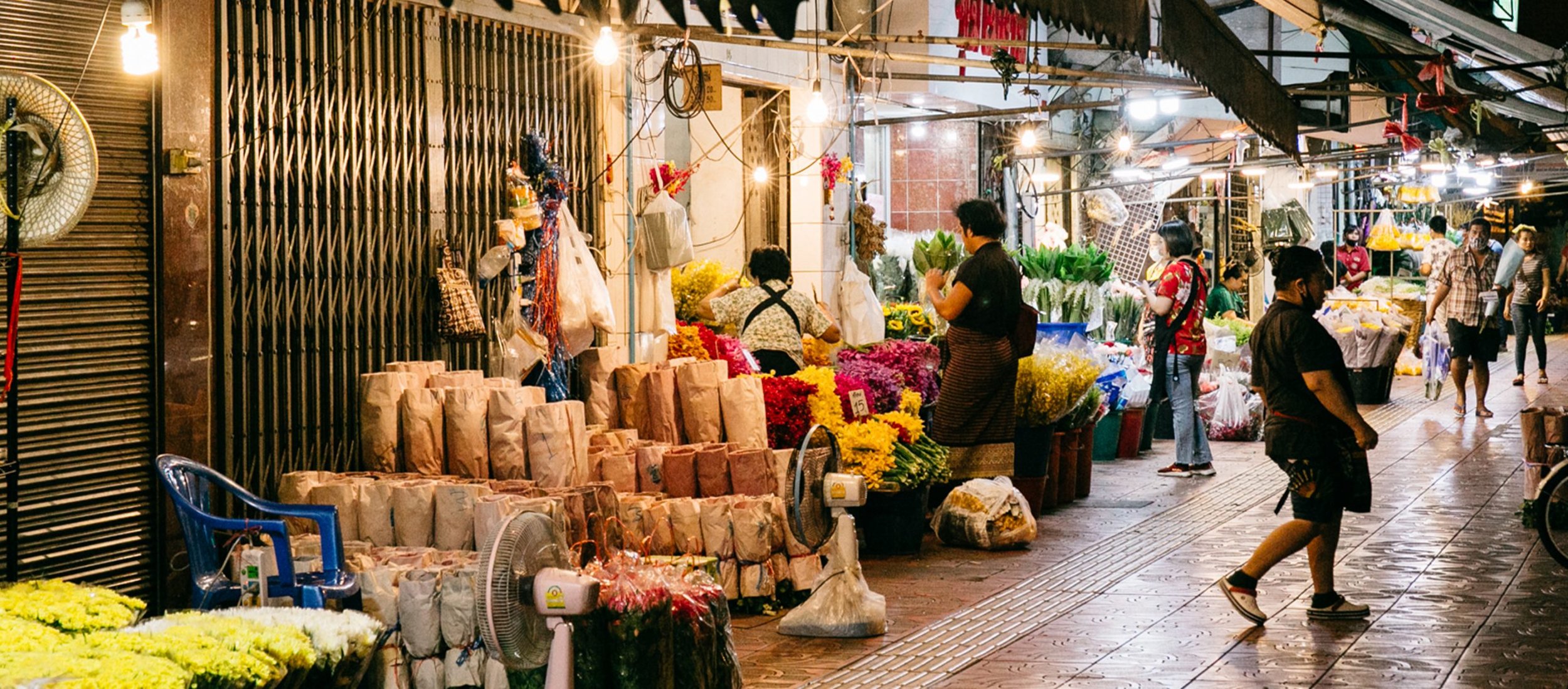
This image is from A Day Magazine
Pak Klong Talat (Flower Market) — one of Bangkok’s most vibrant markets filled with blossoms, buckets of orchids, and floral life before the sun fully rises.
If you are an early bird, begin your day before sunrise at Pak Klong Talat, Bangkok’s largest flower market. The market has existed in various forms since the late 18th century and became a hub for flower trading in the 20th century. It supplies temples, ceremonies, hotels, and households across the city.
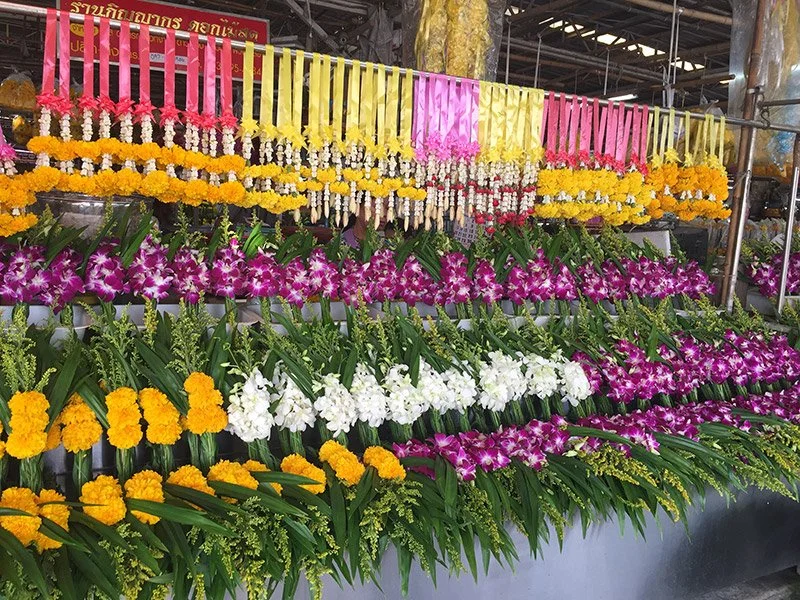
You will see vendors offering bunches of flowers as well as hanging long garlands. The marigold, lotus, and orchids are not decorative pieces; they are commonly offered in Buddhist merit-making.
Local Tips
- Wear close-toed shoes as the ground can be wet and dirty.
- Watch how vendors carefully thread jasmine buds into garlands by hand.
- Notice the shift in scent from fresh roses to incense drifting from nearby shrines.
- Observe temple workers arriving at dawn to purchase flowers for morning offerings.
- Stop at Farm to Table, Organic Café afterward for a coffee or light breakfast — a calm contrast to the bustling market before starting your day.
08:30 — Grand Palace & Wat Phra Kaew: What to Know Before You Go
Arrive early: the heat climbs fast after 10 a.m. The Grand Palace and the Temple of the Emerald Buddha (Wat Phra Kaew) are Bangkok‘s most revered landmarks.
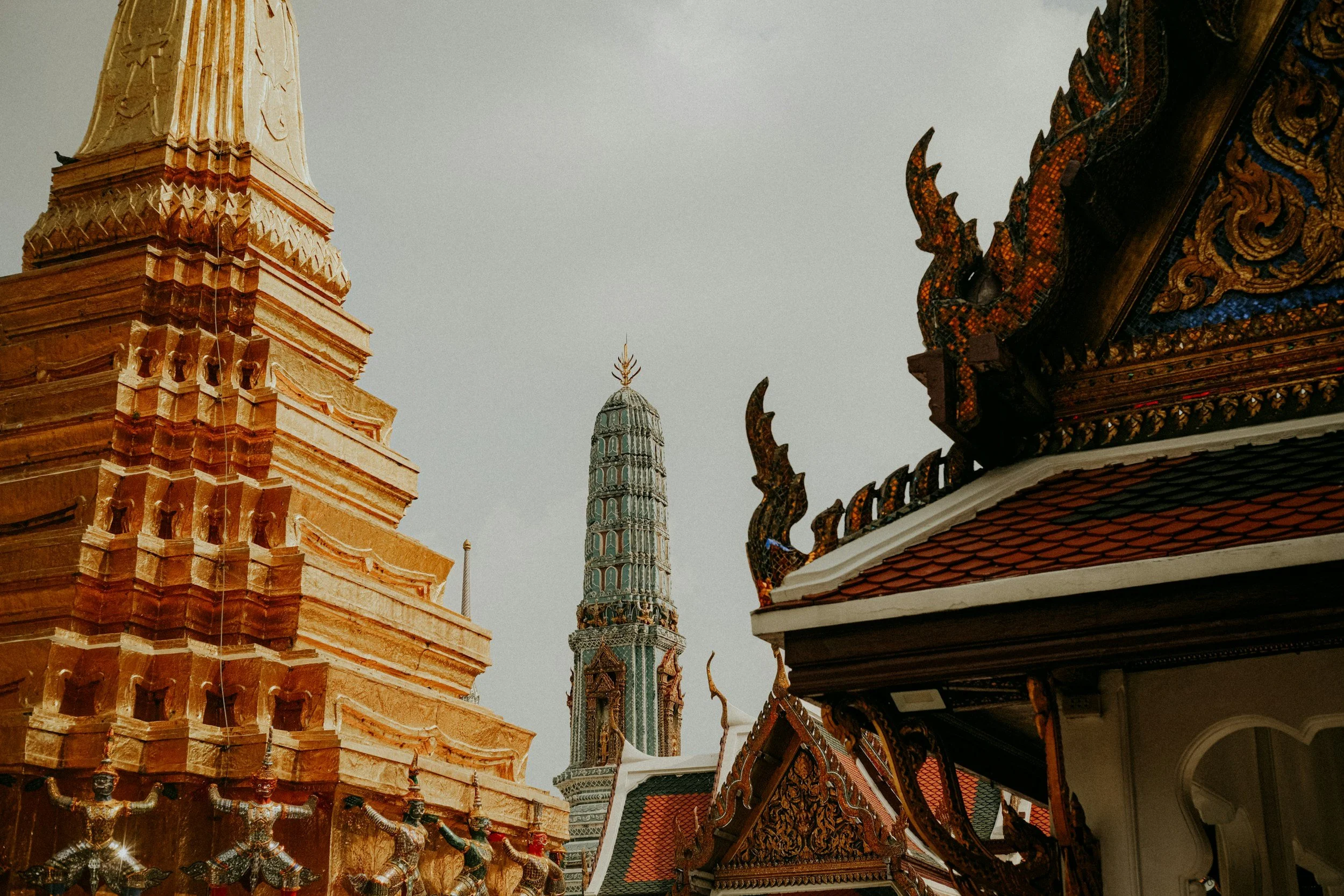
The Grand Palace complex was constructed in 1782 and served as the royal residence for generations of Thai kings. While the monarchy no longer resides here, it remains the ceremonial heart of the nation.
Within the complex is Wat Phra Kaew, the Temple of the Emerald Buddha. The Emerald Buddha is carved from a single piece of jade and is considered the most sacred Buddhist image in Thailand. Only the King changes its seasonal robes three times per year.
If you love fabric lore, design, and Thai fashion history, visit Queen Sirikit Museum of Textiles. It’s located within the Grand Palace complex and is included in your ticket. This museum highlights Thai silk heritage and the global influence of Queen Sirikit. In the mid-20th century, the Queen promoted Thai silk internationally, supporting rural weaving communities and bringing Thai textiles onto the global fashion stage.
Local Tips
- Wear clothes that cover your shoulders and knees. Use a scarf and bring your hat!
- Spot the mural paintings along the gallery walls that depict the Ramakien (the Thai version of the Ramayana).
- The golden stupas and layered temple rooftops.
- Guardian statues and mythical creatures such as yaksha (locally called “yak”), often identified by their two fangs.
- You are walking inside Rattanakosin Island, once fortified by canals and marking the official beginning of modern Bangkok.
10:30 — Wat Pho: The Reclining Buddha & the Birthplace of Thai Massage
Just a short walk away is Wat Pho — home to the massive Reclining Buddha.
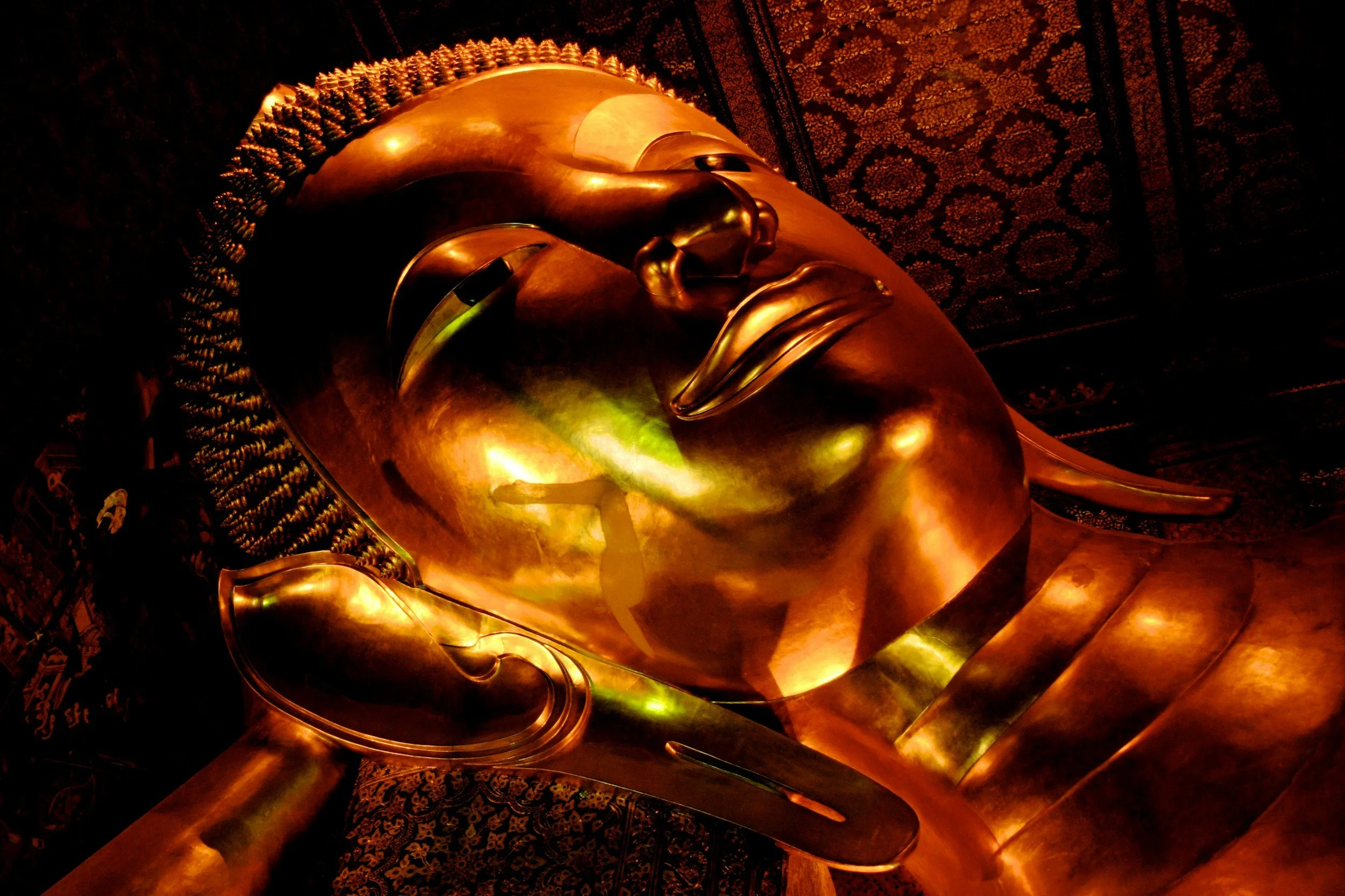
Wat Pho is one of Bangkok’s oldest temples and predates the founding of the capital. It is famous for the 46-meter-long Reclining Buddha covered in gold leaf.
Local Tips
- The full official name of Wat Pho is “Wat Phra Chetuphon Wimon Mangkhalaram Rajwaramahawihan”.
- The intricate mother-of-pearl inlay on the Buddha’s feet.
- The 108 bronze bowls along the wall — you can drop coins for merit.
- The large collection of stone inscriptions recognized by UNESCO.
Wat Pho is also considered the birthplace of traditional Thai massage. The temple houses Thailand’s leading massage school, and visitors can take 150-hour massage courses or enjoy a massage on-site.
11:00 — Tha Maharaj & Thammasat University: Bangkok's Best Riverside Break
Take a breather along the river:
Coffee, snack, or fresh drink at Tha Maharaj
Leisurely stroll through Thammasat University grounds
Watch local students grabbing lunch or relaxing between classes
Tha Maharaj is a small riverside community mall with cafés and river views. It sits between the Grand Palace and Thammasat University. You can find restaurants, cozy cafes, as well as small pop-up stores for crafts and gifts.
Thammasat University was founded in 1934 and played a significant role in Thailand’s political and democratic history. Walking through campus gives you a glimpse of student life in a historic setting. Enjoy the contrast: academic life meets riverside serenity.
12:00 — Where Locals Eat in Bangkok Old Town
Option 1 — Khun Daeng's Vietnamese Noodle
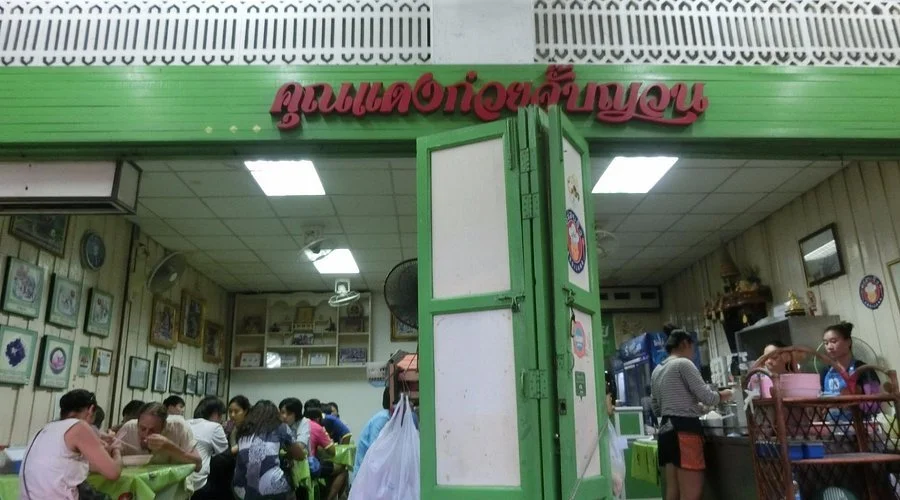
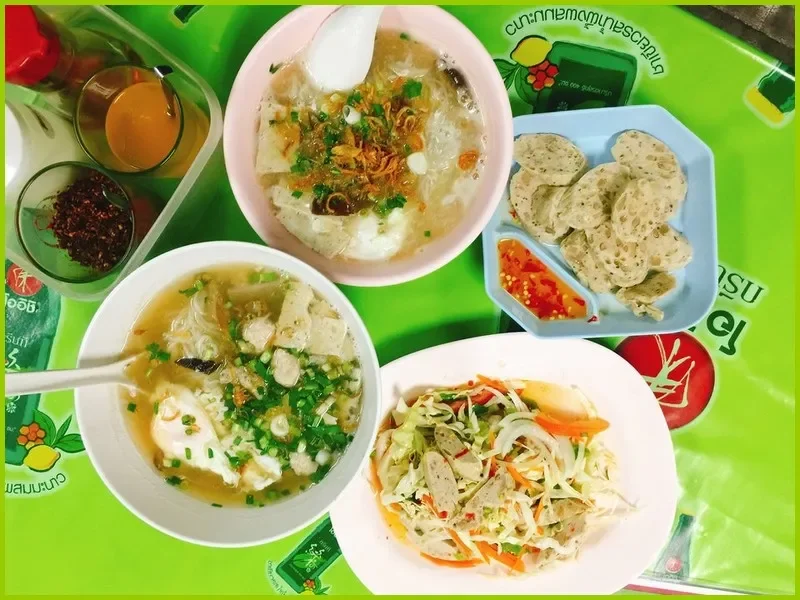
Khun Daeng’s Vietnamese Noodles is one of my most favourite choices for a local meal. If you were my friend visiting me, I would definitely bring you here if we’re in this area.
A humble but iconic noodle shop serving Vietnamese-influenced noodle soup. The dish was introduced to Thailand by Vietnamese immigrants, particularly in provinces like Ubon Ratchathani (Northeast Thailand), and it’s not Vietnamese Pho; it’s adapted from Bánh canh. It features thick, chewy noodles made from rice flour or tapioca starch, served in a rich pork-based broth.
The setting is simple with colorful plastic chairs and a lively atmosphere. If the ground floor is full, head upstairs. I would suggest you share the fried spring rolls and spicy sausage salad (be careful, it’s spicy!). Definitely, get the signature noodle bowl for yourself as a main dish.
Option 2 — Explore Thaphrachan Alley Eats (students and local style)
This maze of local stalls and mini-cafés next to the river is a student and local favorite. Students’ choices go for ELLE ThaPhra Chan Restaurant or Lung Louise. Quick bites, cheap eats, local flavours.
After the meal, you can walk through small alleys to experience real local street vendors and spot some small Buddha statues and amulets for sale. Along the main road, you will find shops selling Thai Yadom (inhaler) as well as yellow oil (for massage and bug-bite treatment) which makes perfect souvenirs for your friends and family.
13:00 — Museum Siam: Bangkok's Most Interactive Hidden Gem
Mission: Learn Thai identity in the most interactive museum in the country.
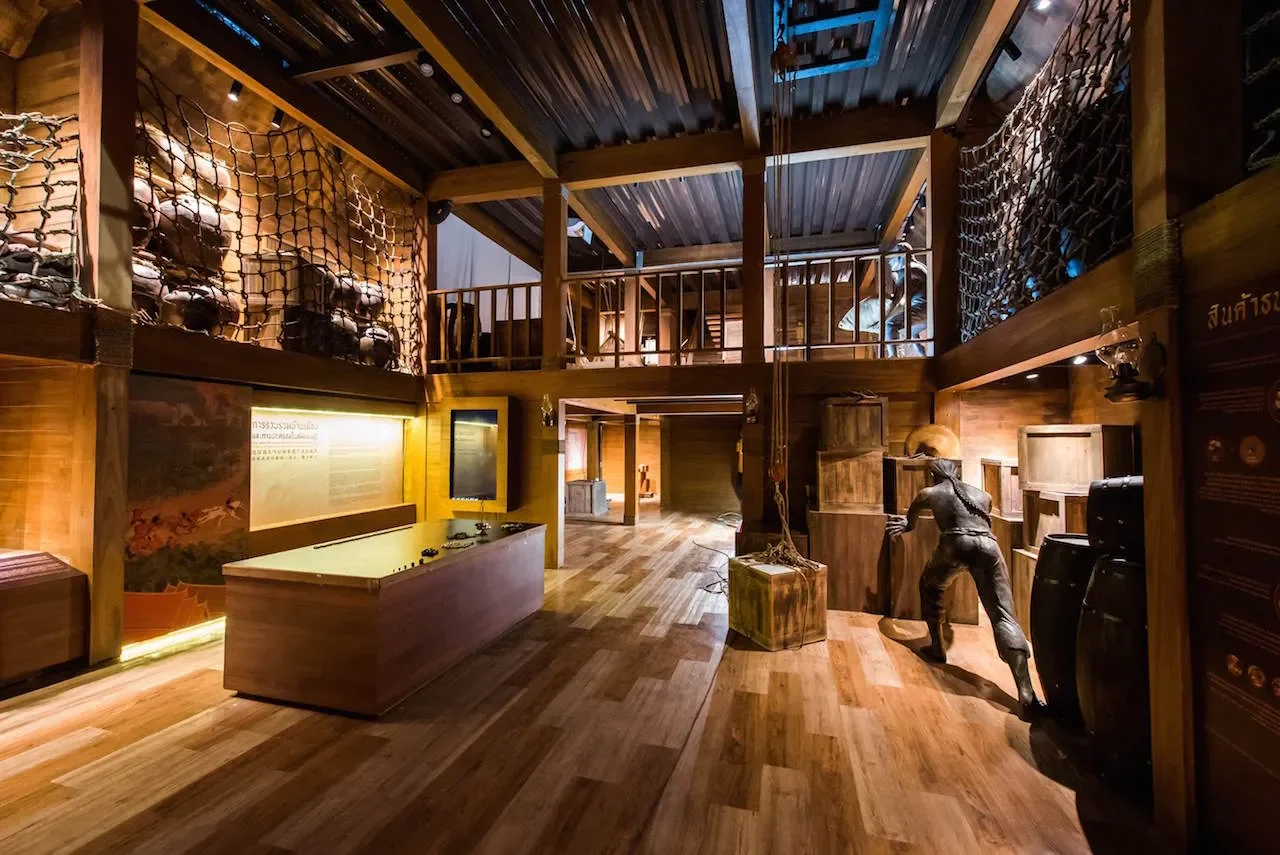
This image is from tngholidays.
Museum Siam is one of Thailand’s most interactive museums. The museum building itself was once the Ministry of Commerce and reflects European-influenced architecture from the early 20th century.
Its permanent exhibition, “Decode Thailand,” explores what it means to be Thai through history, identity, language, food, and pop culture. As a local, I’ve been there several times with friends and family, and I still enjoy going there once in a while. You can easily spend about 1.5 - 2 hours here.
Best Cafés in Bangkok Old Town: Where to Stop and Recharge
After a long learning session in the Bangkok heat, this is the perfect moment to slow down, grab an iced coffee, and enjoy the breeze by the river. Old Town has some beautiful hidden corners where you can sit, recharge, and reflect on the history you’ve just walked through.
ViVi The Coffee Place is a relaxed riverside café that has become a favorite stop for visitors exploring this area. It offers good coffee, simple desserts, and a laid-back atmosphere. The location is convenient if you are walking between Museum Siam and the river pier, and it is a comfortable place to cool down before continuing your afternoon.
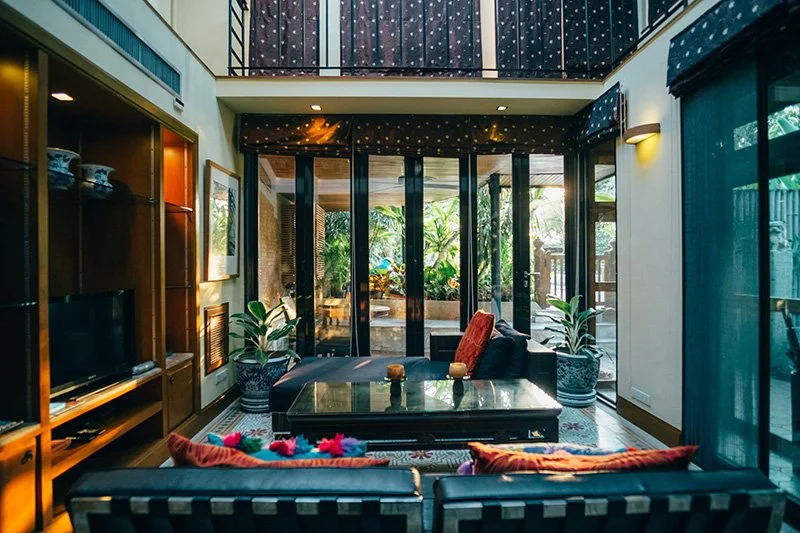
Image is from Jetsettimes
For something more elegant and atmospheric, head to Chakrabongse Villas. Originally built in the early 20th century as a royal residence, this riverside property is now a boutique hotel combining colonial architecture with traditional Thai design. The gardens are peaceful, the river views are beautiful, and it feels like stepping into another era of Bangkok. It is a lovely place to sit quietly with a drink and take in the surroundings.
Just across the street, you’ll also find a small and charming bookshop that is worth a quick browse.
16:00 — Sunset at Wat Arun: The Best Time to See Bangkok's Most Iconic Temple
This riverside temple is one of Bangkok’s most iconic landmarks.
Take a short ferry ride across the river from Tha Tien Pier. Wat Arun is one of Bangkok’s most recognizable temples. Its central prang (tower) is decorated with porcelain fragments and seashells, reflecting the trading history of the area.
Wat Arun is called the "Temple of Dawn". It’s situated on the Chao Phraya River, and it represents the morning sun, symbolizing a fresh start and light overcoming darkness, specifically after King Taksin reached the temple at sunrise.
Originally dating back to the Ayutthaya period, the temple was expanded during the early Rattanakosin era. It is particularly beautiful in late afternoon light.
Many visitors rent traditional Thai outfits for photos. There are plenty of salons and shops offering Thai traditional costumes right behind the temple
Local Tips
- Take the ferry. A short ride from Tha Tien Pier.
- Spot the porcelain details embedded in the prang (towel) and look closely at broken Chinese ceramics.
- Escape the heat and see the golden reflection of the temple on the river at sunset.
17:00 — Best Riverside Restaurants in Bangkok Old Town for Dinner
A nice Drink at Above Riva Rooftop
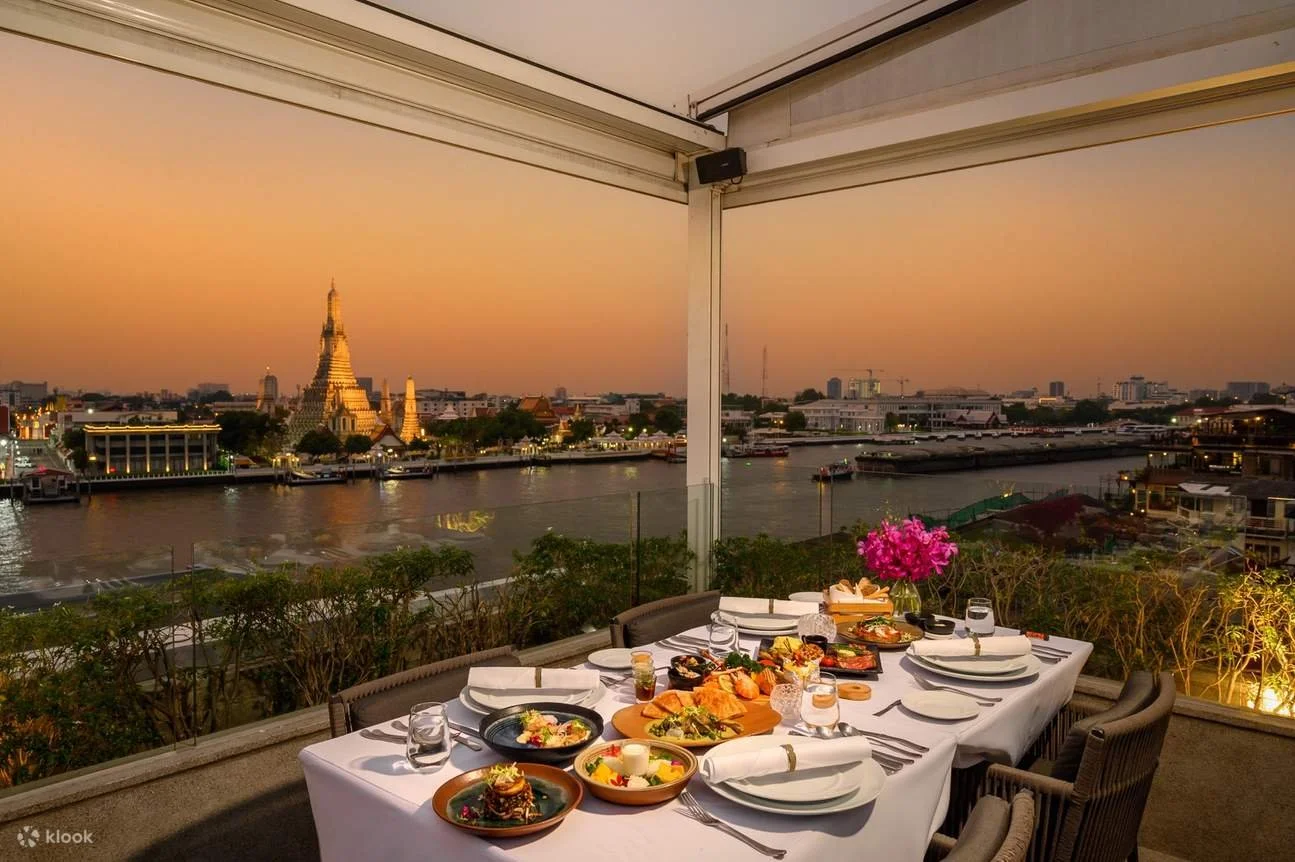
The picture is from Klook.com
Relax with a sundowner, overlooking both the river and Bangkok’s skyline. This is a boutique hotel, where you can also spend a night or two for a special occasion. One room on the top floor offers a jacuzzi with a view of the river.
Dining on River-front Terrace (Book in Advance)
There are plenty of good options for dining experiences by the river, facing the iconic Wat Arun lighted at night. Here are my to-go options. You need advanced reservations as these places can be fully booked quickly.
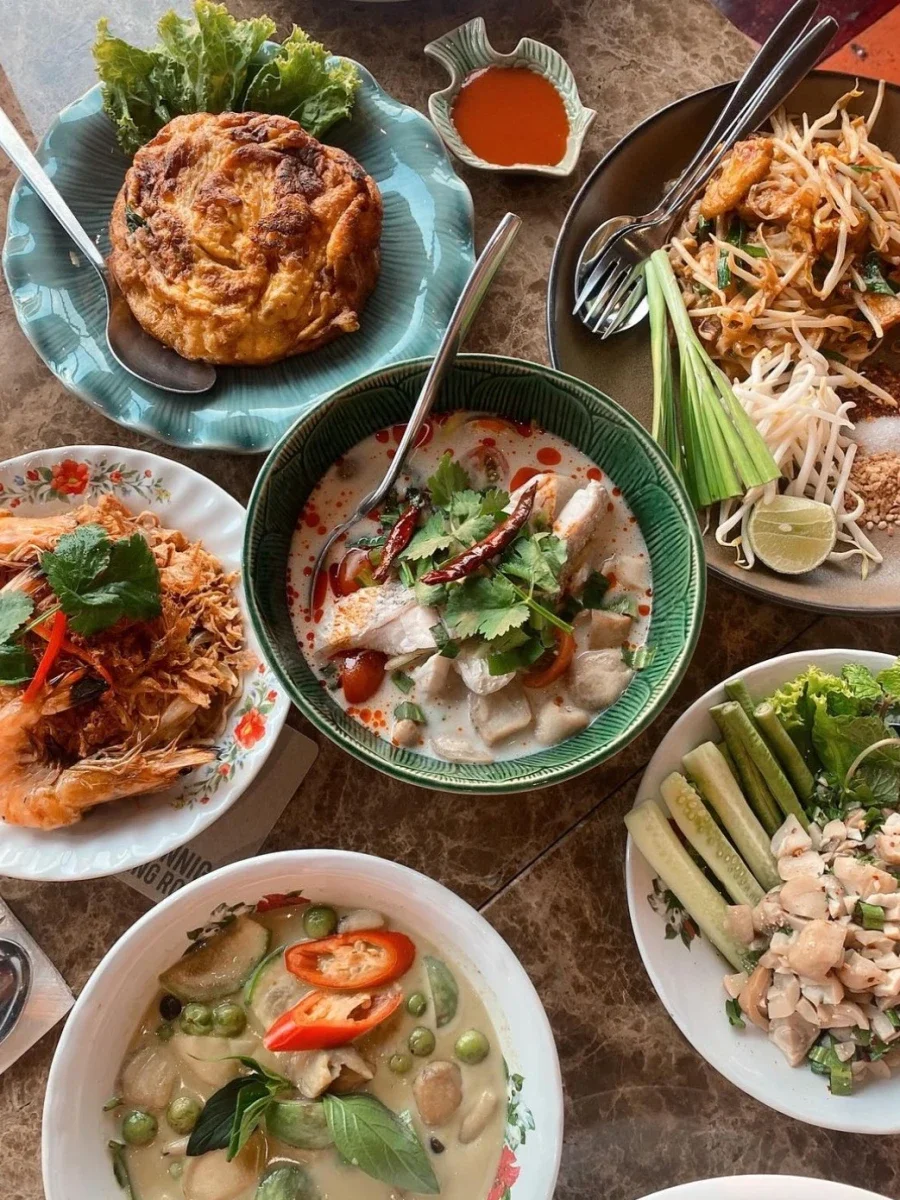
Supanniga Eating Room Tha Tien is a well‑known Thai restaurant brand with several branches across Bangkok. This branch offers a direct view of the Chao Phraya River and Wat Arun.
The restaurant focuses on refined Thai cuisine inspired by family recipes from the eastern provinces of Thailand. The flavors and presentation are elegant without losing authenticity.
Booking a terrace table is highly recommended, especially around sunset when the temple lights begin to glow.
Nearby, the Deck is part of Arun Residence Boutique Hotel and has long been one of the classic riverfront dining spots in Bangkok Old Town. Its terrace offers one of the most direct and unobstructed views of Wat Arun across the river. The menu features Thai and international dishes, making it a comfortable option for mixed groups. The atmosphere is intimate and slightly romantic, especially after dark when the temple is illuminated.
RONGROS is a modern Thai restaurant located directly by the Chao Phraya River with one of the most stunning, front‑row views of Wat Arun. The restaurant blends contemporary Thai cuisine with refined presentation, often reinterpreting traditional dishes with high‑quality seasonal ingredients. The terrace seating is the highlight — especially in the early evening when Wat Arun begins to light up across the river. The atmosphere feels stylish yet warm, making it suitable for special dinners, date night, or an elevated final stop to your Old Town journey.
Final Thoughts
Bangkok Old Town is bigger than this route. Beyond this classic path lie the backpacker energy of Khaosan Road, the laid-back local bars of Samsen, the spiritual calm of the Giant Swing area, and the panoramic view from Golden Mountain (Wat Saket). Each corner tells a different story.
This is the version of Old Town I know best. It is not rushed, not overly curated, and not only about the checklist from other foreign travelers. It is about walking slowly, noticing details, exploring local life, and most importantly, great choices of authentic Thai food.
Take your time. Stay curious. Let the city unfold around you. I hope this guide helps you discover Bangkok’s old town and brings you a wonderful experience, just as it did for me.
Ambassador Notes
- Wear light, breathable fabrics — Bangkok can be very hot.
- Shorts and a t-shirt are fine, but bring light linen pants to cover your knees for temple visits.
- Bring a hat, sunglasses, and sunscreen.
- Wear closed shoes (sneakers recommended) — you’ll be walking a lot.
- Carry cash — this guide connects you with authentic local life.
Frequently Asked Questions: Bangkok Old Town (Rattanakosin)
What is Bangkok Old Town called and where is it?
Bangkok's Old Town is officially called Rattanakosin — the historic island district that has been the ceremonial and cultural heart of Thailand since 1782, when King Rama I established the Chakri Dynasty and moved the capital across the Chao Phraya River. It sits on a bend of the river in central Bangkok and contains the Grand Palace, Wat Phra Kaew, Wat Pho, Wat Arun, Thammasat University, and Museum Siam, among other landmarks.
How long does it take to visit Bangkok Old Town properly?
A full day — 8 to 10 hours — is the right amount of time to experience Bangkok Old Town without rushing. Starting early at the flower market, visiting the Grand Palace and Wat Pho before the midday heat, taking a proper lunch break, spending time at Museum Siam in the afternoon, and finishing with sunset at Wat Arun covers the historical, cultural, and local layers of the area. A half-day visit will get you through the main landmarks but misses most of what makes this neighborhood interesting.
What is the best time to visit the Grand Palace in Bangkok?
Arrive as early as possible — by 8:30am ideally. The Grand Palace opens at 8:30am and the heat and crowds both build significantly after 10am. Going early means cooler temperatures, better light for photos, and a calmer atmosphere inside the complex. Bring clothes that cover shoulders and knees, or you will not be allowed to enter.
What is the best time to see Wat Arun Bangkok?
Late afternoon — arriving around 4pm — is the best time to visit Wat Arun. The light hits the porcelain-decorated prang (tower) at its most photogenic angle, the heat has reduced from its midday peak, and by the time you finish exploring, the temple begins to light up for the evening. Taking the short ferry from Tha Tien Pier and watching the reflection of Wat Arun on the Chao Phraya River at sunset is one of the most memorable things you can do in Bangkok.
Where do locals eat in Bangkok Old Town?
Khun Daeng's Vietnamese Noodle shop is a local favorite near Thammasat University — a humble, iconic spot serving thick Vietnamese-influenced noodle soup that most tourists never find. The Thaphrachan Alley food stalls next to the river are where students and locals eat quickly and cheaply. For dinner, Supanniga Eating Room Tha Tien and RONGROS are the best options for authentic Thai food with a direct view of Wat Arun across the river — both require advance reservations, especially for terrace seating at sunset.
What is Museum Siam in Bangkok and is it worth visiting?
Museum Siam is one of the most underrated things to do in Bangkok Old Town. Located in a beautifully restored colonial building that once housed the Ministry of Commerce, it hosts a permanent exhibition called "Decode Thailand" — an interactive exploration of Thai identity through history, language, food, and pop culture. It is consistently recommended by Bangkok locals over more famous landmarks because it explains the why behind everything else you've seen during the day. Plan 1.5 to 2 hours. The entry fee is affordable and well worth it.
Is Pak Klong Talat flower market worth visiting in Bangkok?
Yes — Pak Klong Talat is one of Bangkok's genuine hidden experiences and most visitors never make it here. Bangkok's largest wholesale flower market has been running since the late 18th century and supplies temples, ceremonies, and households across the city. Going before sunrise means seeing the market at full intensity: buckets of orchids, jasmine garlands being threaded by hand, marigolds and lotus for Buddhist offerings. The combination of colors, scent, and activity before the city wakes up is unlike anything else in Bangkok.
This guide is part of Veloura's local ambassador series — authentic Bangkok neighborhood guides written by people who actually live here. Explore more at veloura-gems.com.
Veloura App
There is more to explore.
Bangkok, Koh Phangan and Northern Thailand, beyond the obvious.