
Electric Sheep Bangkok: The Restaurant That Cooks Without Olive Oil
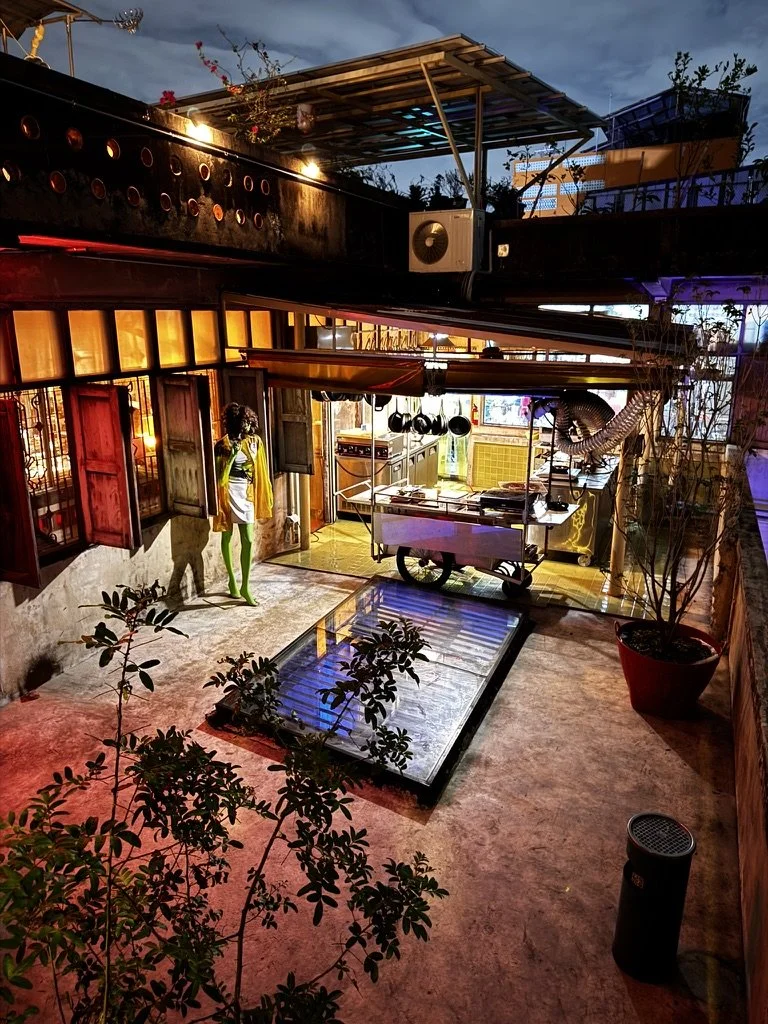
By Timo Eckenfels, Veloura Gems · In conversation with Amerigo Tito Sesti and Yoan Martin, Electric Sheep
Some restaurants have a concept. Electric Sheep has a conviction.
We came to interview Amerigo and Yoan, the two chefs behind one of Bangkok's most quietly determined restaurant, and left with the kind of impression that is hard to put into words after the fact. We had planned for thirty minutes. We stayed for nearly an hour, and then stayed longer for dinner. They answered everything with real depth and real warmth, pulled out their menu card and walked us through it like it was the most natural thing in the world.
The food was extraordinary. The story behind it is even better.

Your Local Ambassador
Timo E.
Timo visited Electric Sheep in July 2026 together with the Veloura team. He sat down with chefs Amerigo Tito Sesti and Yoan Martin for what was planned as a thirty-minute conversation and stayed for nearly an hour, then dinner. All dish recommendations in this guide come from what the team actually ordered and loved on the night.
What Is Electric Sheep?
Electric Sheep is a sustainable restaurant in Bangkok serving a Mediterranean-inspired menu built entirely from local Thai ingredients. No olive oil from Spain. No capers from Italy. No imported flour, spirits, or wine. Every single ingredient, for food and drink alike, comes from Thailand.
That sounds like a limitation. In practice, it is an act of creativity that produces some of the most surprising and genuinely delicious food in the city.
The name comes from Philip K. Dick's novel Do Androids Dream of Electric Sheep, which later inspired the film Blade Runner. In that world, nature has disappeared. It exists only in memory. Amerigo and Yoan chose the name deliberately: Bangkok, they said, is already that world. Polluted air, undrinkable water, nature pushed far to the edge. Electric Sheep is their answer to that reality, a restaurant that brings nature back to the plate, ingredient by ingredient, through a cuisine built on respect for what is actually here.
The Two Chefs
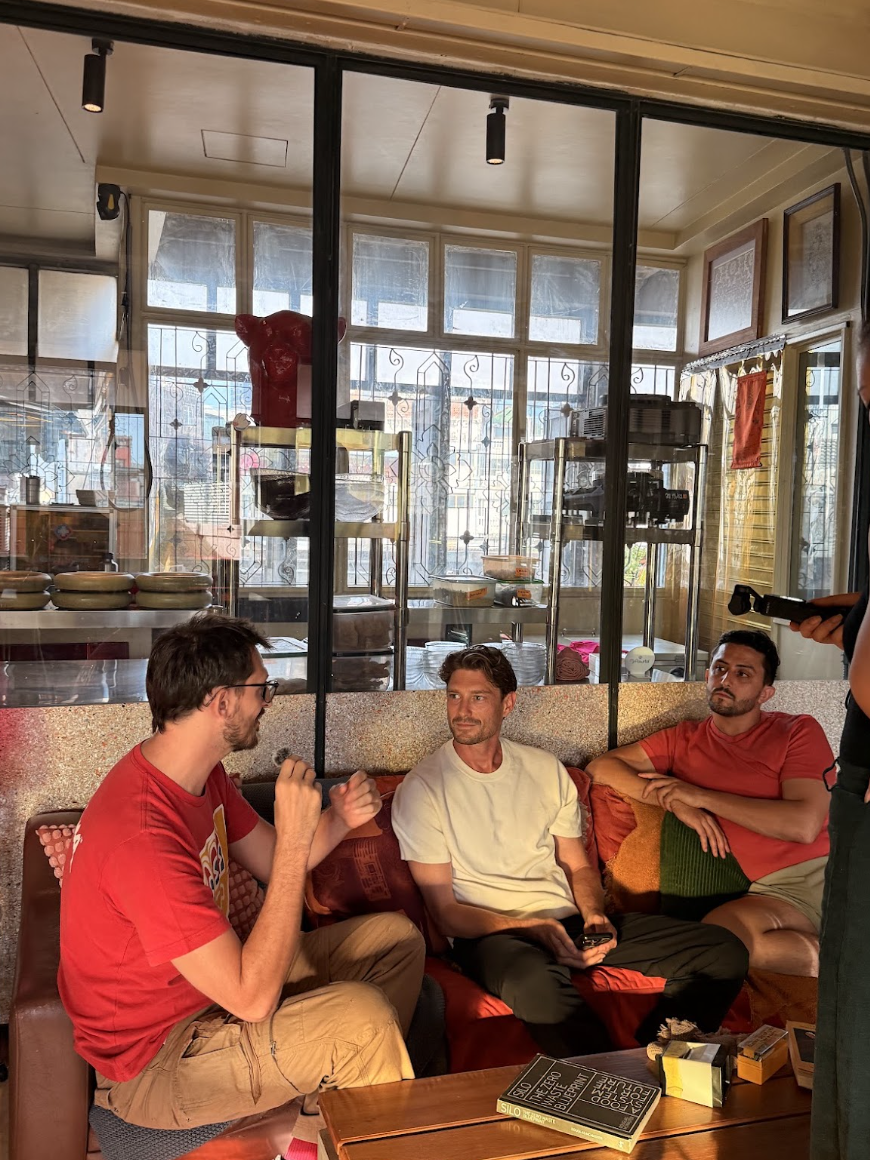
Amerigo has been a chef for over 20 years. He grew up in northern Italy in a household shaped by art: his parents were artists, and the atelier they worked in was his early world. What drew him to cooking was a set of criteria he had for his career: he wanted to travel, to work with his hands, to make something tactile and creative. Cooking ticked all of those boxes. He spent years moving through kitchens across Europe and the United States before arriving in Thailand twelve years ago. His roots are French and Italian. His approach is now shaped by more than a decade of absorbing Thai ingredients and Thai terroir, and then figuring out what happens when those two worlds are put in the same kitchen together.
Yoan came to Bangkok eleven years ago after a period working in France, then a stint in Australia that he did not love. He grew up in a family rooted in food: his grandfather was a butcher, his parents ran bakeries. The expectation was that he would follow them. He watched his father work impossibly long hours, miss Christmases, miss holidays, and decided he would not do the same thing. Then he became a chef. "It is exactly the same thing," he said, laughing. "Even worse." He still remembers that the first dish he ever cooked was a Blanquette de Veau, which he made with his dad.
He reached out to chefs in Bangkok, asked for meetings, and was told they were all too busy to see him. Eventually a connection led him to Yusatorn, to a kitchen run by a chef who was described to him as very cool. That chef was Amerigo. They spent an hour, maybe two, just talking. There was no position available. But they kept in touch, and a few years later Yoan joined the kitchen. They have now been working together for nine years.
"Most of the time it is coming from some stupid thing that we try, and we are like, ah, okay, that reminds me of this."
Yoan, Electric Sheep
Before Electric Sheep, both chefs spent years at J'AIME Bangkok, the French fine dining restaurant where they earned a Michelin Star between 2018 and 2023. In 2024, J'AIME received a Michelin Green Star for its sustainable practices. Electric Sheep is what came next.
What strikes you immediately when they talk about their collaboration is how easy it seems. They do not sit down to plan dishes. They spend seven to ten hours a day together, cooking, tasting, experimenting, and the food emerges from that shared rhythm. "Most of the time it is coming from some stupid thing that we try," Yoan said, "and we are like, ah, okay, that reminds me of this." Amerigo finished the thought. That is how it works. Sometimes a dish starts from a memory of somewhere they grew up. Sometimes it starts from a fermentation they put aside months earlier, opened again, and found had become something they did not expect. "We span most of the time together," Yoan said, "and we built something on that."
The Philosophy: 100% Local, Zero Compromise
Electric Sheep operates on one foundational rule: every ingredient must come from Thailand.
This covers everything. Spirits. Wine. Flour. Every vegetable, every protein, every seasoning. The kitchen also cuts all single-use plastic, including the vacuum bags, plastic wrap, and aluminium foil that most professional kitchens treat as basics.
Beyond sourcing, Amerigo and Yoan review every recipe to reduce byproduct, then reintegrate what remains into the same dish or another component of the menu. They ferment and preserve to extend shelf life across seasons and to recreate things Thailand does not have. Their version of olive oil is built from Thai ingredients through a process that took countless tests before Yoan pushed through where Amerigo, by his own admission, had nearly given up. "I said: Yoan, we cannot do that - this is olive oil. Forget about it. We have just to learn how to cook without olive oil." Yoan kept going. Spanish guests who tried the gazpacho told them it tasted like there was olive oil inside. There was not.
What Amerigo said about that process stayed with me. "By imposing those limitations, you reopen creativity." The things they could no longer use forced them to find other ways. Things they never imagined recreating became possible precisely because they had to try. "That is what actually pushes forward," he said.
"By imposing those limitations, you reopen creativity."
Amerigo, Electric Sheep
The kitchen runs entirely on electricity. The rooftop holds 97 square meters of solar panels. The materials used to build the restaurant were sourced with the same philosophy applied to the menu: nothing imported, nothing wasted, everything with a story.
Nothing here is accidental. Everything has been thought about.
Coming from a background in sustainability myself, what I found most impressive was not just the commitment but the depth of knowledge behind it. These are not chefs who adopted sustainability as a marketing angle. They know exactly what they are doing and exactly why. The expertise in that room was real.
The Food
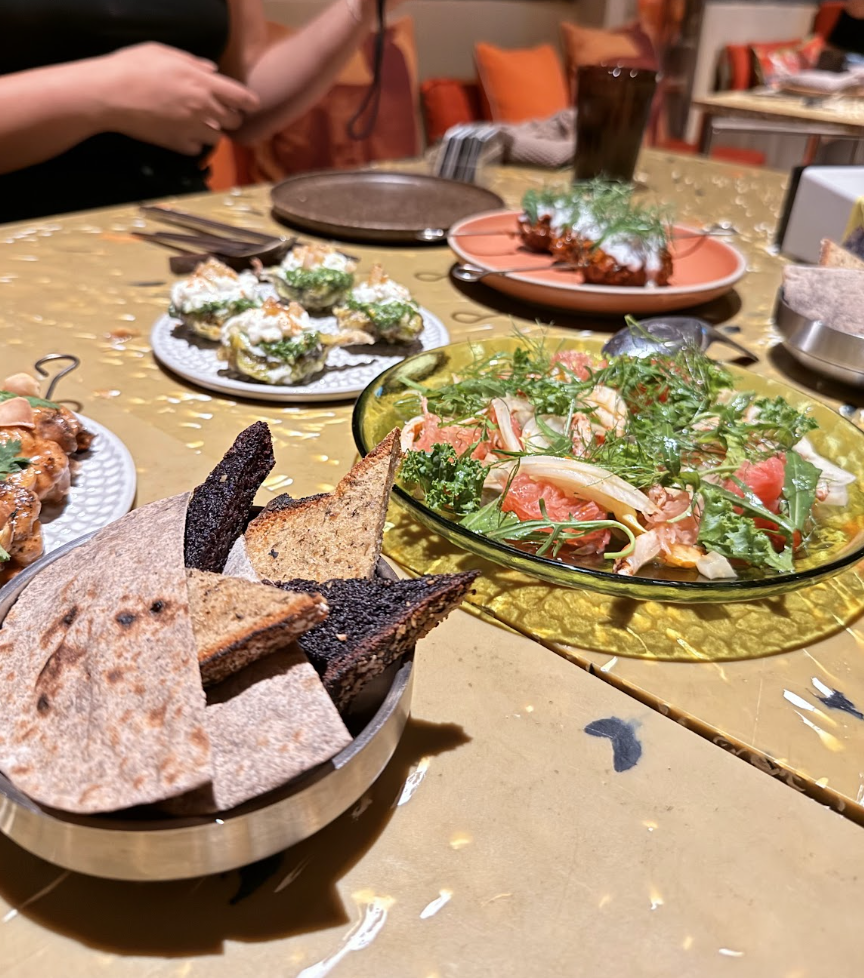
The menu at Electric Sheep changes with the seasons and what is available. What you find on the day will not be exactly what we found on the day we visited. That is the point.
What we can tell you is what we ate, and how it landed.
Squid Roe, Oyster Mushrooms, Macadamia and Coriander. The standout of the evening. Clean, precise, and unexpected in the best way. The macadamia brought a richness that should not have worked alongside the roe but did, completely.
Mac and Coffee. The most surprising dish of the evening. Sceptical when it arrived. Wrong to be. It surprised more than anything else at the table, which is probably exactly what Amerigo and Yoan intend when they put something like this on a menu.
Bonito with Gazpacho. The dish two of us gravitated toward independently. The whole fish is used. The parts normally discarded become a fish sauce folded back into the gazpacho. The olive oil is not olive oil. The capers are not capers. But Spanish guests taste it and say it lacks for nothing. Thai guests recognise the ingredients and cannot believe the flavour. That disorienting familiarity, something known made strange, something strange made comfortable, is the whole restaurant in one bowl. It is also the dish Amerigo and Yoan themselves describe as the one that most honestly represents Electric Sheep.
Eggplant Fritelle. Ordered alongside the Bonito by more than one person at the table, and for good reason. Light, precise, and the kind of dish that makes you understand what the kitchen is doing before you have read a word of the menu.
Guava, Vanilla and Macadamia. The dessert that quietly outshone expectations. Light, specific, and nothing like what you expect from those three words written in a list.
Nothing disappointed. That is the honest summary of the evening. Three from the Veloura team, ten different dishes between us, every single one worth mentioning, different directions through the menu, and not one moment where something fell short of what it promised. That consistency, across a menu built on constraints most restaurants would find impossible, is the thing that stays with you long after you leave.
What They Hope For
When I asked what they hope Electric Sheep will change, neither of them reached for something grand.
Yoan said he hopes they keep going in this direction, step by step, making it more sustainable. And that maybe other restaurants are inspired to try. "If everybody is doing a bit like this," he said, "the world will be much better."
Amerigo said he hopes the work eventually gets communicated more widely, through a book or social media or interviews like this one, so that the systems they have developed can reach people operating elsewhere. The purpose of Electric Sheep from the beginning, he said, was to make a statement: that it is possible to operate more sustainably within a casual restaurant. Not in a fine dining environment with large budgets and dedicated teams. In a normal restaurant. So that it can show a way for other people in the business.
That landed differently after the time we spent at Electric Sheep. Not as a mission statement but as something they have actually done.
The Space
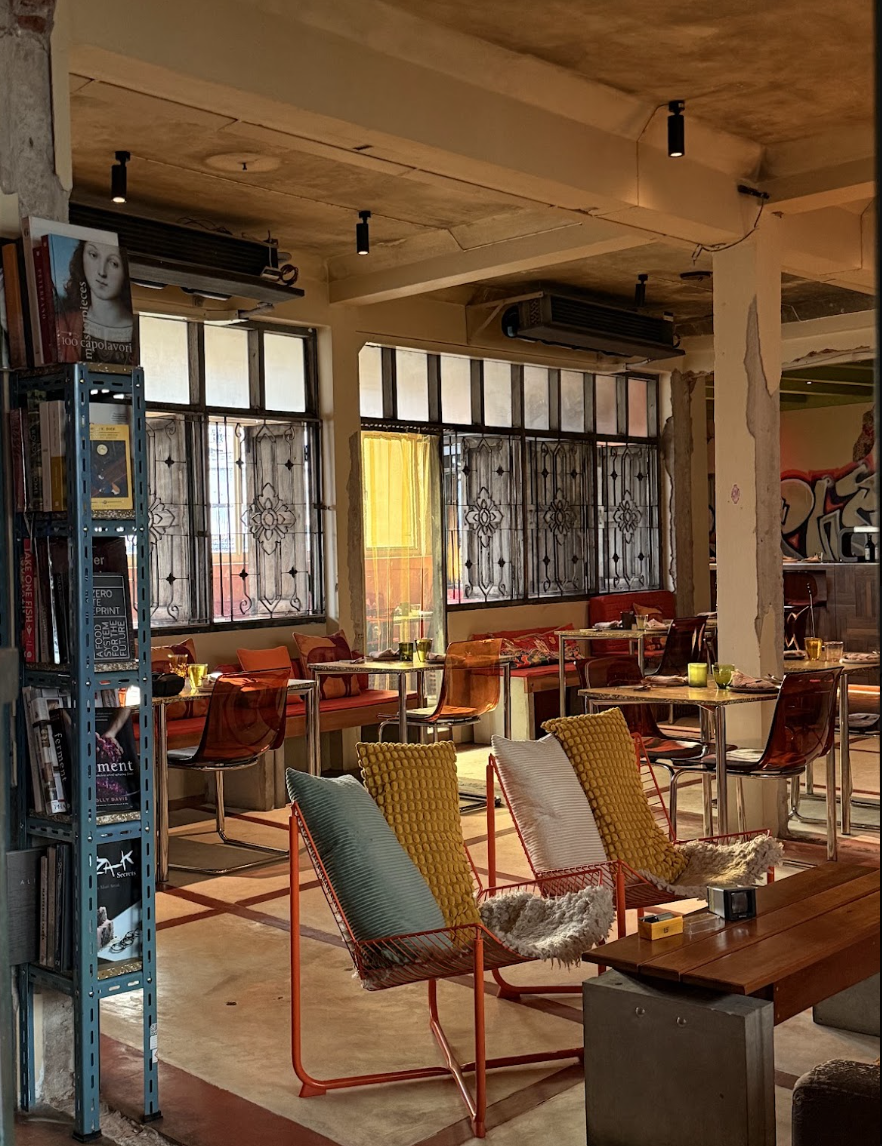
Walking into Electric Sheep, the sustainability is visible before you have eaten a single thing.
The counter bar is built from wood parquet salvaged from the original kitchen. The tables are made from recycled plastic by local artisans, each one representing 14.7 kilos of plastic cups. The lampshades are made from silk cocoons that are normally discarded in the production of Thai silk. The cushions and upholstery are recycled fabric. The carpets are off-cuts from the fashion industry. Even the projections on the walls, abstract images of nature, were chosen deliberately: they are meant to feel like flashbacks, nature remembered in a city where it has largely disappeared.
Nothing was chosen for aesthetic reasons alone. Everything carries the same thinking that goes into the menu. Amerigo described it as designing the restaurant and the menu together, as one unified thing, rather than treating the space and the food as separate projects.
The result is a room that feels considered without feeling laboured. It is calm and a little unexpected, the kind of place that takes a moment to understand and then makes complete sense.
Good to Know
Electric Sheep is located on the 4th floor of The Warehouse, 867 Charoen Krung Road, Talad Noi, Bangkok. It is a Veloura partner venue. The menu changes with the season. Reservations are recommended, particularly during peak season when the better tables fill fast. The space is calm and considered, with the sustainability philosophy visible in the materials around you as much as in what arrives on the plate.
Veloura Member Perk at Electric Sheep
Electric Sheep is an official Veloura partner venue in Bangkok. As a Veloura member you receive a complimentary Savory Snack or Dessert on your visit.
To redeem it, download the Veloura app, join the membership, and show your member benefit at the counter before ordering.
Not a member yet? Download the Veloura app using the link below.
Before You Visit
Electric Sheep is a Veloura partner venue in Bangkok. This guide is based on a visit and interview conducted by the Veloura team. For more Bangkok venue guides and neighbourhood recommendations, explore our guides at veloura-gems.com/guide.
Veloura App
Free Savory Snack or Dessert at Electric Sheep.
Download the Veloura app, become a member, and unlock exclusive perks at Electric Sheep and partner venues across Bangkok.
