
Thailand Visa Guide for Expats and Digital Nomads
By Timo Eckenfels, Veloura Gems · In partnership and collaboration with True Digital Park (TDPK), a BOI-certified LTR visa agency in Bangkok
Moving to Bangkok is one thing. Figuring out which visa actually gets you there legally, and keeps you there, is another thing entirely.
I moved here two years ago and went through this process myself. The paperwork is genuinely administrative and not particularly exciting, but getting it wrong means leaving the country and starting over from outside Thailand, so it is worth doing properly. The question I get asked most by friends considering the move is not about the city. It is about the visa. Specifically: which one, and whether it is really as complicated as it sounds.

Your Local Ambassador
Timo E.
Timo moved to Bangkok two years ago and went through the visa process himself. He has been a Veloura partner with True Digital Park since and has spent time understanding how the long-stay visa landscape works for people making the same move. This guide is the resource he wished he had found first.
The honest answer is that it is not complicated once you understand what each option is actually designed for. The hard part is that most guides either go too deep into legal detail that most people do not need, or stay so surface-level that you still do not know what to do next. This guide tries to sit in between: the real picture, in plain language, with the things that actually matter for someone making the decision you are making right now.
"Get this wrong and you are leaving the country to start over. So let's get it right."
Thailand has genuinely good long-stay options in 2026. The DTV is one of the most flexible digital nomad visas anywhere in the world. The LTR gives high earners and retirees a ten-year runway. The Thailand Privilege Card lets you skip the paperwork for a price. The Retirement Visa is straightforward if you qualify.
The less good news: the rules have tightened. Rejection rates are up. What worked two years ago does not always work now. And getting this wrong means leaving Thailand and starting over from outside the country.
This guide covers the four main long-stay options for people moving to Bangkok in 2026. For LTR applications specifically, our partner True Digital Park (TDPK) is a BOI-certified agency authorised to handle the full process.
- A four-question decision guide to find the right visa for your situation
- Full breakdown of the DTV including 2026 enforcement updates
- LTR visa requirements and how to apply through TDPK
- Thailand Privilege Card tiers and what they actually include
- Retirement visa requirements, renewal process, and obligations
- Visa comparison table and nine-question FAQ
Which Visa Is Right for You? Start Here.
Before the details, a quick frame. Four questions narrow this down fast.
Are you a remote worker or freelancer earning income from outside Thailand? The DTV (Destination Thailand Visa) is almost certainly your starting point. It was built for exactly this situation and is the most accessible long-stay visa Thailand has ever offered.
Are you a high earner, senior professional, or investor? The LTR (Long-Term Resident) visa gives you a ten-year stay, potential tax benefits, and work authorisation in Thailand, but it comes with income and asset thresholds the DTV does not have.
Do you want to avoid paperwork and documentation requirements entirely, and have the budget for it? The Thailand Privilege Card (formerly Thailand Elite) is a paid membership that buys you long-stay rights without income proof, bank statements, or complex applications.
Are you 50 or older and planning to retire in Thailand? The Retirement visa (Non-Immigrant O-A) is the standard route, with a clear financial threshold and a straightforward annual renewal process.
A note before we continue: most of these visas do not come with Thai work rights for local employment. The LTR visa is an exception, as certain categories allow work permit applications in Thailand. If you plan to work for a Thai company or take on Thai clients on other visa types, a Non-Immigrant B visa and work permit are required. This guide covers long-stay options only.
The Destination Thailand Visa (DTV): The Digital Nomad Standard
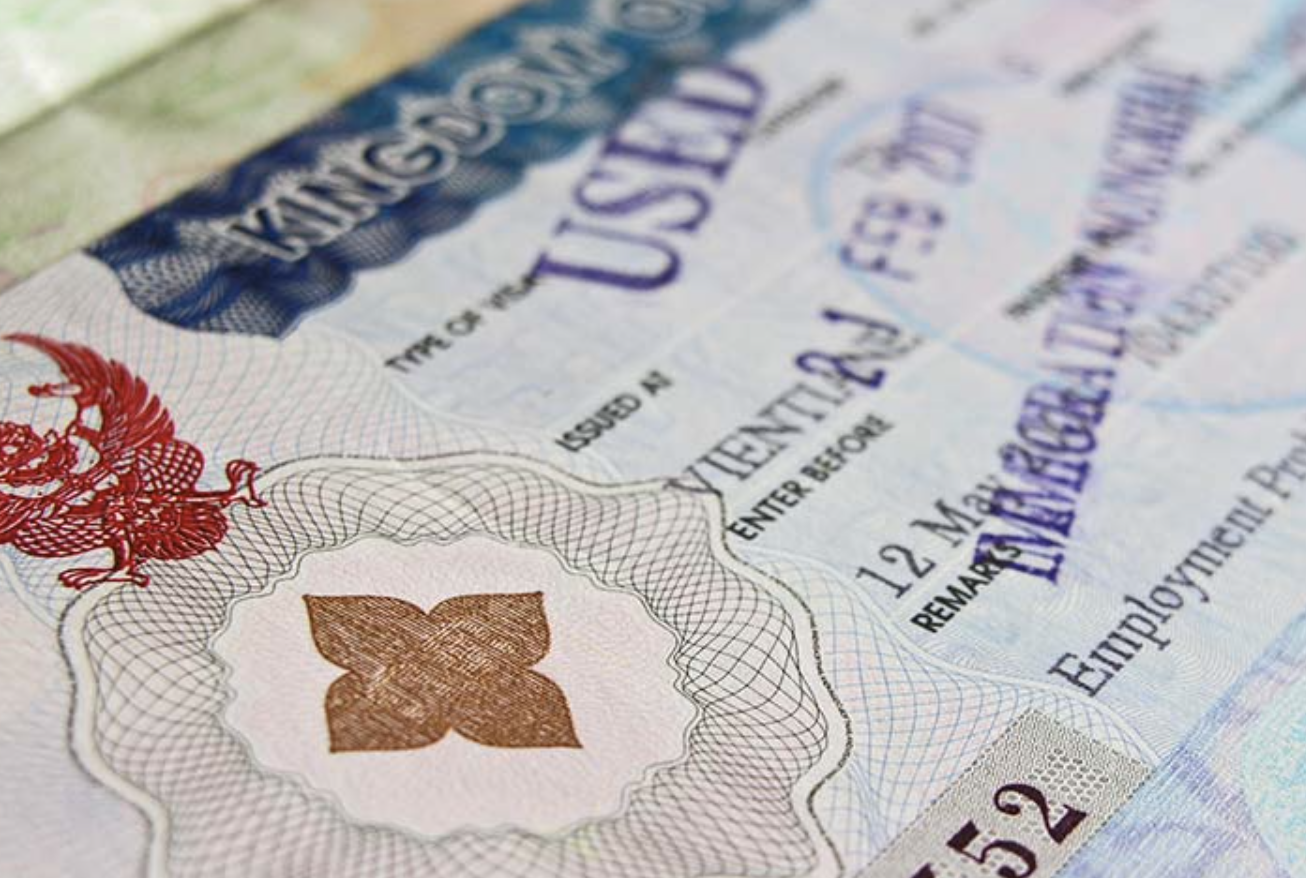
The DTV launched in July 2024 and has become the go-to long-stay visa for remote workers, freelancers, and digital nomads in Thailand. In 2026 it remains the most practical option for most people in that category.
What it gives you A five-year multiple-entry visa. Each entry allows a stay of up to 180 days. You can exit and re-enter as many times as you like within the five-year validity.
Who qualifies The DTV has three categories. The Workcation category covers remote employees of foreign companies, freelancers with international clients, business owners earning foreign income, and content creators. The key condition is that your income comes from outside Thailand. The Soft Power category covers enrollment in recognised Thai cultural programs: Muay Thai training, Thai cooking courses, medical treatment, seminars, and cultural events. The Dependants category allows spouses and unmarried children under 20 to apply once the main applicant is approved. The minimum age for a main applicant is 20.
What it costs The visa fee is approximately 10,000 THB, with variation depending on the embassy where you apply.
What you need to prove A minimum of 500,000 THB in personal savings (approximately €13,200 at the June 2026 rate), held for at least three to six months. Bank statements only: crypto and investment accounts are not accepted. Category-specific proof of work or enrollment is also required.
What has changed in 2026 Enforcement has visibly tightened even though the written rules have not formally changed. Officers increasingly favour longer program enrollments (nine to twelve months or more) for Soft Power applicants. Entry checks have intensified for travel patterns that resemble long-term stays on tourist status. Rejection rates have risen, driven mainly by recently deposited funds, vague freelance documentation, and non-qualifying Soft Power providers. Applications cannot be submitted from inside Thailand. The e-Visa system cross-checks IP and GPS location, and any application submitted from within the country is automatically rejected.
What is not allowed on a DTV Working for Thai companies, taking on Thai clients, holding a Thai work permit, or managing daily operations of a Thailand-based business.
Where to apply Through the official Thai e-Visa portal at thaievisa.go.th, from outside Thailand only. Processing times vary significantly by embassy: faster posts like Vientiane, Phnom Penh, and Kuala Lumpur can return approvals in three to seven days. London, Berlin, and Washington can take four to six weeks.
"The biggest thing most people underestimate is the bank statement requirement. Not the amount itself, but how long the funds need to have been sitting there."
A note from my own experience: the process was smoother than I expected, but only because I had the right questions ready before I started. The biggest thing most people underestimate is the bank statement requirement. Not the amount itself, but how long the funds need to have been sitting there. A large recent transfer raises flags. If you are planning ahead, give yourself at least three to six months of a clean, stable balance before you apply.
The Long-Term Resident (LTR) Visa: The Ten-Year Option
The LTR visa is Thailand's premium long-stay option for high earners, senior professionals, retirees with substantial assets, and specialists in target industries. It offers a ten-year renewable stay (issued as five years initially, renewable for a further five years) and, unlike the DTV, includes work authorisation in Thailand for certain categories.
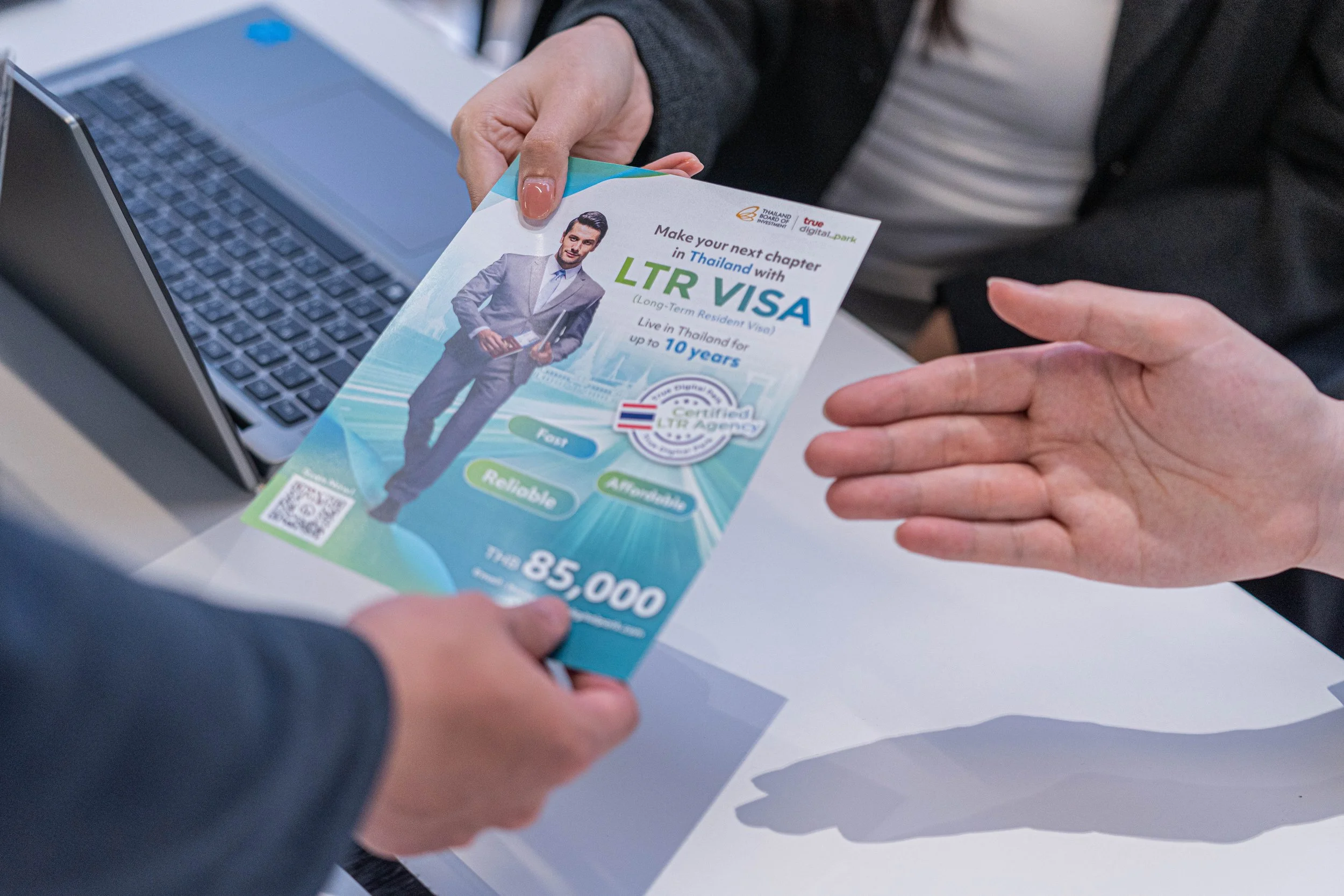
This is a more complex application than the DTV, with higher thresholds and stricter documentation requirements. Our partner True Digital Park is a BOI-certified LTR agency authorised to handle the full process. If you are considering the LTR, speaking with them is the most reliable first step.
What it gives you A ten-year renewable visa with multiple re-entry rights, work authorisation under specific categories, and a significantly reduced 90-day reporting obligation (annual rather than quarterly for all four LTR categories).
Who qualifies The LTR has four main categories. Wealthy Global Citizens require at least USD 1 million in global assets including a minimum USD 500,000 investment in Thailand. Wealthy Pensioners require passive income of USD 80,000 per year, or USD 40,000 per year plus a USD 250,000 Thai investment. Work-from-Thailand Professionals must be employed by a qualifying overseas company with income of at least USD 80,000 per year, or USD 40,000 per year with a master's degree or higher. Highly Skilled Professionals must have senior-level expertise in a targeted industry with income of at least USD 80,000 per year, or USD 40,000 per year with a master's degree or higher in science or technology.
What it costs A one-time government fee of 50,000 THB.
Key documents Passport and passport photo, proof of income or assets meeting the relevant category threshold, health insurance covering at least USD 50,000 per policy year with a minimum of 10 months remaining validity (or a security deposit of USD 100,000 maintained for a minimum of 12 months), and employment or professional documentation depending on the category.
The TDPK advantage True Digital Park is on the official BOI list of certified LTR application agencies. They handle the end-to-end process, including document preparation, application submission, and follow-up. Given the complexity and the stakes of a ten-year visa application, working with a certified agency significantly reduces rejection risk.
Official LTR resources: BOI LTR Visa portal: ltr.boi.go.th True Digital Park LTR services: truedigitalpark.com/business-service/ltr-visa
Thailand Privilege Card: The No-Documentation Route
The Thailand Privilege Card (formerly Thailand Elite) is a government-backed long-stay membership program that exchanges a one-time fee for multi-year visa rights, without income proof, bank statements, or the documentation requirements of other visa categories. It is not a visa in the traditional sense. It is a paid membership that comes with a visa as one of its benefits.
What it gives you Long-stay rights from five to twenty years depending on the tier, multiple re-entry rights, airport fast-track services, help with 90-day reporting, and a points-based system redeemable for travel, wellness, and lifestyle services.
Current membership tiers (approximate, 2026)
Bronze: five years, approximately 650,000 THB (limited-time promotional tier); Gold: five years, approximately 900,000 THB; Platinum: ten years, approximately 1,500,000 THB; Diamond: fifteen years, approximately 2,500,000 THB Reserve: twenty years (invite-only), approximately 5,000,000 THB
Who it suits People who want to avoid complex documentation, frequent travellers who value VIP airport services, retirees or investors with the capital and preference for a one-payment solution, and anyone who has been rejected for or does not qualify for the DTV or LTR.
What it does not include Local work rights. The Privilege Card does not come with a Thai work permit and does not allow employment with Thai companies.
What to check before buying Exact benefits, point allocations, and promotional tiers change regularly. Always verify current details on the official Thailand Privilege website at thailandprivilege.co.th before purchasing.

Retirement Visa: The Standard Route for Over-50s
Thailand's retirement visa sits under the Non-Immigrant O category and comes in three types depending on your situation and how long you want to stay.
Non-O (90 days, extendable to 1 year): Apply online via the Thai e-Visa platform before travelling, or convert a tourist visa or visa-exemption stamp into a 90-day Non-O at a local immigration bureau office. Before the 90 days expire, apply for a one-year extension of stay based on retirement at a local Thai immigration office.
Non-OA (1-year long stay): Apply from outside Thailand only via the Thai e-Visa platform. You cannot apply for this visa from within Thailand.
Non-OX (5 plus 5 years, limited to eligible nationalities including US, UK, Australia, Japan, and more): Apply overseas via the Thai e-Visa platform if you hold an eligible passport, or apply directly at a Thai Immigration Bureau office if you are already in Thailand.
Who qualifies Anyone aged 50 or older who meets the financial requirements.
Financial proof required (one of the following) 800,000 THB held in a Thai bank account, or monthly income or pension of at least 65,000 THB, or a combined total of savings plus income reaching 800,000 THB. For Non-OX the requirement is significantly higher: a fixed deposit of at least 3,000,000 THB in a Thai bank, or at least 1,800,000 THB combined with an annual income of at least 1,200,000 THB.
Supporting documents Updated bank passbook and a bank letter confirming the funds came from abroad, or an income verification letter from your embassy, or 12 months of bank statements showing regular 65,000 THB deposits. If applying from outside Thailand, also add a police clearance certificate, a medical certificate, and proof of health insurance. Required documents can vary by embassy or consulate, so always verify with the relevant embassy before applying.
Ongoing obligations 90-day reporting is required, by mail, online, in person, or through an agent. A re-entry permit is required if you want to leave Thailand and return without voiding the visa. For full and current document checklists, check the official Thai e-Visa page directly at thaievisa.go.th/visa/retirement.
| DTV | LTR | Thailand Privilege | Retirement | |
|---|---|---|---|---|
| Duration | 5 years | 5 + 5 years | 5 to 20 years | 90 days / 1 year / 5+5 years |
| Stay per entry | 180 days | 5 years (continuous) | 1 year | Varies by sub-type |
| Min. age | 20 | Varies by category | None | 50 |
| Financial proof | 500,000 THB savings | USD 80,000+ income or assets | None required | 800,000 THB or 65,000 THB/month |
| Work rights | Remote / foreign only | Yes (certain categories) | None | None |
| Fee | 10,000 THB | 50,000 THB | 650,000 to 5,000,000 THB | Varies by sub-type plus extension fee |
| 90-day reporting | Yes | Annual (all categories) | Yes | Yes |
| Best for | Remote workers and nomads | High earners and professionals | Anyone wanting simplicity | Retirees aged 50 and above |
True Digital Park: Our LTR Visa Partner
For LTR visa applications, True Digital Park (TDPK) is Veloura's recommended partner. TDPK is a BOI-certified agency, which means they are officially authorised to submit LTR applications on your behalf. They handle the full process: eligibility assessment, document preparation, application submission, and ongoing support.
I first came across True Digital Park through Veloura's partnership work, but the more time I have spent there the more I have come to see it as genuinely one of the best resources for anyone navigating long-term life in Bangkok. The LTR visa service is one part of what they do, but the community, the events, and the people who work there are worth knowing regardless of your visa situation.
"Once it is sorted, you stop thinking about it and start actually living here. Which is the whole point."
TDPK also regularly hosts information sessions for people exploring long-stay options in Thailand, covering both the LTR and other visa categories. These are a practical way to get current, reliable information directly from people who process these applications every day.
Find out more at truedigitalpark.com/business-service/ltr-visa, or visit TDPK at their campus in the Phra Khanong and Udomsuk area, directly connected to the BTS. The TDPK International Service Center is located on the 3rd floor of True Digital Park, West Wing. If you are interested in visa or business support services, you can walk in Monday to Friday, 10:00 AM to 5:00 PM.
If you have specific visa questions or want to start your Thailand journey with expert guidance, you can also reach the TDPK visa team directly via their Visa Services Interest Form.
One last thing before the frequently asked questions. If you are at the beginning of this process and feeling overwhelmed by the options, that is normal. Most people I know who moved to Bangkok spent longer researching visas than they spent deciding which neighbourhood to live in. The decision is worth the time. Once it is sorted, you stop thinking about it and start actually living here, which is the whole point.
Frequently Asked Questions: Visa Guide Thailand
This guide is produced by Veloura Gems in partnership with True Digital Park (TDPK). All information is based on publicly available sources and current as of July 2026. Visa rules, fees, and requirements can change. Always verify the latest requirements directly with the relevant Thai embassy or official BOI sources before applying. This guide does not constitute legal or immigration advice.
For more guides on living in Bangkok, explore veloura-gems.com/guide.
Veloura App
Bangkok is better with the right people.
Discover curated venues, member perks, and a community of expats and nomads who already made the move.
