Moving to Bangkok: Your First Week Guide

By Smuk Landolf, Veloura Gems · Updated June 2026
I was born and raised in Bangkok and have spent most of my life here before moving abroad. Looking back, I realized many of the things locals take for granted are exactly the things newcomers struggle with.

Your Local Ambassador
Smuk Landolf
Born and raised in Bangkok, Smuk blends deep local knowledge with an active and adventurous spirit. She loves showing expat friends around and curating refined weekend escapes that balance cultural depth, local flavors, and upscale choices. With international friends visiting regularly, Pari is the person to reach out to when you want to experience Thailand.
This guide brings together the practical advice, local knowledge, and personal recommendations that I would share with a friend moving to Bangkok for the first time.
Rather than trying to cover everything, we'll focus on the essentials: choosing the right neighborhood, understanding your visa options, getting connected, managing your money, downloading the apps you'll use every day, and building a simple routine that makes life in Bangkok easy from the very beginning.
What This Guide Covers
A simple overview of the essentials you need during your first week in Bangkok.
-
1. Visa Overview
Understand the most common visa options before planning your stay.
-
2. Find the Right Place to Live
Choose your first area carefully before committing to a long-term rental.
-
3. SIM Card & Internet
Get connected with a local SIM, eSIM, or monthly mobile package.
-
4. Money & Payments
Learn how to use cash, cards, QR payments, and money exchange in Thailand.
-
5. Must-Have Apps
Download the apps you’ll use every day for transport, food, shopping, and communication.
-
6. Daily Life Essentials
Set up your everyday routine with groceries, laundry, fitness, and coworking.
Before You Arrive
Choose the Right Visa
Before booking a long-term stay or signing a rental contract, it's worth understanding what type of visa you'll be entering Thailand with. Your visa doesn't just determine how long you can stay, it can also affect whether you can open a bank account, sign a mobile phone contract, rent an apartment, or apply for certain services.
For many visitors, a visa exemption or tourist visa is enough for a short stay. If you're planning to work remotely, start a business, retire, or live in Thailand for a longer period, there are several long-term visa options available.
The most common choices include:
Tourist Visa / Visa Exemption
Best for
Holidays
Exploring Bangkok before deciding to relocate
Staying for a few weeks or months
Usually doesn't allow opening certain bank accounts or signing long-term contracts
Destination Thailand Visa (DTV)
The DTV has become one of the most attractive long-term options for people who want to base themselves in Thailand while working remotely. It offers much more flexibility than a tourist visa and is worth considering if you plan to stay for an extended period.
Best for
Digital nomads
Remote workers
Freelancers
Each entry allows you to stay for up to 180 days, with the possibility of extending for another 180 days before leaving and re-entering.
Thailand Privilege Visa
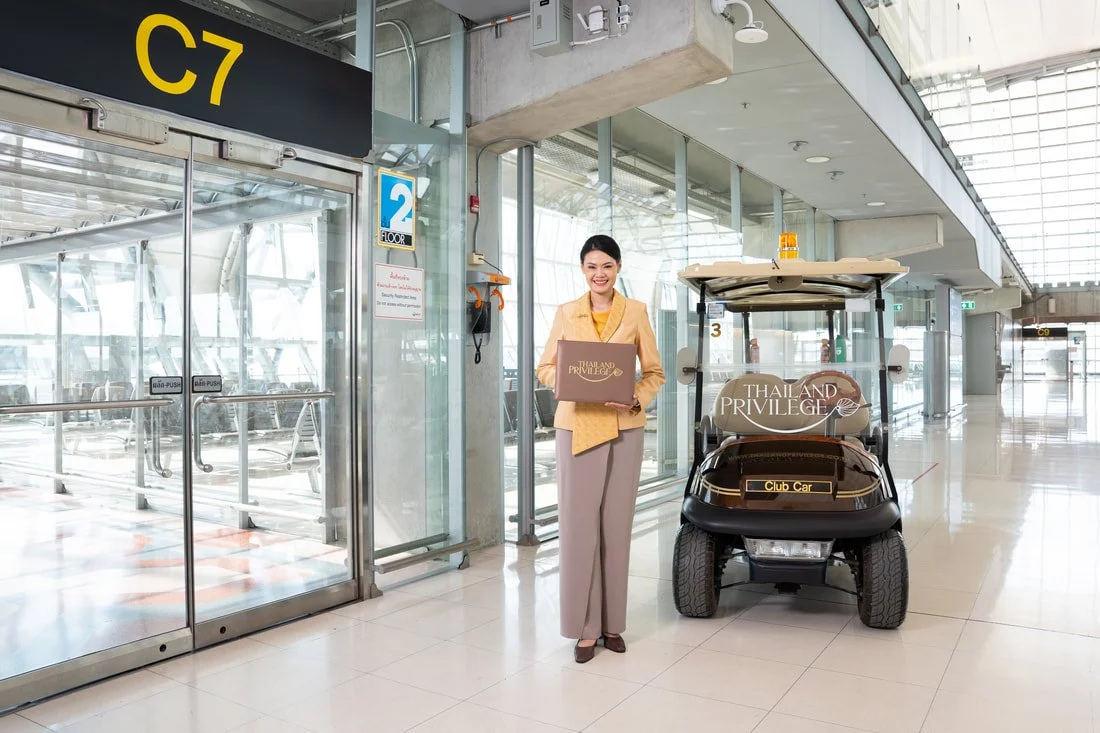
Photo from Thai-Elite.com
Thailand Privilege Visa (formerly Thailand Elite Visa) is a government-backed long-term residency program offering memberships from 5 to 20 years, depending on the package. It is designed for foreigners who want the convenience of living in Thailand long-term without frequent visa renewals, along with benefits such as VIP airport services and concierge assistance.
Best for
Frequent visitors
Retirees
Long-term residents looking for convenience
Things to consider
Thailand Privilege is designed for long-term residency and lifestyle benefits. It does not include a work permit or allow employment with a Thai company. If you plan to work for a Thai employer, you'll need the appropriate work visa and work permit.
Work Visa & Work Permit
If you're employed by a Thai company or relocating through your employer, they'll usually guide you through the visa and work permit process.
Which One Should You Choose?
If you're only testing the waters, start with a tourist visa.
If you're planning to work remotely and stay longer, the DTV is worth exploring.
If you expect to spend many years in Thailand and value convenience, the Thailand Privilege program can be a good investment.
If you're relocating for work, your employer will generally arrange the appropriate visa.
Veloura Notes
If you're still deciding which visa suits your situation, don't rush into it. Many people arrive on a short-term visa first, spend a few weeks exploring different neighborhoods, and only then decide whether they want to make Bangkok their long-term home.
If you're interested in the Destination Thailand Visa (DTV) or Thailand Privilege, our partner True Digital Park, regularly hosts information sessions and can connect you with trusted visa specialists to help you understand the available options.
2. Finding Your First Home in Bangkok
Choosing where to live is one of the most important decisions you'll make when moving to Bangkok. Every neighborhood has its own character, lifestyle, and pace of life. Before signing a lease, spend a few days exploring the area to make sure it feels right for your everyday routine.
Don't Rent Yet. Start with a Hotel or Airbnb First
One of the biggest mistakes people make when moving to Bangkok is signing a one-year rental contract before they've experienced what it's actually feels like to live in the neighborhood.
If you're moving to Bangkok for the first time, I would recommend staying in a hotel, serviced apartment, or Airbnb for at least 3–7 days before making any long-term decision.
What to Look For
When exploring a neighborhood, don't just look at the apartment.
Pay attention to:
Walking distance to BTS or MRT
Grocery stores nearby
Coffee shops and restaurants
Parks and green spaces
Traffic during rush hour
Noise level during the evening
Safety when walking at night
Daily convenience like pharmacies, laundry shops, and 7-Eleven
Remember, you'll experience these things every day, not just your apartment.
A condominium might look perfect online, but you may later realize it's next to a busy road, surrounded by nightlife, or simply doesn't match the lifestyle you're looking for.
Taking a few extra days before signing a lease can save you months of frustration later.
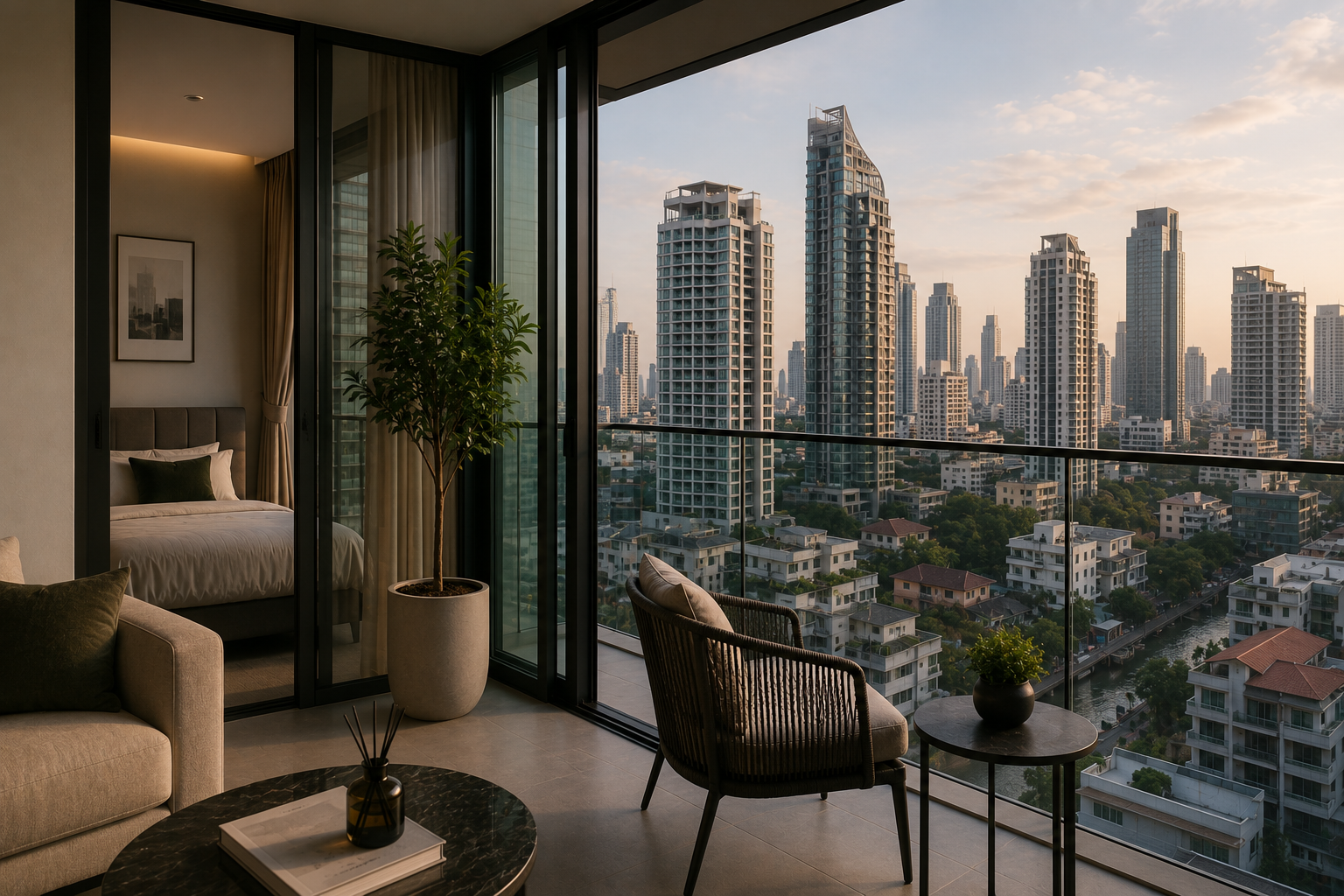
Find the Right Neighborhood
Bangkok is a city of neighborhoods. There isn't one "best" place to live, only the one that fits your lifestyle.
The good news is that if you stay somewhere close to the BTS Skytrain or MRT subway, getting around the city is generally easy.
Timo, another Veloura Ambassador wrote a guide about choose a neighborhood to live based on your preferences, budget and lifestyle here:
Best Neighborhoods in Bangkok for Expats and Digital Nomads (coming soon)
Veloura Notes
Spend at least one weekday and one weekend in the area before making a decision. The atmosphere can feel completely different. Think about your routine. If you enjoy working out, look for parks or gyms nearby. If you work remotely, make sure there are cafés or coworking spaces within walking distance.
Live inside a Soi rather than directly on the main road to avoid noise from the street. A Soi is what we call the smaller streets branching off Bangkok's main roads. Walking just one or two sois away from Sukhumvit Road can make a huge difference. The neighborhood becomes quieter, greener, and much more pleasant to live in, while still being only a few minutes from public transport.
Look around the building if there are any potentials for construction projects, avoid it at all costs. Choose a place that is surrounded by new buildings which have less risk to be knocked down and rebuilt to protect your morning peace or quiet Sunday.
Don't choose a condo because it has a beautiful rooftop pool. Choose it because you'll enjoy the neighborhood every day. I had an amazing swimming pool in my condominium, but I only got to enjoy the use of it less than 5 times a year.
3. Get Connected (Sim card and Internet)
One of the first things you'll want after landing is a local phone number and reliable internet. Whether you're ordering a Grab, using Google Maps, or messaging your landlord, having mobile data makes everything much easier.
In Thailand, there are two main ways to get connected:
Physical SIM card
eSIM (if your phone supports it)
Both options are widely available and easy to set up.
The Main Mobile Networks
Thailand has two major mobile operators that most people use.
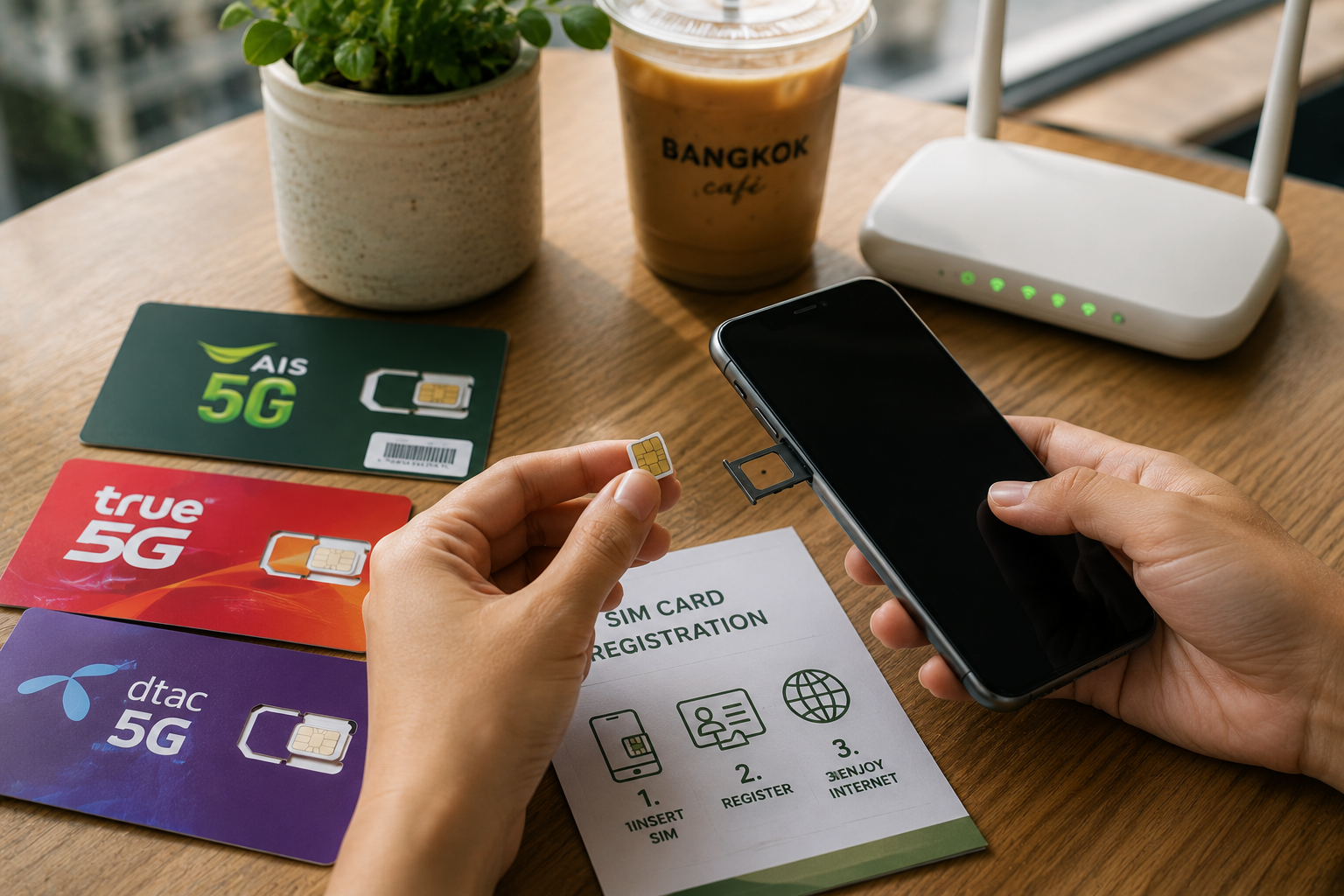
AIS
AIS has the largest network coverage in Thailand and is generally considered the most reliable, especially if you plan to travel outside Bangkok.
It's my personal recommendation if you'll be living here for a longer period.
See current prepaid packages for AIS here.
True (Merged together with Dtac)
True is another excellent option and has very good coverage throughout Bangkok. Since merging with DTAC, its network has become even larger.
You'll often find competitive promotions for both prepaid and monthly plans.
See current prepaid packages for True here.
Prepaid vs Monthly Plans
Prepaid SIM
Best for
Tourists
Short-term visitors
People who don't yet have a Thai bank account
You simply top up your balance and choose an internet package whenever you need one. There are plenty of affordable options, and you can easily manage everything through the provider's mobile app.
Monthly Contract
Best for
Expats
Long-term residents
Work permit holders
Monthly plans are usually better value if you're staying for several months or longer. Please check the conditions and minimum months for the contract.
Most packages range between 500–1,000 THB per month, depending on the amount of high-speed data and whether they include call minutes.
Bills are usually paid through the provider's app, QR code, or automatic payment if you have a Thai bank account.
Where to Buy a SIM Card
You can easily purchase a SIM card:
At Suvarnabhumi Airport
At Don Mueang Airport
At any AIS or True store
In most shopping malls
At many convenience stores
Don't forget to bring your passport, as it is required for registration.
e-SIM
If your phone supports eSIM, I would recommend using it.
It saves you from swapping physical SIM cards, and you can usually activate it within minutes.
Many travellers even install it before arriving in Thailand.
Veloura Notes
You need your passport to buy a sim card in Thailand.
I highly recommend getting your sim card already at the airport. But before buying, ask them if the SIM card can be used long term even after the current promotion expires.
Personally, I recommend using an AIS prepaid SIM. It's flexible, easy to top up, and they regularly offer excellent long-term data packages. I've seen promotions starting from around 1,800 THB for 12 months of unlimited data (promotions change throughout the year), making it a fantastic value if you're staying in Thailand for several months. You also have the flexibility to switch packages whenever a better promotion comes along.
If you're only staying for a few weeks, a prepaid SIM is usually the easiest option. If you're planning to live in Bangkok for several months, compare monthly plans once you have your accommodation sorted.
Download the AIS or True app after activation. It's the easiest way to check your balance, manage your package, and pay your bill.
If your phone supports eSIM, I'd choose that over a physical SIM for convenience.
4. Money & Payments
Paying for things in Thailand is simple once you understand the different options. From cash and credit cards to QR code payments, knowing how locals pay will make everyday life much more convenient.
How People Pay in Thailand
Thailand is becoming increasingly cashless, but you'll still use a mix of payment methods depending on where you are.
The three most common ways to pay are:
Cash
Credit or debit card
QR code (PromptPay)
Once you understand how each one works, paying for things in Bangkok becomes very straightforward.
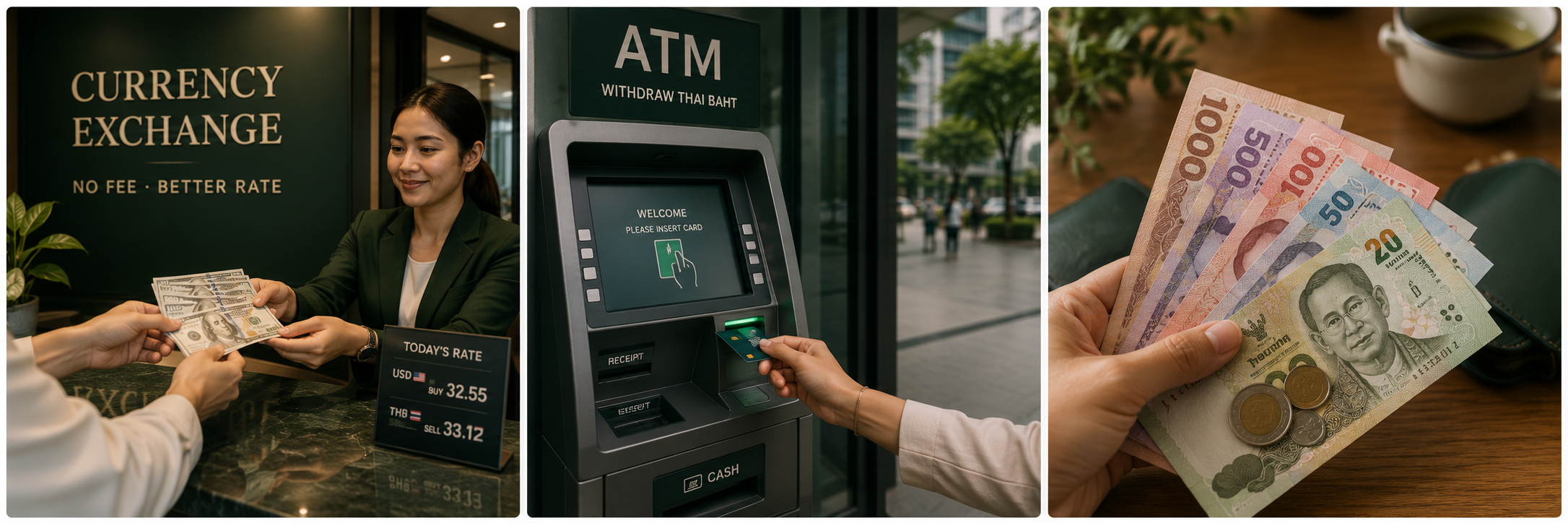
Cash
Although many places now accept cards, cash is still useful for:
Street food
Local markets
Small cafés
Independent shops
Some taxis and motorcycle taxis
I usually recommend carrying around 500–1,000 THB in cash for everyday expenses.
If you would like to get small changes, make a quick stop at a convenient store. Always carry some small bank notes or coins. Many times, people do not have changes.
Withdrawing Cash from an ATM
If you need Thai Baht after arriving, you can withdraw cash from ATMs throughout the city. The most common banks you'll see are Bangkok Bank, Kasikorn Bank (KBank), Krungthai Bank (KTB), SCB (Siam Commercial Bank), and Krungsri Bank.
Most foreign bank cards work without any issues, but Thai banks usually charge an ATM withdrawal fee of around 220 THB per transaction (this may vary slightly by bank). Your home bank may also charge its own fees or apply its own exchange rate.
Whenever the ATM asks whether you'd like to be charged in your home currency or Thai Baht (THB), choose Thai Baht. This allows your own bank or card provider to handle the exchange, which is often a better rate than the ATM's conversion.
Money-saving tip: Most Thai ATMs charge foreign cards around 220 THB per withdrawal. Some AEON ATMs may charge a lower fee (often around 150 THB), although availability is more limited. It's worth checking if there's one nearby.
Read our Guide on How to Get Cash in Thailand.
Exchanging Cash
If you're bringing cash in your home currency, one of the best places to exchange it is SuperRich, which is well known for offering some of the most competitive exchange rates in Thailand.
You'll find SuperRich branches at Suvarnabhumi Airport as well as in many major shopping malls and business districts around Bangkok.
Always bring your passport, as it's required when exchanging foreign currency.
If you're exchanging a larger amount, it's worth comparing rates between a few exchange counters, but SuperRich is generally a reliable choice for both convenience and competitive rates.
Veloura Notes
Credit & Debit Cards
Visa and Mastercard are widely accepted throughout Bangkok but only for authorized stores and in shopping malls. Small vendors may not accept card payment.
American Express is accepted in larger hotels, shopping malls, and some restaurants, but it's still less common than Visa or Mastercard. If you're relying on Amex, it's always good to have a backup card.
PromptPay (QR Payment)
If you've ever visited Thailand recently, you've probably noticed almost everyone scanning QR codes to pay.
This is called PromptPay, Thailand's national QR payment system.
It's by far the most common way locals pay for almost everything, from coffee and restaurants to taxis and market stalls. To use PromptPay, you'll need a Thai bank account.
Wise & Revolut
If you're bringing money from overseas, I highly recommend using Wise or Revolut.
You can exchange your home currency into Thai Baht at competitive rates and pay directly using the digital or physical card. It's usually much better value than exchanging large amounts of cash at the airport.
Whenever you pay by card, always choose to be charged in Thai Baht (THB) rather than your home currency. This helps you avoid unnecessary exchange fees.
Opening a Thai Bank Account
Whether you can open a Thai bank account depends largely on your visa.
Some banks require a long-term visa or work permit, while others have more flexible requirements.
We'll cover this in more detail in our Long-Term Living in Thailand Guide.
Veloura Notes
Carry around 500–1,000 THB in cash for street food, local markets, or small independent shops. Bangkok is very card-friendly, especially in shopping malls, cafés, and restaurants.
If you just arrive and still rely on your money back home, I usually recommend exchanging only a small amount of cash, then use Wise or Revolut for most card payments. Always choose to pay in Thai Baht when your card terminal asks. Let your own bank handle the exchange rate.
If you need to withdraw a larger amount, it's usually better to make one larger withdrawal rather than several small ones to reduce ATM fees.
Keep your passport with you if you plan to exchange foreign currency.Don't exchange all your money at the airport. Exchange a small amount for your first day, then use Wise or Revolut for better exchange rates.
Once you have a Thai bank account, PromptPay quickly becomes your preferred payment method. It's fast, free, and accepted almost everywhere.
5. Download These Essential Apps
Once you've sorted out your accommodation, SIM card, and payment methods, a few essential apps will make your daily life in Bangkok much easier. From booking a ride and ordering dinner to shopping online and chatting with local businesses, these are the apps you'll probably end up using almost every day.
Transportation
Grab
The first app I recommend downloading.
Grab is Southeast Asia's equivalent of Uber. You can book cars, taxis, motorcycle taxis, order food, send parcels, and even pay for services through the app. Basically, all you in to live a convenient life in Thailand.
Best for
Airport transfers
Everyday transportation
Food delivery
Parcel delivery
Bolt
Bolt is Grab's biggest competitor in Thailand.
The service works similarly but often offers lower prices, making it a great alternative when comparing fares. Driver availability can vary depending on the area and time of day, so I usually keep both apps installed.
Best for
Affordable rides
Comparing prices with Grab
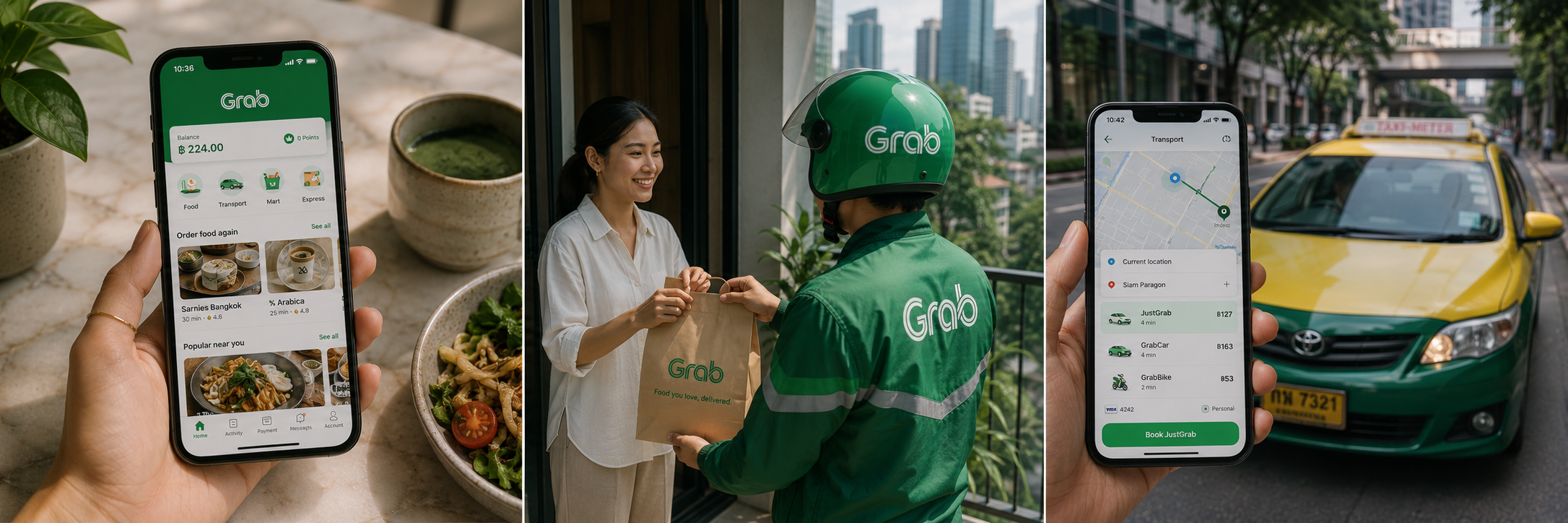
Food Delivery
GrabFood
Already included within the Grab app, GrabFood is one of the easiest ways to order from thousands of restaurants across Bangkok. Whether you're craving local Thai food, sushi, pizza, or groceries, you'll find almost everything here.
LINE MAN
LINE MAN is another popular food delivery platform, especially for local restaurants that may not appear on Grab.
Many Bangkok residents use both apps depending on promotions and restaurant availability.
Best for
Local restaurants
Thai food
Daily meal deliveries
Communication
LINE
If you're only going to download one communication app after arriving, make it LINE.
Unlike many Western countries where WhatsApp is the default, LINE is the primary messaging platform in Thailand. You'll use it to chat with friends, landlords, real estate agents, businesses, restaurants, delivery drivers, and even some government services.
Many cafés, gyms, clinics, and local businesses also use LINE as their main customer support channel.
Navigation
Google Maps
Google Maps works very well in Bangkok and is probably the only navigation app you'll need.
Besides directions, it's also incredibly useful for finding restaurants, cafés, supermarkets, pharmacies, laundries, and checking reviews before visiting somewhere.
Shopping
Lazada
Lazada is one of Thailand's largest online shopping platforms.
You'll find almost everything, from electronics and home essentials to kitchenware and fitness equipment, with delivery often arriving within one or two days.
Shopee
Shopee is another major e-commerce platform and is particularly popular for smaller everyday purchases.
I usually compare prices between Lazada and Shopee before buying, as promotions change regularly.
Shopping Tips
Shopping online in Thailand is incredibly convenient, and once you know a few local tricks, you can save both time and money.
Buy from Local Sellers
When searching for products on Lazada or Shopee, I usually filter for items that are shipped from Thailand rather than overseas.
Domestic orders often arrive within 1–3 days, while international shipments can take one to several weeks. It's also much easier to return or exchange products if something isn't right.
Shop During Monthly Sales
If your purchase isn't urgent, wait for one of Thailand's monthly shopping festivals.
Major promotions happen on the same date each month, such as:
1.1
2.2
...
11.11
12.12
These sales usually offer some of the biggest discounts of the year, with extra vouchers, free shipping, and cashback promotions.
Collect Coupons Before You Check Out
Before placing an order, always check the Coupons section in the app.
Lazada and Shopee regularly offer platform vouchers, store coupons, bank promotions, and free shipping discounts. It only takes a few seconds to collect them, but it can save you a surprising amount, especially on larger purchases.
Fitness & Lifestyle
GoWabi
A useful app for booking massages, beauty treatments, wellness services, and salon appointments. It regularly offers discounts and promotions at spas, nail salons, and wellness providers across Bangkok.
Best for
Massage
Spa
Beauty
Promotions
ClassPass
If you're new to Bangkok, I highly recommend starting with ClassPass before committing to a gym membership.
It gives you access to hundreds of gyms, yoga studios, Pilates classes, CrossFit boxes, and wellness experiences across the city. It's a great way to explore different communities and neighborhoods before deciding where you'd like to train long-term.
7-Eleven Thailand
The 7-Eleven Thailand app is surprisingly useful if you're living in Bangkok. In addition to collecting loyalty points through the All Member program, you can browse promotions, order selected products, and access exclusive discounts available only in the app.
If you find yourself visiting 7-Eleven regularly (which you probably will), it's worth signing up.
Best for
Collecting All Member points
Exclusive promotions
Everyday convenience
IQAir
Bangkok's air quality changes throughout the year, especially during the dry season. IQAir gives you real-time air quality information so you can decide whether it's a good day for outdoor activities such as running, cycling, or simply spending time in the park.
If you exercise outdoors regularly, this is one of the most useful apps to have.
Best for
Checking daily AQI
Planning outdoor workouts
Monitoring air pollution
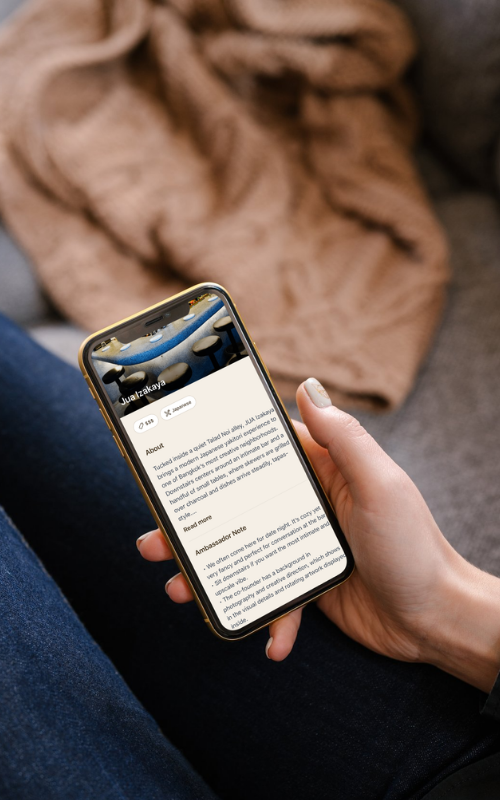
Veloura Gems
Once you've settled into the basics, it's time to start exploring Bangkok beyond the tourist hotspots.
Veloura helps you discover curated cafés, restaurants, neighborhoods, wellness spots, and local experiences that have been personally visited and recommended—not simply collected from online lists.
Whether you're looking for your next brunch spot, planning a weekend, or exploring a new neighborhood, Veloura helps you experience Bangkok through trusted local recommendations.
Best for
Discovering curated places
Saving favorite spots
Exploring neighborhoods
Finding cafés, restaurants, and local experiences
Veloura Notes
I always keep Grab and Bolt on my phone and compare prices before booking a ride.
Download LINE as soon as possible. You'll use it much more than WhatsApp while living in Thailand.
Before signing up for a gym membership, try a few places through ClassPass. It's the easiest way to discover what fits your routine and your neighborhood.
Save your favorite places in Google Maps or, even better, organize them inside the Veloura app so you always have your personal Bangkok guide with you.
I use the 7-Eleven app mostly for collecting points and checking promotions before buying everyday essentials.
Before going for a run or spending time outdoors, I always check IQAir, especially during Bangkok's burning season starting from February to April.
Once you've settled into your daily routine, start exploring the city neighborhood by neighborhood. Veloura is designed to help you discover places that are genuinely worth visiting, not just what's trending.
6. Daily Life Essentials
Once you've settled into your accommodation and sorted out the basics, it's time to make everyday life a little easier. Bangkok is one of the most convenient cities to live in, with supermarkets, convenience stores, laundries, gyms, and coworking spaces never too far away.
Here are a few essentials that will quickly become part of your weekly routine.
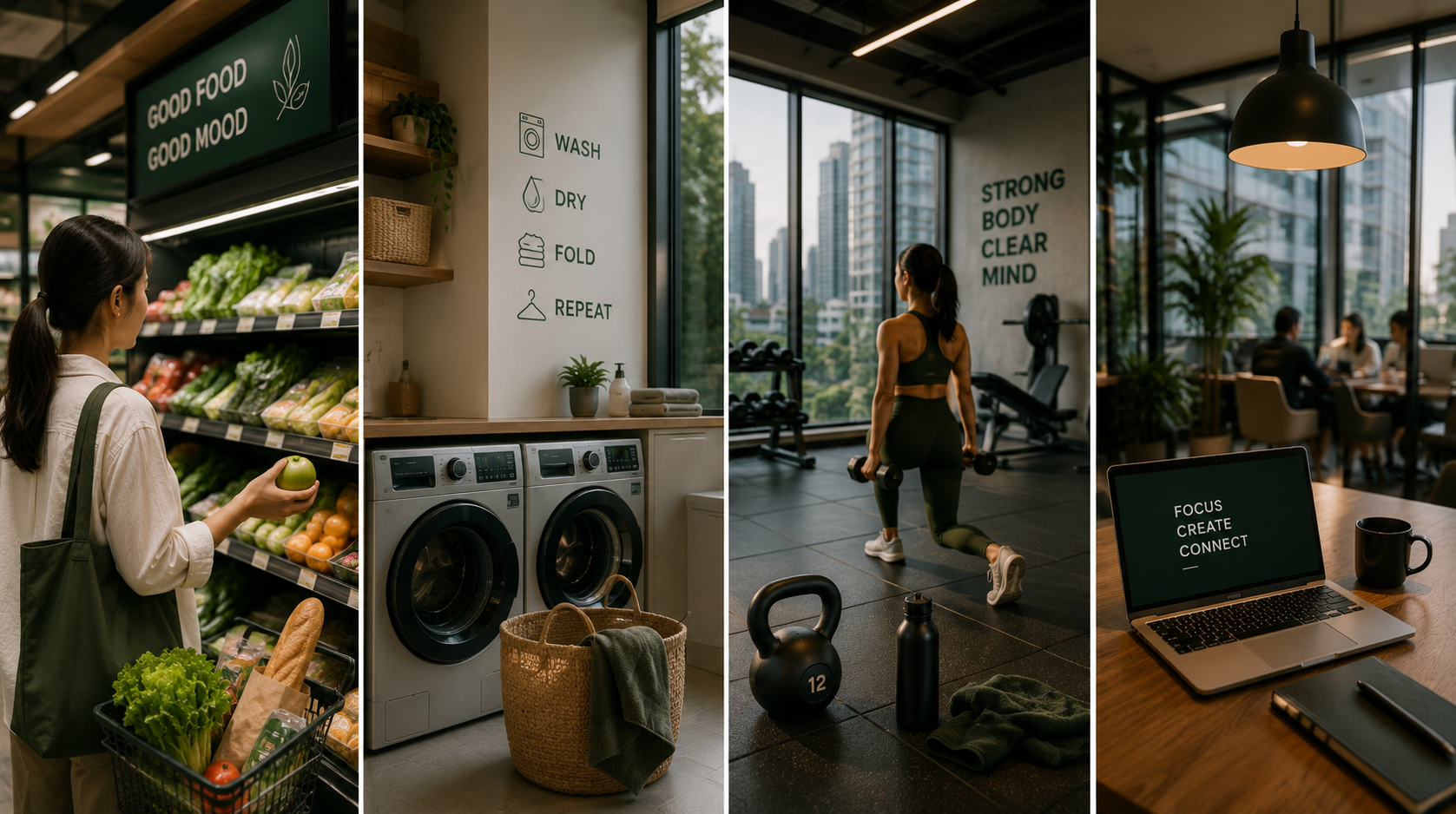
Convenience Stores
If there's one place you'll visit more often than you expect, it's 7-Eleven.
They're everywhere in Bangkok, often every few hundred meters, and they're much more than just a convenience store. Besides drinks and snacks, you can buy ready-to-eat meals, basic groceries, toiletries, medicine, phone top-ups, and everyday household items. Many branches also offer ATM services, parcel pick-up, and bill payment.
Besides 7-Eleven, you'll also come across Lotus's Go Fresh, Mini Big C, CJ More, and Lawson 108 in some neighborhoods. While FamilyMart was once widespread, you'll see it much less often today as many branches have closed or changed ownership.
Grocery Shopping
For your weekly grocery shopping, Bangkok has plenty of options depending on what you're looking for.
Everyday Supermarkets
Lotus
Big C
Foodland
These are my go-to supermarkets for everyday groceries. They stock everything from fresh produce and household essentials to local snacks and basic cooking ingredients.
Premium Supermarkets
Gourmet Market
Villa Market
Tops
If you're looking for imported products, international cheeses, wine, baking ingredients, or specialty foods, these supermarkets are worth visiting. They're slightly more expensive but offer a much wider selection of international products.
For everyday groceries, I usually shop at Lotus or Big C. If I'm looking for imported ingredients or something more specific, I'll head to Gourmet Market or Villa Market instead. Makro is ideal if you're buying in larger quantities or stocking up for a longer stay.
Laundry
Most condominiums and serviced apartments come with either a private washing machine or a shared laundry room within the building. If you're staying in a hotel or Airbnb, check what's included before booking.
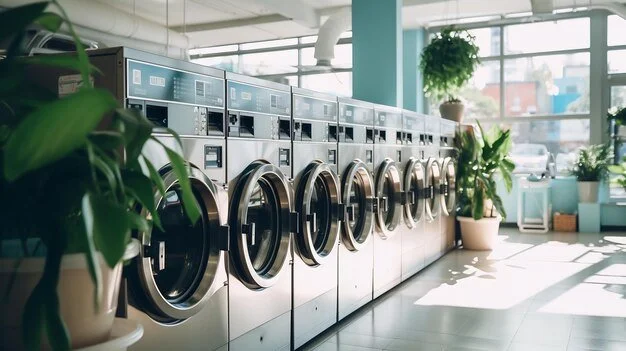
Another convenient option is using one of the many local laundry shops around Bangkok. Simply search "Laundry Near Me" on Google Maps and you'll usually find several nearby. Most shops offer washing, drying, and ironing services, with pricing either calculated by weight or per item.
Laundry services in Bangkok are surprisingly affordable. If you're staying for a while, dropping off your clothes and picking them up later can save a lot of time.
Self-service laundromats are also common throughout the city. While they're often the most affordable option, I personally prefer using my own washing machine or a local laundry service for convenience.
Fitness & Wellness
Whether you're into strength training, yoga, CrossFit, HYROX, or simply going for a run, Bangkok has no shortage of fitness options.
For commercial gyms, you'll find chains like Jetts Fitness, Fitness First, Virgin Active, and Active Fitness across the city.
If you enjoy group training, you can explore studios such as F45, BASE, Cubic, or boutique fitness concepts throughout Sukhumvit.
CrossFit athletes can check out CrossFit Thonglor, CrossFit Naga, or CrossFit Bangkok, while hybrid training and HYROX enthusiasts may enjoy Iron Hive.
Besides running and cycling, Benjakitti Park and Lumpini Park also offer free public sports facilities, including basketball courts, tennis courts, badminton courts, pickleball courts, outdoor fitness equipment, and open spaces for group exercise. They're some of the best places in Bangkok to stay active without needing a gym membership.
Before committing to a long-term gym membership, I recommend trying a few different places with ClassPass. It's an easy way to explore different gyms, neighborhoods, and communities before deciding where you'd like to train regularly.
Coworking Spaces
Bangkok has become one of Asia's most popular cities for remote workers, freelancers, and entrepreneurs. Whether you need a desk for the day or a long-term office, you'll find plenty of coworking spaces throughout the city.
While working from cafés is common, a coworking space is usually a better option if you regularly take meetings or need a quiet place to focus.
My only tip is that choose the co-working space with a great community and regular events. You will widen your network quicky.
Some of the most popular options include:
Common Ground
True Digital Park
The Hive
WeWork
Spaces
Regus
Daily passes are widely available, while monthly memberships typically range from 3,500–10,000 THB, depending on the location and facilities.
If you're still deciding where to live, try working from a coworking space in different neighborhoods. It's a great way to experience the local community before choosing your long-term home.
True Digital Park (Our Partner)

Photo from True Digital Park Bangkok
If you're a remote worker, entrepreneur, or digital nomad, True Digital Park is one of the best coworking communities in Bangkok. Located in the Phra Khanong area and directly connected to the BTS, it's home to startups, entrepreneurs, events, cafés, meeting rooms, and one of the largest coworking spaces in the city.
Whether you're looking for a productive place to work for a day or planning to stay longer, True Digital Park offers flexible day passes as well as monthly memberships.
Veloura Member Perk
As a Veloura Member, you'll receive:
10% off True Digital Park coworking memberships
Exclusive partner perks and benefits
Access to future Veloura community events and collaborations
Simply download the Veloura app, join the membership, and redeem your benefit directly through the app before purchasing your coworking membership.
It's one of the easiest ways to save if you're planning to work remotely in Bangkok for more than a few days.
Frequently Asked Questions: Cost of Living in Bangkok
Final Thoughts
Moving to a new city always comes with a learning curve, but Bangkok is surprisingly easy to settle into once you understand the basics. Finding the right neighborhood, getting connected, learning how to pay like a local, and discovering a few everyday essentials will help you feel at home much faster.
The goal of this guide isn't to help you see everything in your first week, it's to help you build a comfortable routine so you can start enjoying the city with confidence. Take your time, explore one neighborhood at a time, and don't be afraid to venture beyond the main roads. Some of Bangkok's best cafés, restaurants, parks, and local gems are hidden inside its smaller sois.
We hope this guide gives you a smooth start to your journey. Welcome to Bangkok - we're excited to help you discover more.
Continue Exploring Bangkok
Ready to explore beyond the basics? Here are a few guides to help you discover more of the city.
Available Guides
Cost of Living in Bangkok (2026)
Wondering how much it really costs to live in Bangkok? Explore typical monthly expenses, accommodation, transportation, food, and everyday costs to help you plan your budget.
One of Bangkok's best neighborhoods for food lovers. Discover my personal favorite cafés, brunch spots, local restaurants, and dinner recommendations after living in the area for six years.
Everything You Need to Know About Eating in Thailand
Learn how dining works in Thailand—from street food and local etiquette to common dishes, food safety tips, and how to order like a local.
Talad Noi & Song Wat Weekend Walking Guide
Spend a day exploring one of Bangkok's most creative neighborhoods, filled with specialty coffee shops, historic streets, local restaurants, galleries, and hidden gems.
Looking for a great place to slow down? These are six cafés I genuinely enjoy returning to, each with its own atmosphere, character, and story.
Learn when to take the BTS, MRT, Grab, Bolt, taxis, or motorcycle taxis so you can travel around the city efficiently and avoid common mistakes.
Coming Soon
These are some of the guides we're currently working on to help you explore Bangkok even further.
Finding a Condo in Bangkok
Setting Up Your Long-Term Life in Thailand
Bangkok Neighborhood Guide Series
Bangkok Fitness & Wellness Guide
Best Coworking Spaces in Bangkok
Grocery Shopping in Bangkok
Bangkok Weekend Guides
Local Markets Guide
Every guide on Veloura is built from real experiences, local knowledge, and places we've personally visited. Our goal isn't to recommend everything—it's to help you discover the places and experiences that are genuinely worth your time.e who truly lives here.
Veloura Gems is a community and guide platform for Bangkok and Koh Phangan, built by people who live here, for people figuring out how to. For more guides on cost of living, visas, and getting settled in Bangkok, explore the rest of our guides at veloura-gems.com/guide.
Rent figures in this guide are based on June 2026 market data and vary by building age, floor, and furnishings. Always verify current listings before making a decision. We update our guides regularly. If something has changed, let us know.
Veloura App
There is more to explore.
Bangkok, Koh Phangan and Northern Thailand, beyond the obvious.