
Spice Koh Phangan: The Beach That People Never Leave
By Timo Eckenfels, Veloura Gems · In conversation with Fin Taylor, Spice Koh Phangan
Haad Tien is not easy to reach. You take a boat from Koh Samui to get to Koh Phangan. Then you have two options. You can go to Haad Rin, where the Full Moon Party happens, and take a taxi boat from there that takes ten minutes. Or you can drive. Fin does not recommend driving. The road is only for experienced drivers and 4x4 cars, and even then it is a full off-road experience over a mountain. You will make it. But you will know you have been somewhere.
Once you get there, some people never want to leave.
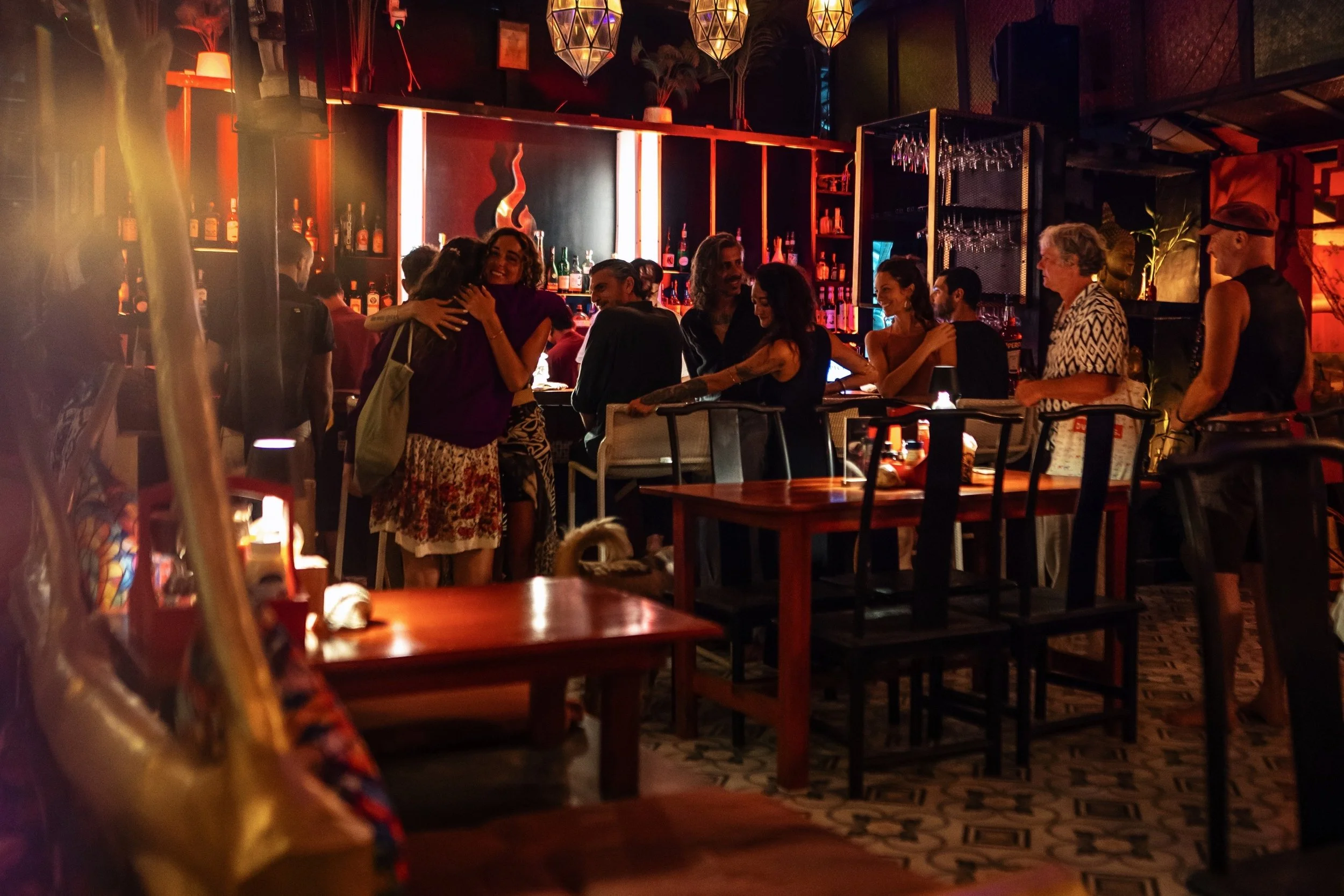
Spice Koh Phangan started as a restaurant in 2008. Fin's dad built it on a beach that already had something going for it: The Sanctuary, which opened in the 1990s and became one of Southeast Asia's most legendary wellness retreats, drawing people from across the world to what was then genuinely one of the most hidden beaches in Thailand. The restaurant came first, then one wooden bamboo hut for accommodation a year later, then another room, then three more. Now there are 20 private houses, a dinner restaurant that seats 120 and turns over two or three hundred people on a peak night, a brunch cafe, a minimart that started during COVID and never stopped, and two talking birds who cannot fly.
Fin came back to run it at the end of 2025 after studying hospitality in Switzerland and spending time in London. He is the one who added the matcha sourced from a 300-year-old Japanese teahouse and put iPads in the kitchen. His dad built the place. Fin is figuring out what it becomes next.
Your Local Ambassador
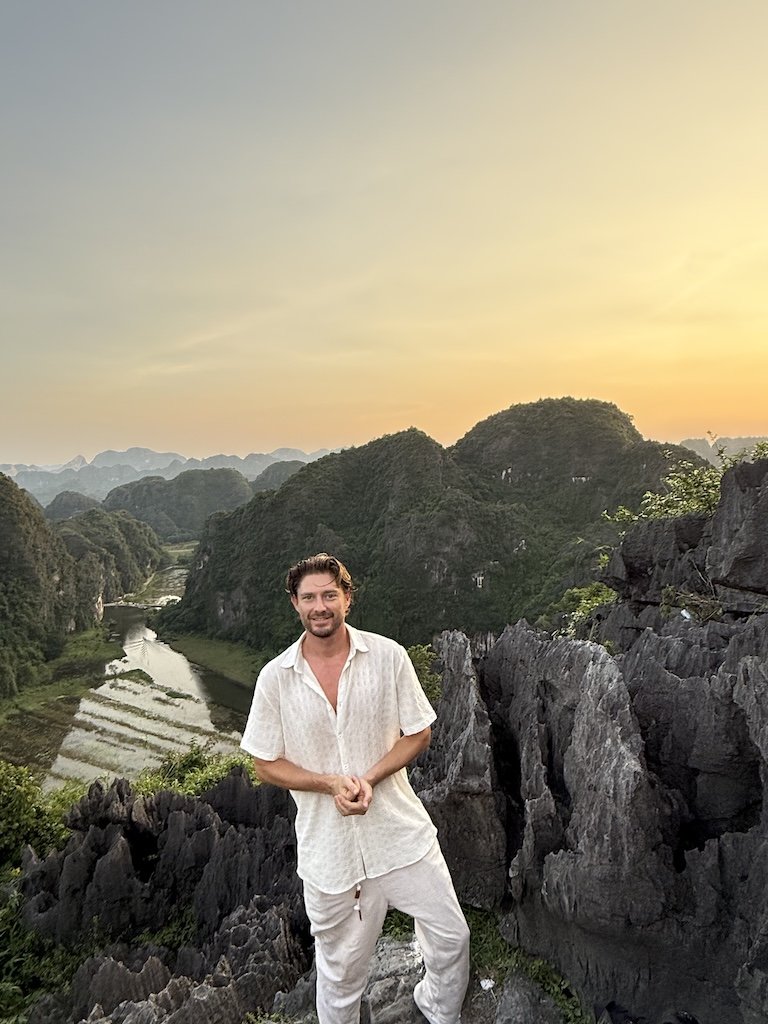
Timo E.
Timo has visited Spice and Haad Tien many times and keeps coming back. He sat down with Fin, who grew up on Koh Samui and came back to run the place after studying hospitality in Switzerland, to hear the full story behind what makes this beach and this restaurant so hard to leave.
How Spice Started
Fin's dad had a restaurant before Spice. It was called the Yoga Cafe, on Fisherman's Village in Koh Samui, which he ran with Fin's mum, a yoga teacher. They made healthy food, smoothies, juices. Then his parents separated, and his dad wanted to come home. Home was Haad Tien.
He had land there and wanted to do something with it. The Sanctuary had already established the beach as a destination people sought out. Guy's Bar, a legendary party spot on the same bay, was pulling people in. The beach was remote but it was alive. So in 2008, Spice opened as a restaurant.
The name came from the food. Everything was made from scratch. Curry pastes, soups, coconut milk ground directly from the coconuts. No packets from the market. A lot of spice. The name stuck, and even now, as Spice has grown into a property with 20 villas, it still traces back to that original idea of cooking everything from the ground up.
One year after the restaurant opened, there was one room. A wooden bamboo hut. Then another room. Then three more in 2011, making five. Then baby steps, every year, until twenty.
The Food
The restaurant at Spice started as a pure seafood operation. Where the barbecue area is now, there used to be a small boat full of fresh catch. Mostly grilled. Simple and direct.
But the menu has evolved every year since 2008. Fusion elements entered. Salads appeared. Dishes arrived from unexpected directions, because the guests at Haad Tien come from everywhere and the kitchen wanted to speak to all of them.
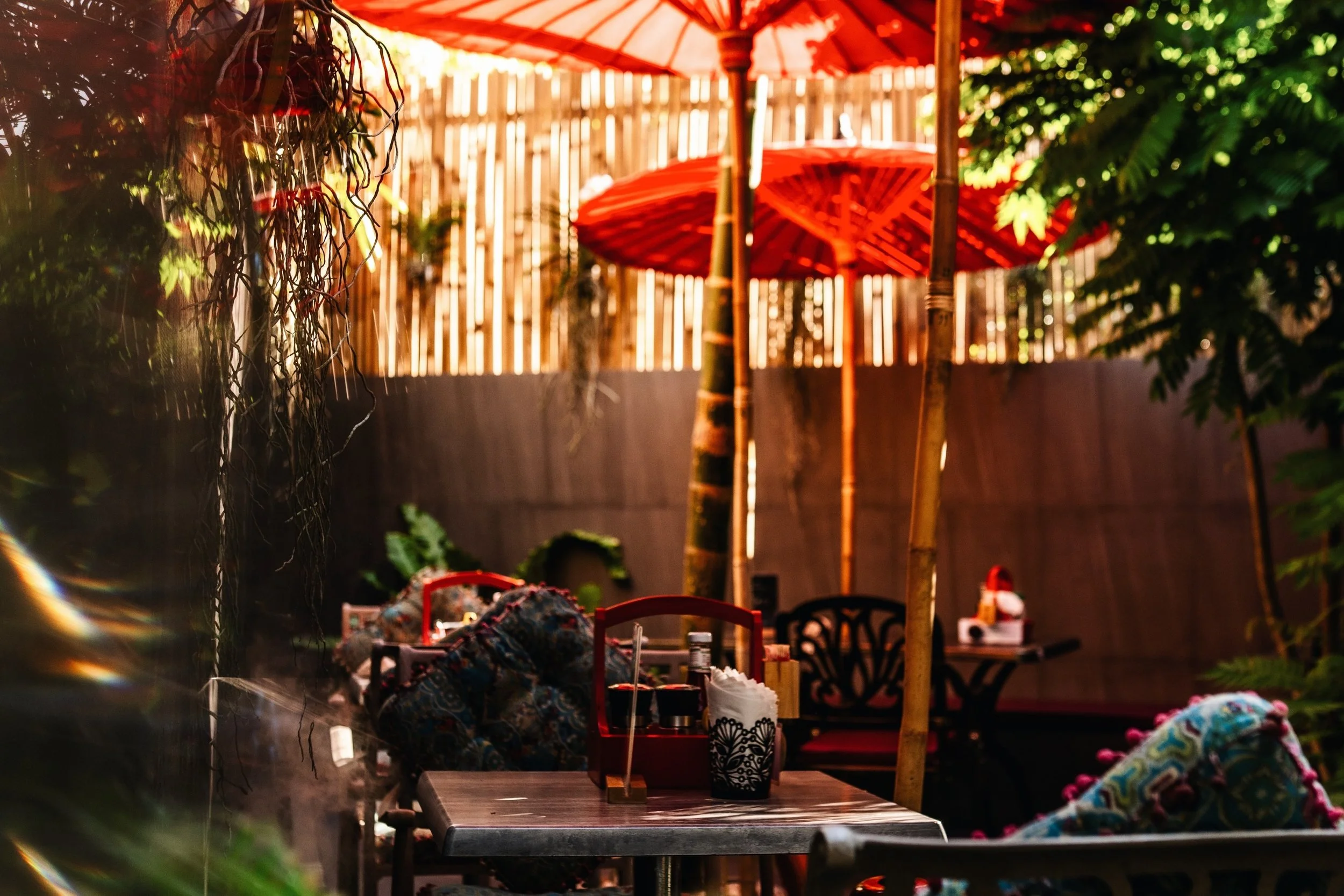
Fin's dad drives most of the food menu. His partner too. But Fin has a few contributions of his own, including fish and chips made from locally caught fish rather than imported cod, and Hokkaido scallops, something he wanted on the menu because he loves them. The drinks are his territory entirely: the cocktails, the cold-pressed juices, the matcha and the coffee sourced with the same attention the kitchen brings to the food.
What makes the sourcing interesting is the geography. About 80% of the seafood comes from right there on Haad Tien. Fin's dad fishes every morning and every evening. It is his hobby as much as his job. Red snapper, white snapper, barracuda, white tuna, squid: caught on the bay and on the plate the same day. King prawns come from local fishermen on the island. Vegetables grow in the garden behind the restaurant: papaya, coriander, mint, morning glory. What cannot be grown is sourced from friends and relatives who farm on Koh Phangan. The noodles are ordered from the south of Thailand directly, not from any delivery app. Everything is personal.
"We don't order things from Lazada or anything," Fin says. "We go there, we try it, we make a deal, and then we arrange the delivery."
There are exceptions. Salmon and red tuna come from abroad. Hokkaido scallops travel to get there. But the rule is local first, every time.
No MSG. No artificial additives. These were commitments his dad brought from the Yoga Cafe and never let go of.
The Brunch Cafe
The dinner restaurant is lively. Warm red lighting, music, two or three hundred people on a busy night. The brunch cafe was designed to be the opposite.
Open every day except Wednesday, from 9.30am to 3pm, the cafe is easy going and low pressure. You can sit and read. You can do remote work. You do not need to order from the menu at all. The minimart sits right next to it and you can pick up snacks from there and bring them to a table. Nobody will say anything.
The matcha comes from a 300-year-old teahouse in Japan through Marukyu Koyamaen, what most of the Western world would call ceremonial grade. The coffee is sourced from Sarnies in Bangkok. The tea is from Monsoon, a forest-friendly tea producer in northern Thailand. The same sourcing philosophy that runs through the dinner restaurant runs through the drinks.
The idea behind the cafe was community. A place where people who come for dinner at night could also have a reason to come during the day. A gathering point for the bay.
The Minimart
The minimart started during COVID.
When the pandemic hit, Haad Tien became a kind of sanctuary within a sanctuary. People who were living at Spice could not leave and did not particularly want to. They were on a remote beach with no crowds, no streets, no chaos. They stayed. And they started asking the team to buy them things: this snack, that item, something from the main part of Koh Phangan.
"I don't know if they were hungry or if they were just too bored."
Fin, Spice Koh Phangan
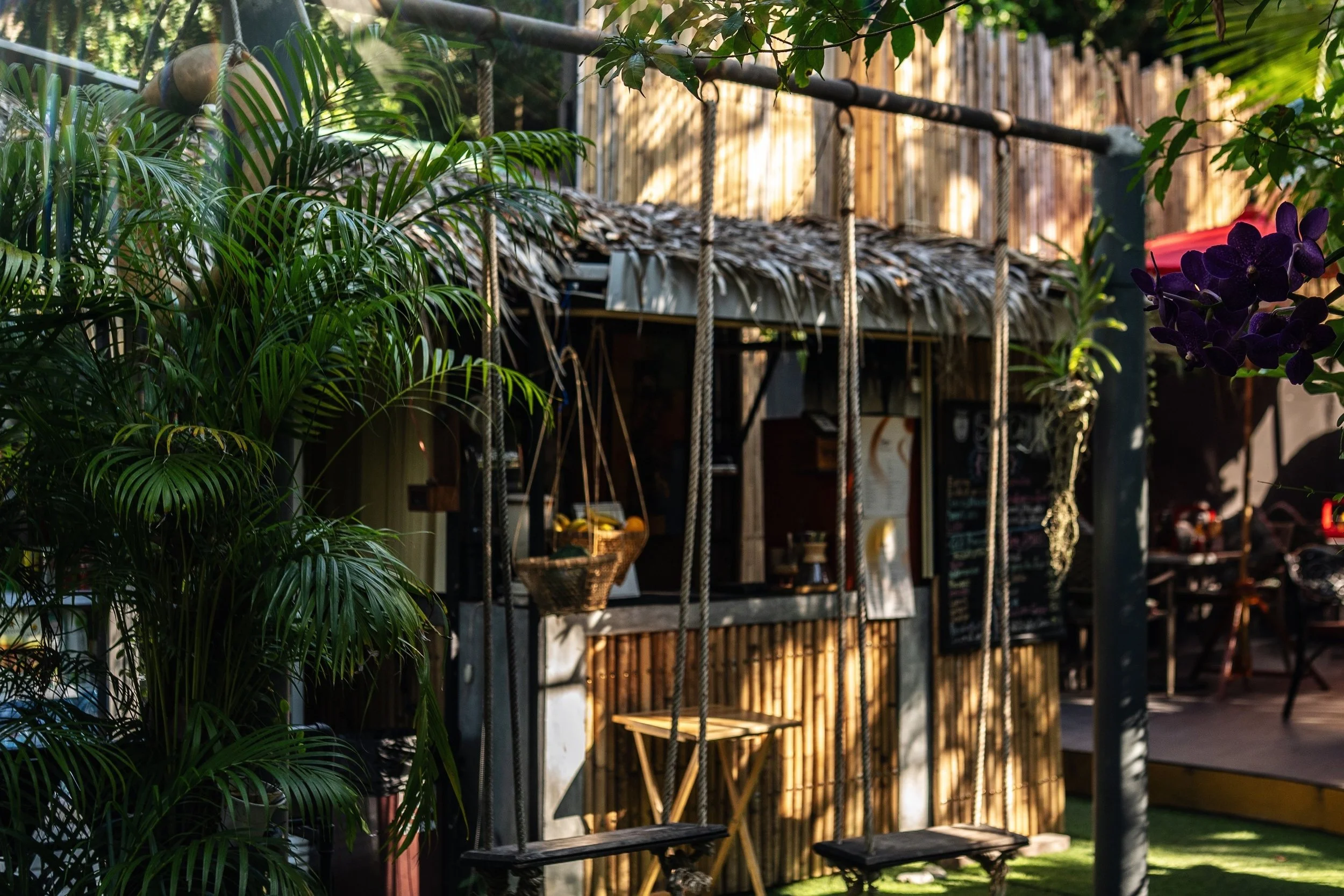
Spice was already doing grocery runs for long-term residents. So they started a small stand with the items they kept getting asked for. It restocked almost every day. Another shelf was added. Then another. Eventually it became a minimart.
"I don't know if they were hungry or if they were just too bored," Fin says.
The selection is international rather than Thai because the residents are international. Local items appear wherever possible: dried bananas, dehydrated fruits, things that come from the island. But the shelves reflect the people who live there.
Spice also offers a cash withdrawal service. There are no ATMs on the free beaches of the bay. Guests arrive expecting to pay by card everywhere. They can at Spice. But the surrounding area is cash dependent, and someone has to help people navigate that.
A restaurant, a cafe, a minimart, a cash service. Fin calls it a village.
The Houses
The 20 properties at Spice are not rooms or bungalows. Fin calls them houses, and the distinction matters.
They are individual, private, gated. Most have kitchens. Some have private cold plunges. One is 200 square metres. Five are over 100 square metres. Each has its own design and personality. None of them are stacked next to each other in resort formation. You have space. You have privacy. You have what feels like your own place on a beach that most people will never find.
Some of the 20 do not appear on the website at all. Those are occupied by long-term residents with private agreements. Guests who came for two nights, stayed for two weeks, and eventually arranged not to leave.
Fin mentions a resident who has been there for 14 years.
"They leave their jobs behind," he says. "They're like, I'm going to retire. Not in Thailand. I'm going to retire on Haad Tien."
About 70% of bookings end up extended. People arrive for five nights and stay for twelve. Some come for the parties at neighbouring Haad Yuan and use Spice as a base to sleep properly between events. Others arrive with no party plans at all and find they have no reason to leave.
The wrong guest for Spice is someone who wants to rent a motorbike and see the whole island in a week. The road alone will discourage them. The right guest is someone who wants to feel like they found something real.
"You come and you immediately feel it," Fin says. "This is the one thing we cannot fake."
Twenty houses is enough. More would mean more staff costs to cover during the low season months, when the high season income from December to April has to stretch further. Adding more rooms does not make that equation work better. So instead of growing the number, the focus is on improving what exists. Better renovation. Better maintenance. The humidity and the materials of a jungle property demand constant attention.
Coming Home
Fin grew up in Koh Samui and then went to an international school in Chiang Mai, partly back on Haad Tien during holidays. He studied hospitality at Glion in Switzerland. He spent time in London looking at hotel and restaurant operations. At the end of 2025 he came back to Koh Phangan for good.
The biggest challenge was not what he expected. It was not learning the business. It was implementing technology into a system that ran entirely on pen and paper. Kitchen display systems. iPads for taking orders. A booking management process that could scale.
His dad approached it with an open mind. The staff, who had never used tablets before, were sceptical at first. Then they got through it together.
"Every day, we should try and learn something new," Fin says. "This is the same thinking our staff has."
The staff do not have narrow roles. On a property this remote, you cannot hire someone to only do the dishes. Everyone does everything: construction, restaurant service, guest relations. The same is true of Fin. He is, as he puts it, an everything manager.
The Birds
There are two birds at Spice. Thong (ทอง), which means gold in Thai, and Ngoen (เงิน), which means silver.
They are native to Thailand and Indonesia. They mimic sounds around them, including human voices, which is how they confuse predators in the wild. At Spice, they have learned phrases from the guests who walk by. “Sawadee ka”. “I love you”. Whatever the guests have said to them, the birds now say back.
"If we didn't keep these birds as pets, they would already be dead by now."
Fin, Spice Koh Phangan
Many guests are convinced they are speakers.
Fin has had arguments with customers who did not believe the birds were real.
The birds cannot fly. Fin's staff found them on the ground with damaged wings. A bird that cannot fly on a beach with cats and snakes does not survive long. So the staff gave them a home. The home has gotten bigger since.
"If we didn't keep these birds as pets, they would already be dead by now," Fin says.
People sometimes question why the birds are kept at all. That is why.
The Vision
Five years from now, Spice will not look dramatically different from the outside. No new rooms. No expansion of the footprint.
"We don't need to make more," Fin says. "We just want to keep making sure the quality, the service, and the experience keeps getting better."
What Haad Tien is will not change either. Artists and musicians have moved there. People doing remote work arrive and stay. There are wellness programs, detox offerings, some of the island's most famous party venues a short boat ride away. It is a strange mix, and it is not for everyone.
"It's hard to find a place quite like Haad Tien," Fin says. "So if anyone is interested in unique experiences, I think definitely visit."
Good to Know
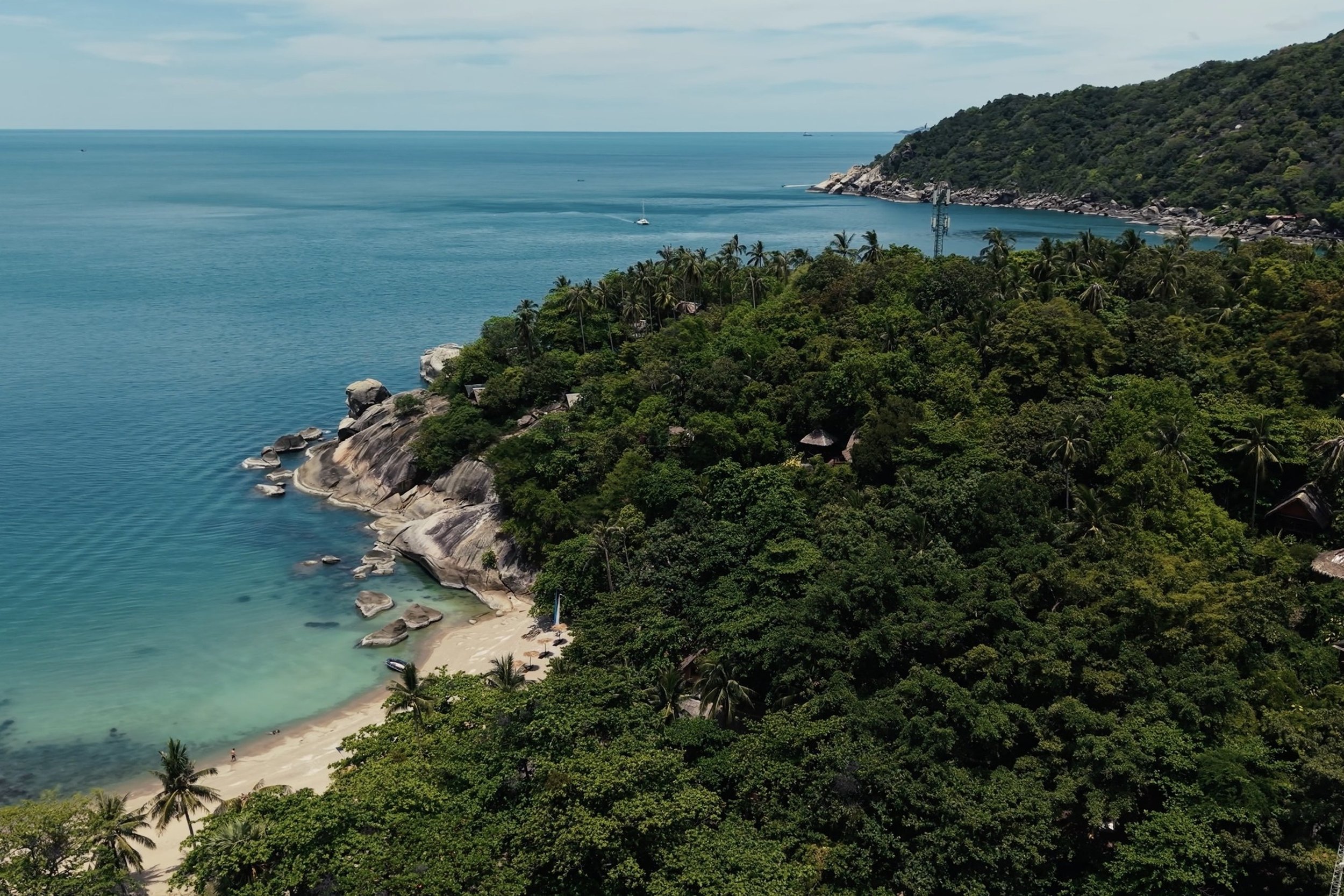
Spice Koh Phangan is located on Haad Tien on the south-east coast of Koh Phangan. The easiest way to reach it is by taxi boat from Haad Rin, which takes around ten minutes. Driving is possible but not recommended.
The dinner restaurant is open nightly. The brunch cafe is open daily except Wednesday, 9.30am to 3pm.
For bookings and more information, visit spicekohphangan.com.
Follow Spice on Instagram for updates on the restaurant, brunch, and events on the bay.
Before You Visit
Veloura Member Perk
Spice Koh Phangan is an official Veloura partner venue on Haad Tien Bay. As a Veloura member you receive a complimentary coconut on your visit.
Download the Veloura app, join the membership, and show your unique QR Code to redeem it.
Not a member yet? Download the Veloura app using the link below.
Spice Koh Phangan is a Veloura partner venue on Haad Tien, Koh Phangan. This guide is based on a conversation with Fin, conducted by the Veloura team. For more Koh Phangan guides, explore our guides at veloura-gems.com/guide.
Veloura App
Free Coconut at Spice Koh Phangan.
As a Veloura member you receive a complimentary coconut at Spice. Subscribe, show your unique QR code, and redeem it on your next visit.
