
People Of Bangkok: Zeena
Interviewed by Timo Eckenfels, Veloura Gems · In conversation with Sayantani, founder of Mustard and Memories
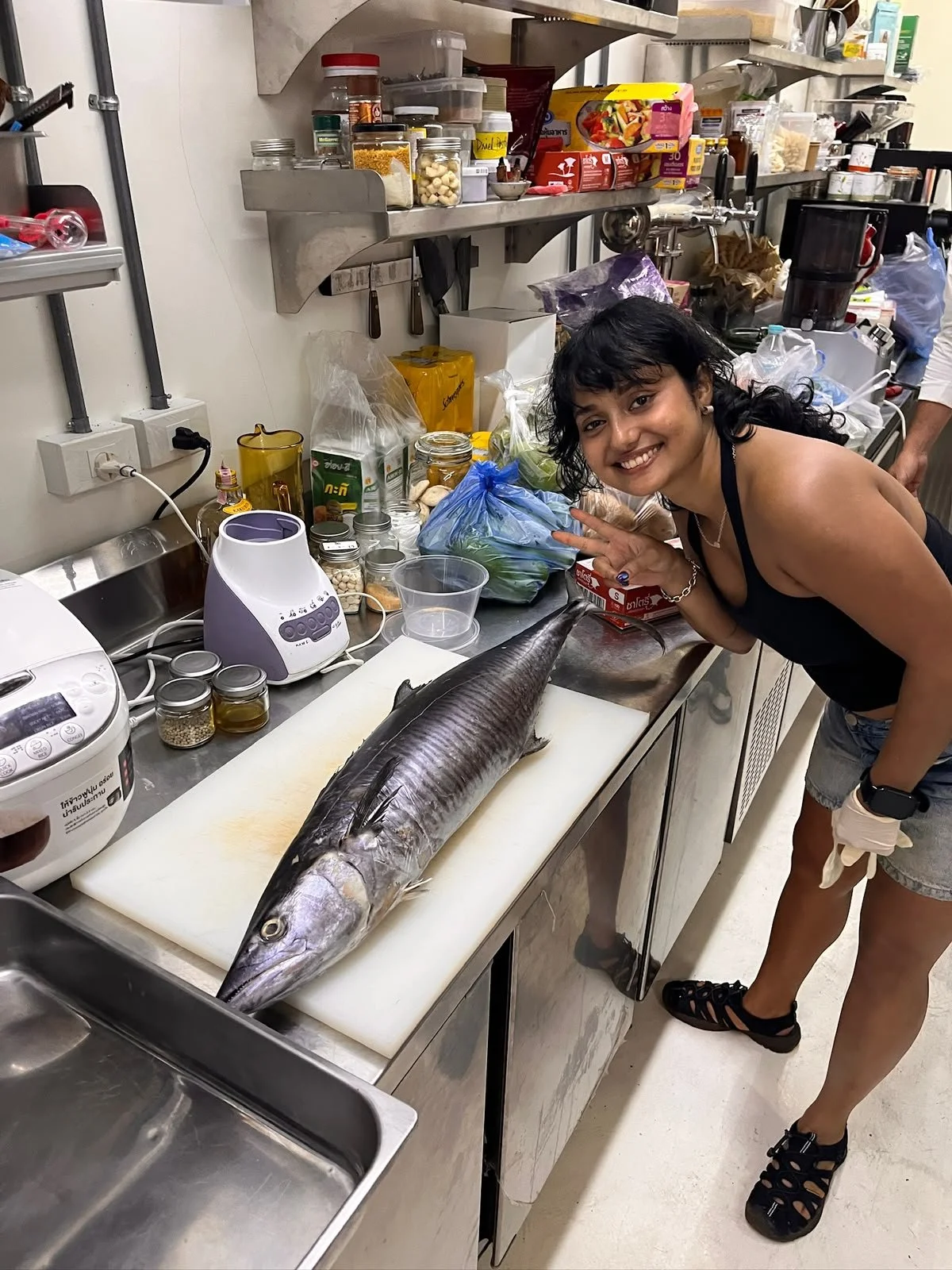
Zeena came to Bangkok like a lot of people do. A company, a job, numbers on a spreadsheet. That was nine years ago. The spreadsheets are still there. But so is something else entirely.
She is from Kolkata. West Bengal. The kind of person who cannot cook for fewer than four people because her brain simply does not compute that as a meal. During COVID she started hosting dinner parties at home and her friends kept coming back. After ten years of working she burned out, took a break, and in that pause she realised something: her job did not define her, and it did not give her what cooking did.
What she did with that pause was everything she had been putting off. She did her photography exhibition first. The theme was Time is a Place. A collection of all the pictures she had taken around the world, each one carrying a memory. She shoots on film. Analog. She says a photograph has no value unless it has a story behind it. That is also, it turns out, exactly how she thinks about food.
What followed was Mustard and Memories. A Bengali dinner series in Bangkok that has now reached its fifth volume, that has introduced strangers who became friends, that has accidentally played matchmaker more than once, and that begins, as Zeena does, with a story.
Where Food Comes From
When did you first realise you loved to cook?
I love to eat food and I'm a very fussy eater. My mom was a homemaker until I was 12 or 13 and then she started working again. We had someone who would cook when she was not there and she would not cook nicely and I would complain a lot. And my mom was like, if you complain, why don't you cook by yourself? That's why I started cooking.
I had two cookbooks at home and I would just go through the menu and try to recreate the food. And my biggest influence is MasterChef Australia. It used to come on TV all the time and I would watch it and recreate the food.
I remember one time I cooked a Mother's Day dinner for my mom. Three or four courses with a dessert because I wanted to do something special. She was so impressed she even invited some of her friends. Those were like a special menu.
What is your earliest food memory?
The first dish I cooked was a sandwich. With some Indian filling and tamarind inside. Fried. But the first proper main course I cooked was mutton. I love mutton. I grew up loving mutton. It takes so long to cook so I spent a whole day just cooking it.
In Kolkata, in my household, Sunday was the meat day. Monday was vegetarian, Tuesday different fish, one day eggs, one day prawn, one day meat. Every week the same order. And because mutton takes longer you savor it. Sunday was always special. We called it Chutir Bhat. Rice on holiday. The whole family comes together. Sometimes friends and neighbours. Grandparents, uncles, aunties. Everyone at the table.
I grew up in a nuclear family, just my parents and me. But on some Sundays my uncles and aunties would visit because that was their holiday too. Come together, eat together, celebrate food. I think sharing food makes the connection better.
How Bengalis Actually Eat
You mentioned that Bengali food is very different from what most people in Bangkok associate with Indian food.
All the nice restaurants here are mostly North Indian food. Butter chicken, kebabs. As a Bengali, we cook very differently. We are very much fish-dependent people with a different set of spices. Mustard oil. Mustard seeds. Our vegetable food has so much depth. Not paneer. Something completely different.
I always struggled to answer when people asked me: what is your favourite Indian restaurant? Because the food they serve is not my food.
Can you explain how a Bengali meal actually works?
Everything is sharing. The highlight of our life is rice. You have rice and then two or three different types of food alongside it, and the meal follows a specific order.
You start with something fried and then something bitter. We have a dish called shukto, a bitter starter. Then dal. Then vegetable or non-vegetarian curry. Then fish. Then meat. Then chutney, which is a bridge between savory and sweet, a little sour and a little savory. Then dessert.
If you go to a wedding there can be ten dishes waiting for you. You go one by one and you can go back. The order matters. It guides your taste. If you eat out of order it will not ruin everything, but it will diminish the experience. The sequence helps you understand what you are eating.
Where does Bengali food come from historically?
Bengal used to be one frontier of the East India Company in British times. During partition they divided it into two. One became East Pakistan and eventually Bangladesh. The other part remained as West Bengal. I am from Kolkata.
Kolkata was a very rich city. The British capital until 1911 when it moved to Delhi. So we have a lot of colonial influences in our food. Portuguese influence. French influence. Malay influence. Arab influence from the Mughal empire. And we have seen around fifty or sixty famines in the last two hundred years and those famines also changed how we eat, gave birth to so many different recipes out of necessity.
That is why when people ask me to summarise Indian food I cannot. Every part of India has more than a hundred dishes of its own. We are too many people. It makes sense.
The Name
How did Mustard and Memories start?
I went to FV for an event they were organising, a Sunday cookout. They were making pizza with Thai flavors, larb pizza, very interesting. I met Yann who works there as a chef. I told him I would love to host a dinner here sometime. He said come and give me a trial of your food, if I like it we will do it together.
"The thing with my recipes is that it's not one tablespoon of salt, one tablespoon of masala. You need to cook with the feeling of food. The taste comes with the feeling and the memories."
Zeena, founder of Mustard and Memories
I cooked all the dishes I wanted to do. My biggest task was selecting seven from over a hundred Bengali dishes I know. Yann loved it. He helped me understand how to scale the dishes for thirty-five people, which I had never done in my life.
Why Mustard and Memories?
Mustard oil and mustard seeds are central to how we cook in Bengal. The pungency defines our food. The name came because I was mainly trying to recreate the memories I have with food so I could share them with people here. Mustard and Memories. It is very simple.
What was the menu for your first dinner?
Fuchka first, which everyone knows as panipuri but we call it fuchka because the flavor is completely different. Then fish egg fritters with a mustard dipping sauce, kashundi. Then dal. Then eggplant fritters. Then a fish curry with mustard and poppy seed paste. That one was pungent. Some people told me the mustard was very strong. Others said it was the best thing they had ever eaten. Mustard paste has a similar quality to wasabi. Then my favourite: mutton kosha, a slow-cooked caramelized mutton with Mughal influences, which is the most Bengali thing I know how to cook. Then chutney with papad to close, a little sweet, not quite dessert but a way to signal the ending.
Seven courses. Thirty-five people the first night when I planned for twenty.
Scaling was the thing nobody had warned her about. She had cooked for ten people at most in her entire life. The gap between ten and thirty-five is not mathematical. Bengali recipes are not written in tablespoons. They are cooked by feeling. By taste. By memory. The spice goes in until it smells right. You cannot write that down and hand it to someone else.
"The thing with my recipes is that it's not one tablespoon of salt, one tablespoon of masala. It's not like that. You need to cook with the feeling of food. The taste comes with the feeling and the memories." Yann and the team at FV helped her understand how to scale without losing that. It took learning to delegate in a way she had never had to before. It was not easy. But it worked.
What Happens at the Table
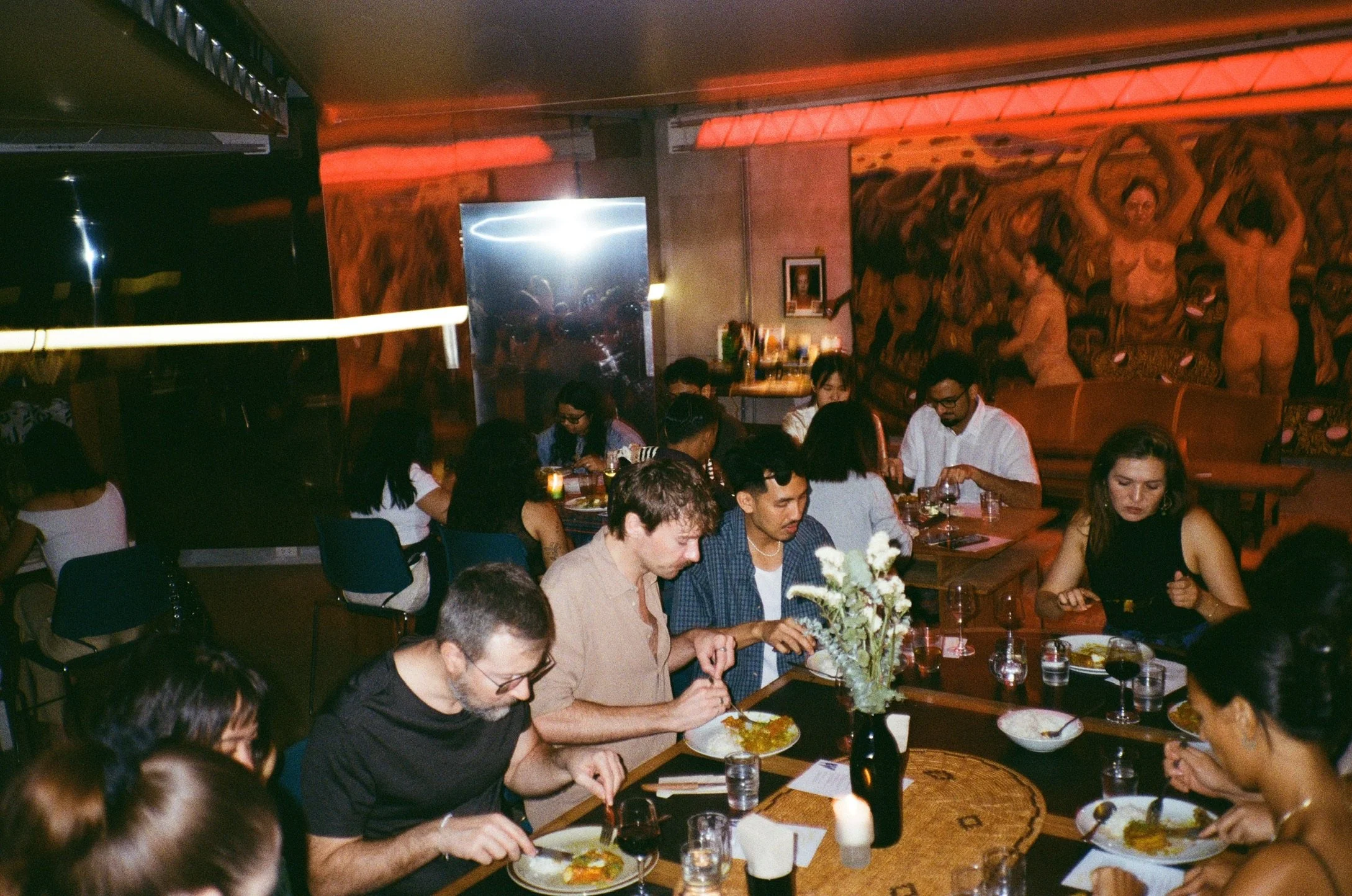
You said the storytelling has improved from dinner to dinner.
The first dinner, Yann told me that since I was cooking these dishes, I should also tell people why. I knew I had to explain but I had not thought it through. I was very shy. I had been cooking all day and then talking to everyone was like, oh my God, what am I doing.
But it got better. A friend came to my first dinner and my fifth dinner and he told me your storytelling has got much better. For me that means everything. If someone comes every time and tells me the food is only getting better, that is the best compliment I can get.
What have you added since the first dinner?
A welcome drink from the second one. Music. My friend Pam the DJ played after the first dinner. Then Perry, Tam, Gaspar, Brent Burns. One dinner had live singing. Each dinner I am building something more layered around the food. Because my three favourite things are music, food, and photography. If I can get two or three of them together in one evening, it is a fun thing.
At the very first dinner she printed photographs of Kolkata. Her own film photographs. One for every person who came. So that everyone who came there could leave with a memory from Kolkata. Not just the taste of it. Something to hold.
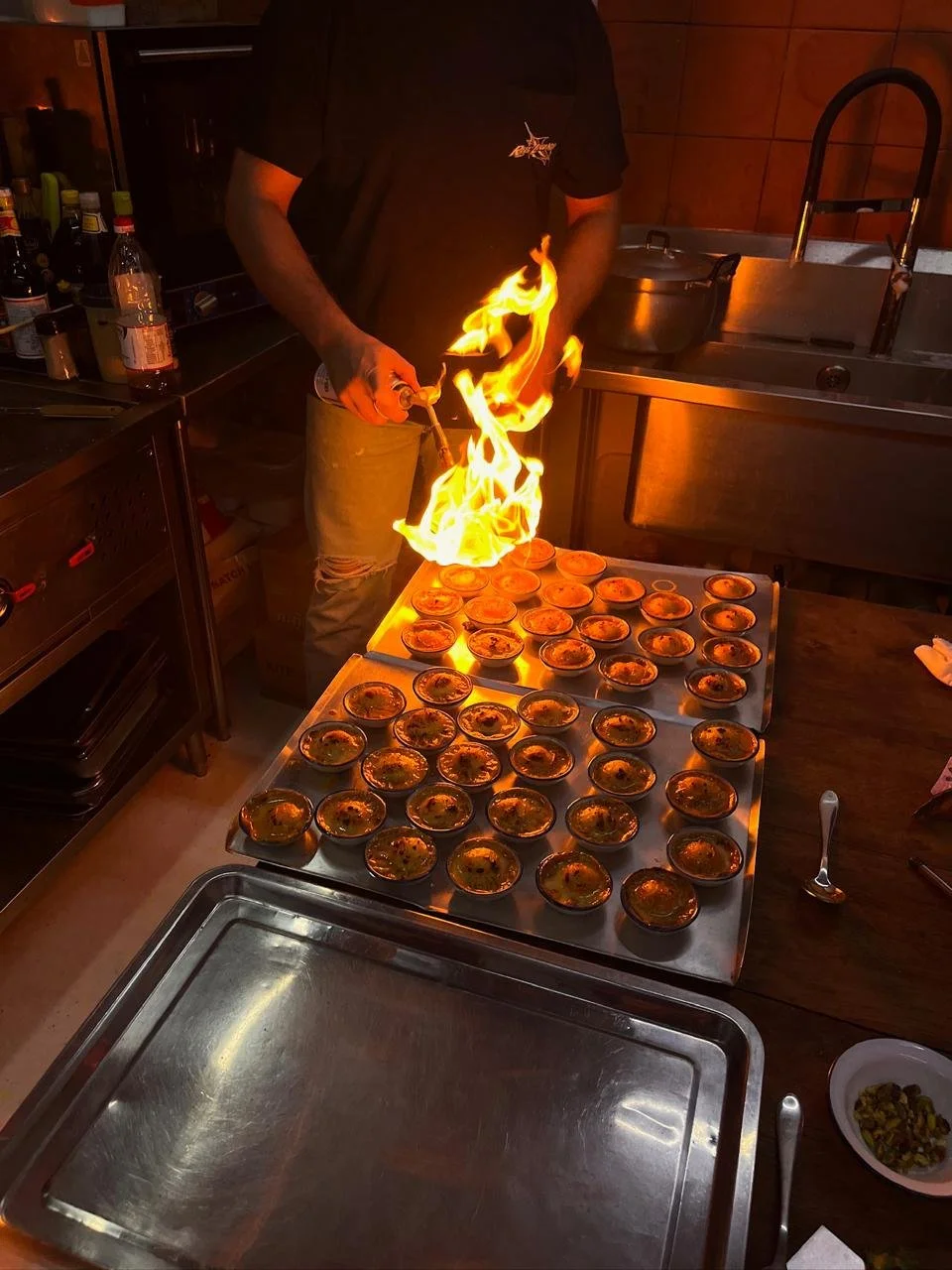
I also finally added dessert on the fifth dinner. I had avoided it for a long time because Bengali desserts take so much effort and you cannot easily find the right ingredients here. But I made it work. That felt like a real improvement.
How do you source the ingredients you need in Bangkok?
There is a flower we use in Bengal its called “Bok Phool”. We deep fry it. I had been going to Klong Toey market since I moved here. Not many foreigners go to Klong Toey to buy vegetables but I like to go there. Four or five years ago I was walking through and I saw that flower. I had never seen it outside Bengal. The Thai people also eat it, in a slightly different way, but they eat it.
It made sense when she thought about it. Bengal and Thailand share the same kind of environment. Both next to rivers in a delta. Both very rice-dependent. Similar soil. Similar vegetables and greens. The flavors arrive from different directions but the land underneath is not so different.
She tries to procure everything from local markets and local farmers. Fish from a special market that opens at midnight or one in the morning, when all the fish trucks arrive and the catch is at its freshest.
Going to that market at midnight reminds her of going with her father on Sunday mornings to choose the fish together. He taught her how to buy groceries. How to look at a fish properly. It was never supermarket food in her house, never frozen. She did not want that for the people coming to eat either.
What She Is Building Next
The fifth volume of Mustard and Memories is not the end of the idea. It is the beginning of a clearer one.
She wants to continue the larger seasonal dinners, cooking for forty people with a menu that reflects the time of year. But she also wants to do something smaller alongside it. Eight to ten people. More intimate. A casual fine dining format where each person gets their own plate instead of sharing. Something closer to the way Europeans eat, she says, with a slight smile that suggests she has thought hard about what that would take from her.
"Food is the best glue you can expect."
Zeena, founder of Mustard and Memories
She has already experimented. A collab at Sababa cooking Indian Chinese food for Chinese New Year. A film screening at Le Café des Stagiaires where she cooked Indian snacks while people watched an art house movie. People came for the film and stayed for the food. People came for the food and stayed for each other.
"I realised that people really like the idea of community where people can come and bond over a certain idea or topic or food. And food is the best glue you can expect."
She is trying to figure out how to build that more deliberately. A place where people do not only share their highs but also their lows. Where the connection lasts longer than the evening.
Some of my friends have met each other at my dinner club and they hang out regularly now. Some of them went on dates. I am like a cupid. I did not expect that but I am very happy for them.
The idea is that you share a meal with someone sitting next to you that you do not know, so you have to talk. The sharing plate forces that. You cannot eat separately. And then music is there, and the stories, and something genuine happens. I have had some amazing connections at the dinner table that became real friendships. I want to build a community where people show up for each other. Not just for the highs but also the lows.
The Closing Question
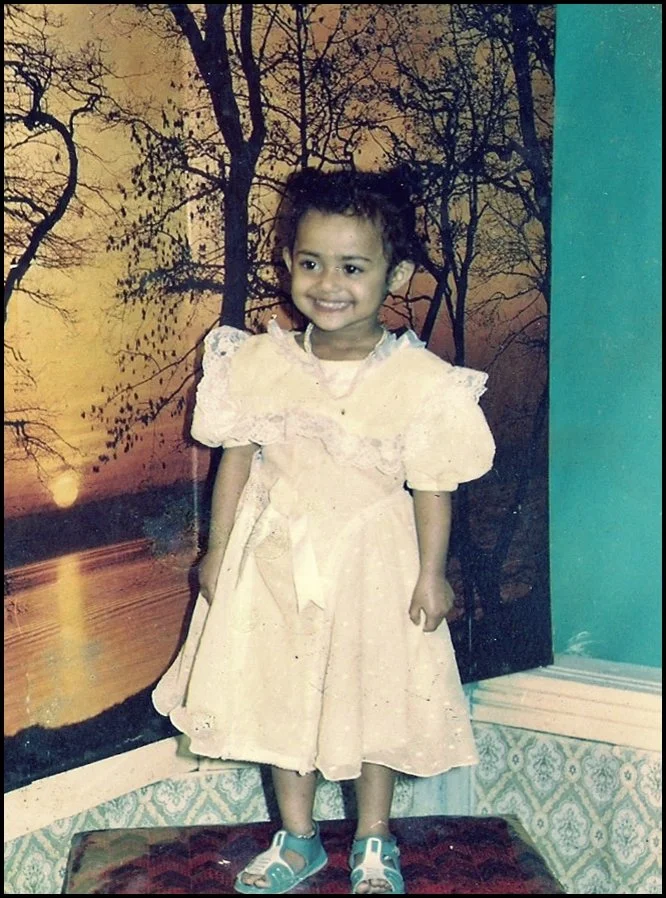
What would little Zeena, cooking her first sandwich at twelve years old, think if she could see where you are now?
She would be so surprised. So shocked. When I was twelve or thirteen I never imagined myself in a completely different city, not in India, doing these things. I would not have imagined that at all. And that makes me so happy.
"I think little Zeena was cooking without thinking about whether anyone would like it. Just cooking for the sake of cooking, for herself. I have to remind myself of that more often."
Zeena, founder of Mustard and Memories
I think little Zeena was cooking without thinking about whether anyone would like it. Just cooking for the sake of cooking, for herself. I have to remind myself of that more often. Sometimes I think, is this good enough? And I need to go back to that feeling of just doing it.
The advice I would give her is: continue that. Never let anyone tell you what you can or cannot do. A wrong dish is also how you learn. Cooking is so different from baking. You can experiment. You can see what you can do. My favourite part of cooking is watching other people cook. It is so beautiful to me. Just watching someone in the kitchen.
Little Zeena will be very shocked. And I am so proud.
Veloura App
More stories. More venues. More reasons to explore Bangkok.
The Veloura app covers Bangkok and Koh Phangan with curated venues, member perks, and the stories behind the places worth knowing.
Zeena hosts Mustard and Memories, a Bengali dinner series in Bangkok. She is currently on her fifth volume, with dinners hosted seasonally across the city. To follow her events and get in touch, find her on Instagram.
People Of is a Veloura series of conversations with the people who shape the places we write about. Read more at veloura-gems.com/guide.
