
Escape Portal Bangkok: Bangkok's First Cinematic Escape Room Experience
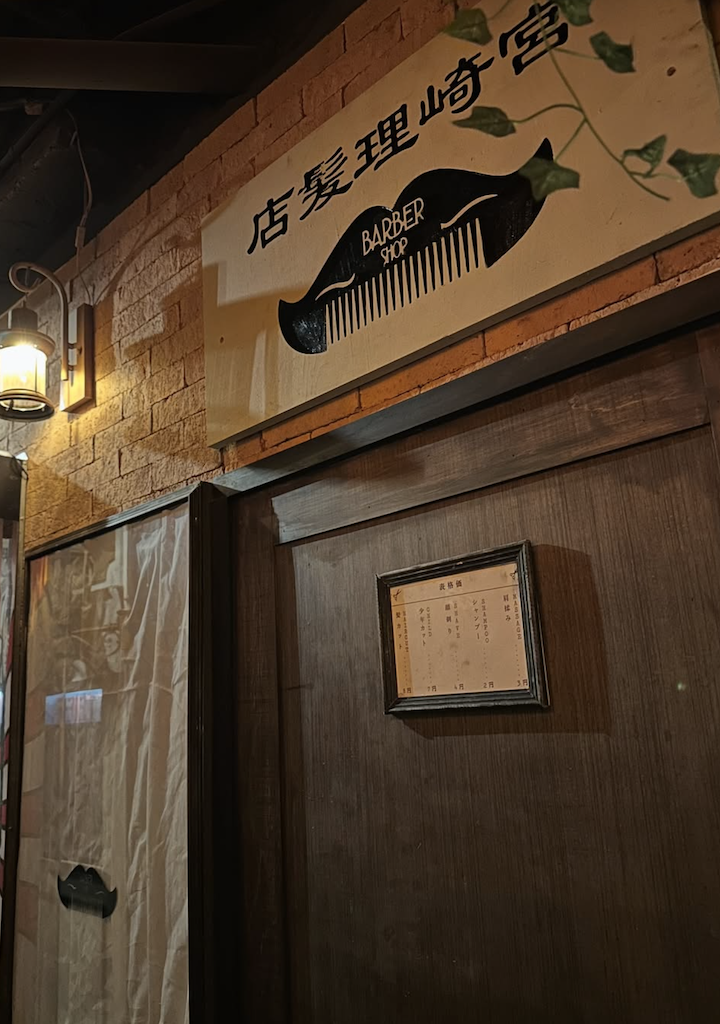
By Timo Eckenfels, Veloura Gems · In conversation with Lily and May, co-founders of Escape Portal
Some businesses start with a plan. Escape Portal started at a friend's gathering when someone mentioned, almost by accident, that May used to design escape rooms.
That was the beginning of it. A casual mention at a dinner party, a meeting arranged for the following week, a spontaneous flight to Japan the month after that, and then construction starting in September 2025 on the 13th floor of a building in Bangkok that is so difficult to find, the founders decided to make the search part of the story.
I sat down with Lily and May mid of July, nearly a year after Escape Portal opened. What followed was thirty minutes that went in directions I did not expect.

Your Local Ambassador
Timo Eckenfels
Timo played Shadow Zen shortly after Escape Portal opened in September 2025. Nearly a year later, he sat down with co-founders Lily and May to hear the full story behind it: the Japan trip, the spontaneous decision, and what it actually takes to build something you believe in from scratch.
How This Started
Lily and her husband Krit had a habit of playing at least one escape room every time they travelled. Not as tourists doing activities, but as people who were genuinely in love with the format. One room led to the next. They played their way across countries. And then in Japan, they found a room that stopped them.
"It's the room that made us come out like wow," Lily says. "Like the 60 minutes that we were in there, we just keep having surprise after one another."
That room convinced them to build something in Bangkok. The escape room scene in Thailand, they felt, had not moved much in over a decade. First generation, second generation, but no one yet doing what they had experienced in Japan: a room where the story is the thing, where every puzzle serves the narrative, where the detail goes all the way down to which lightbulbs belong in the era the room is set in.
"The 60 minutes that we were in there, we just keep having surprise after one another."
Lily, co-founder of Escape Portal
Krit is a good friend of May from university. When the idea was forming, someone at that gathering mentioned May's background. "You know that May used to design escape rooms, right?" That question became a meeting. The meeting became a Japan trip.
May had designed escape rooms professionally over a decade earlier, when she was working in exhibition design and architecture. The company she worked for sent experiences to London, Eindhoven, Brisbane, and India, each one designed around the local story of its destination. A Bollywood theme for India. A London narrative for London. Every room unique. She cannot remember which was her first. "Oh my God, I don't really remember," she laughs.
What she does remember is the principle: the story and the puzzle have to make sense together. They cannot be separated. You cannot bolt a random puzzle onto a theme and call it an escape room. The puzzle has to emerge from the story. The interior design follows from that. Everything is downstream of the concept.
That philosophy is exactly what she found in the room in Japan. It was also what she brought to Escape Portal.
The Japan Trip and What They Found
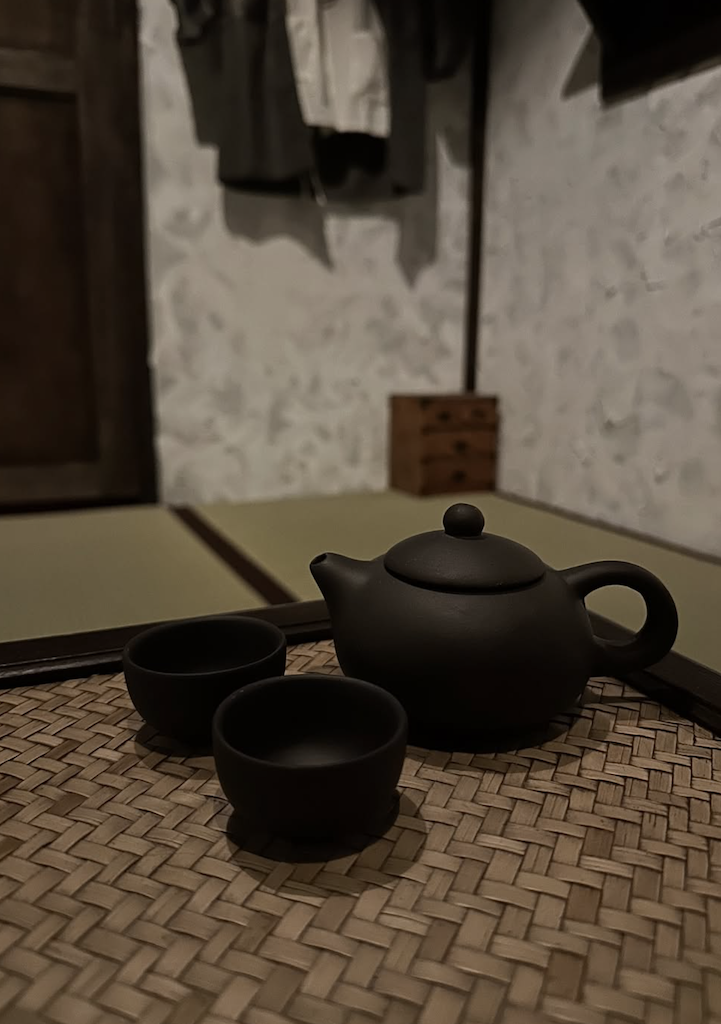
They flew to Japan together shortly after deciding to move forward. Lily had already played multiple rooms at the same venue on a previous trip, falling so deeply in love with the first that she played all of them in a single day.
The room that became Shadow Zen had captured her for a specific reason. "They pay attention to every detail," she says. "And that's what mesmerised us the most."
They did not try to recreate it or design their own version. They licensed the entire experience, story, puzzles, and aesthetic, and brought it to Bangkok. The Japanese design team came to help with the build. And they were uncompromising.
What struck them most about the Japanese design team was their uncompromising commitment to the original. Every detail was scrutinised. Lightbulb temperature. Paint colour. Era-appropriate props sourced and auctioned from Japan, then shipped to Bangkok. The goal was never to put a Bangkok stamp on the room. It was to honour what made it extraordinary in the first place, down to the last detail.
Lily had never done construction in her life. During the build, she was using a hammer and nails, painting walls herself alongside May and Krit. The three of them went into the details that most people would never notice, including a question that might sound obsessive until you understand the spirit behind it. If the character who left clues in this room actually lived, what kind of handwriting would he have?
"Those are the kind of passion that we really put into all this," Lily says.
Why Portal and Not Room
The name took longer than almost anything else. Extensive lists. Debate that went on for months.
The location gave them the answer. The space they found was on the 13th floor of a building that is genuinely difficult to find. Most businesses would see that as a problem. They saw it as a gift.
"We're like, okay, why don't we just make some story, make it fun out of this," Lily says. "It's like a secret bar theme. You find a door in the middle of nowhere. You open the door that doesn't really look like it belongs there, and then you're being transported into another world."
A portal, not a room. The distinction matters. A room implies a space. A portal implies a crossing. You are not solving puzzles in a themed box. You are stepping through something and arriving somewhere else, specifically 1920s Japan, to follow the trail of a monk named Nakamura Bonta through whatever he left behind.
The portal just happens to have appeared in the middle of Bangkok.
What Happens Behind the Mirror
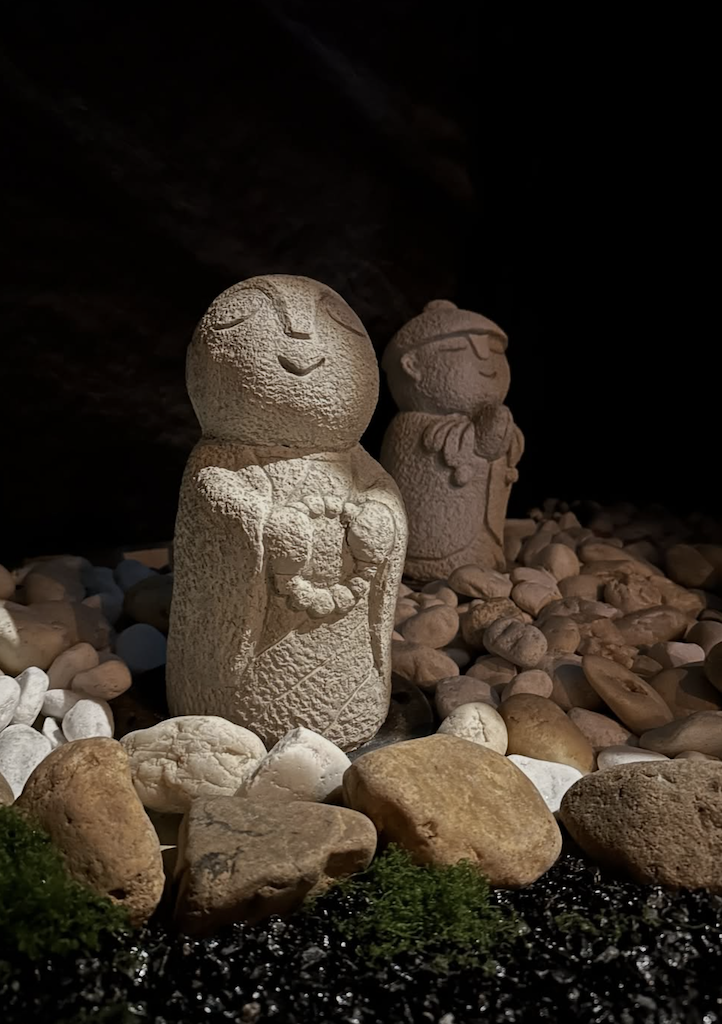
Lily and May have run enough sessions as game masters to have studied human behaviour in ways that still surprise them.
The first thing they notice is how much people change when the door closes. Someone who came in quiet becomes the one directing everyone. Someone who came in loud becomes focused and still. "The characters that I see when they come in, and once the door closed, completely different," Lily says.
What neither of them had fully anticipated was the bowing. More than once, a group has encountered the ceremonial robe in the room and decided that what it requires is an actual ceremony. "They were performing a ceremony inside the room," Lily says. "They were wearing the gowns and everything, and they were all bowing together. And they were begging… like, begging the game."
The hint system at Escape Portal does not work by calling through a speaker. There are no interruptions. Hints are built into the room itself, appearing naturally as part of the story.
"It's an art," May says. "If they're more experienced, you need to make it challenging enough. But if you see that this group, they're newbies, they need more hints, then we slowly guide them through."
The goal is always for everyone to finish the story. "It's like you watch a movie," May says. "If you walk out in the middle, you left something hanging." Every group finishes. No one leaves without knowing the ending.
The most memorable group Lily remembers was three adults and a seven-year-old child. The child kept pointing to the right places. "You have to look at that. You have to check that." The adults kept dismissing him. The overthinkers, as she calls them. The child was right almost every time.
"You start seeing them being child again. And that's the best feeling."
May, co-founder of Escape Portal
But what both of them keep coming back to is the moment at the end, when it is over and the lights come up and people's eyes change.
"You start seeing them being child again," May says. "And then after, once they finish playing, you could see many of them, their eyes are lit up. They get excited. And that's the best feeling."
What They Want for Bangkok
Lily has a quiet ambition for what Escape Portal represents beyond the room itself.
"If you think of escape games, you think of the States, you think of Europe," she says. "I want Bangkok to be part of that conversation. And people say Bangkok got great escape rooms. That's what's really making us go."
They are already preparing a second experience. They will not say much about it except that the story will be different and the standard will be the same. They are being as picky about choosing the next room as they were about this one. "It's like watching a movie," Lily says about the selection process. "We love this movie coming from this director. And it doesn't mean that we can be a good one very soon. So we trust in the art and craft."
Before You Go
Lily's message for anyone who has not played yet: choose your group carefully. This is a one-time experience. You cannot replay it once you know the story. "Select the team you want to come with. Because it can be a special someone. It can be your family. It can be your friends. But if you make sure that you got the right group of people, you have a lot of fun. And it's going to be the memories that you keep for a very long time."
May's advice for once you are inside: do not overthink it. "Just let it go. Go with the flow. Just look around and really immerse yourself in the story, in the details. Because when you overthink, that's when you start to get frustrated. Just enjoy being the main character. Because you are the main character when you play Escape Portal."
Good to Know
Escape Portal is on the 13th floor of Piya Place Langsuan on Ploenchit Road, right next to Mercury Ville. The closest BTS station is Chidlom, Exit 4. The entrance is not obvious. That is intentional.
Recommended for ages 13 and above. Groups of 2 to 5 players. No experience needed, only curiosity and a willingness to look at everything.
Slots fill fast. Book in advance.
Book at escapeportal.co · Instagram @escapeportalworld
Veloura Member Perk
Escape Portal is an official Veloura partner venue in Bangkok. As a Veloura member you receive 5% off your booking.
Download the Veloura app, join the membership, and show your member benefit before booking to redeem it.
Not a member yet? Download the Veloura app using the link below.
Before You Visit
Escape Portal is a Veloura partner venue in Bangkok. This guide is based on a visit and interview conducted by the Veloura team. For more Bangkok venue guides, explore our guides at veloura-gems.com/guide.
Veloura App
5% Off at Escape Portal.
Download the Veloura app, become a member, and unlock exclusive perks at Escape Portal and partner venues across Bangkok.
